Introduction
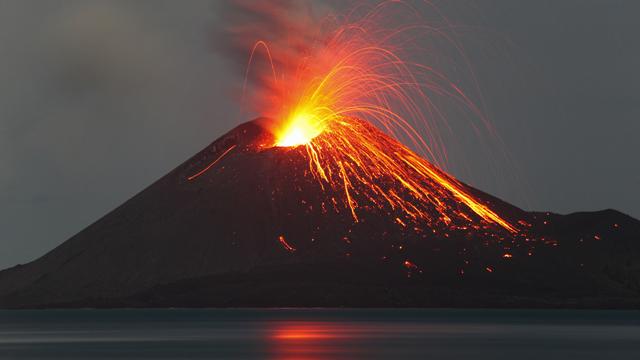 Your team is looking for a place to live. The only sites available are either on an earthquake fault or near a volcano. How will you decide where to live? Perhaps you want to know whether earthquakes or volcanoes are more powerful or destructive. Maybe you need to determine why earthquakes and volcanoes occur. There will be other questions that you will need to answer along the way.
Task
Would you rather live near an earthquake fault or near an active volcano?
Your mission is to find information about both types of areas, and come up with a valid decision based on your findings.
Process
As a group, you will be exploring many Webpages. Some of the reading might be challenging. Use a dictionary to help you.
Divide your team into two groups. One group will be seismologists who will study about earthquakes. The other group will be volcanologists who will study about volcanoes.
The seismologists will answer the following questions in complete sentences:
1. What causes earthquakes?
2. What is the rating scale for earthquakes? Which is the least destructive?
Which is the most destructive?
3. Where was the most recent earthquake and what was its rating? What
damage did it cause?
4. Which major cities in the United States are located in earthquake zones?
5. How do scientists know the exact spot where an earthquake begins?
The volcanologists will answer the following questions in complete sentences:
1. What causes volcanoes to erupt?
2. What are the three different types of volcanoes and give a definition of each
type.
3. Are most volcanoes located near the edges or near the centers of continents?
4. Which major cities in the United States are located on or near active volcanoes?
5. Can scientists predict volcanic eruptions?
6. Where was the most recent active volcano? What damage did it cause?
As you are doing your research, you will come across many interesting facts that are not part of the questions. You should include any information which will make your presentation more interesting and persuasive.
After both groups have gathered all the information that's necessary, you will need to meet with your whole team. Share the information, and then come up with a decision on where your team would live. You should be able to back up your decision with facts and illustrations. Be prepared to present your information to the rest of the class.
The following websites will help you out:
Volcanos
http://www.geo.mtu.edu/volcanoes/hazards/primer/
http://video.nationalgeographic.com/video/kids/forces-of-nature-kids/volcanoes-101-kids/
http://www.weatherwizkids.com/weather-volcano.htm
Earthquakes
http://earthquake.usgs.gov/learn/kids/
http://www.weatherwizkids.com/weather-earthquake.htm
http://pbskids.org/dragonflytv/show/earthquakes.html
Evaluation
You will be graded as a group. Everyone in the group must participate in the research and in the presentation. All questions in the process section must be answered using facts from your research to back up your answers. Neatness counts. You must include illustrations or diagrams as part of your presentation. Remember that this is a presentation to persuade your audience as to which area is the best place to live. In addition to your oral presentation you will hand in your answers to the questions. Each question should be answered in a separate paragraph. As your last paragraph, include a conclusion based on your findings.
Conclusion
When you have completed this project, you will have learned about earthquakes and volcanoes. Based on your research, your group has decided which is the better place to live. Now convince your audience!