Introduction
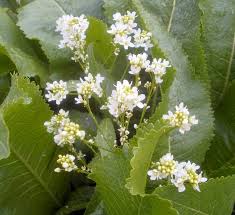
Welcome: Flowering plant.
Description: Identify parts of a flowering plants and their functions
Grade level: Four
Curriculum: Science
Keywords: sepal, petals, filaments, anthers, stamen, stigma, style, ovary, pistil and receptacle and flower stalk.
Author: Sasha Gaye Wright
Task
By the end of this lesson students should be able to:
- define what is a plant
- state the two types of flowering plant
- differentiate between a monocotyledon and a dicotyledon
- identify five parts of a flowering plant
Process
A plant is a living organism of the kind exemplified by trees, shrubs, herbs, grasses, ferns, and mosses, typically growing in a permanent site, absorbing water and inorganic substances through its roots, and synthesizing nutrients in its leaves by photosynthesis using the green pigment chlorophyll.
There are two types of plant, flowering and non flowering but today we will be focusing on flowering plant. flowering plant consists of monocotyledons and dicotyledons. Monocotyledons leaves are long, has more than one fibre, and has one cotyledon in the seed, while dicotyledon leaves are board and flat, has one tap root and has two cotyledons in the seed.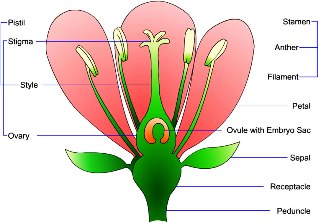
Function of part of a flowering plant
sepals- produce the inner floral parts while the flower is a bud.
petals- usually brightly coloured ( may have nectar at its base to attract insects.
filaments- supports anthers.
stamen- filament and anther together. It is the male part of the flower.
stigma- surface to receive pollen.
style- supports stigma.
ovary- contains the ovules which are the female sex cells
pistil- stigma, style and ovary together. It is the female part of the flower.
receptacle and flower stalk- supports the floral structures.
Students will then listen to audio which entails about the function of the part of a flowering plant
Evaluation
