Introduction
In the rapidly evolving world of the 21st century, traditional classrooms are being replaced with interactive, student-centered models of learning. One such model is the flipped classroom. In a flipped classroom, students are introduced to content at home (usually through videos or digital resources) and use class time for interactive, higher-order activities like discussions, problem-solving, and experimentation.
Biology, as a subject that deeply benefits from visual aids, simulations, and practical work, is perfectly suited for the flipped classroom approach. This WebQuest will empower you, the learner, to become a creator of your own flipped biology lesson. You will take on the role of an educator, designing an engaging, effective, and innovative learning experience using digital tools and collaborative methods.
Through this project, you will learn to integrate technology into biology education, enhance your communication skills, work as a team, and develop digital content that helps others learn better. This experience also brings constructivism and connectivism to life: building knowledge through experience, and making connections through digital and social networks.

Objectives
By the end of this WebQuest, you will be able to:
1. Define the flipped classroom model and its core components.
2. Analyze the advantages and disadvantages of implementing a flipped classroom in biology.
3. Identify and evaluate specific flipped classroom activities suitable for biology students.
4. Apply connectivist and constructivist principles to enhance the flipped learning experience.
5. Collaborate effectively with peers to create a multimedia presentation.
6. Reflect critically on your learning and the potential impact of the flipped classroom model on biology education.
Task
Your mission is to work in groups to research the flipped classroom model and create a multimedia presentation tailored for biology students. Your presentation should include:
- An explanation of the flipped classroom model
- Specific examples of flipped classroom activities suitable for biology
- A discussion of the benefits and challenges of this approach
- Visuals, infographics, and videos to enhance understanding
Deliverables
1. Multimedia Presentation:A visually engaging presentation (e.g., PowerPoint, Prezi, Google Slides) that covers all aspects of the flipped classroom model in biology.
2. Written Report: A detailed report summarizing your research findings, including citations and a discussion of the pedagogical theories underpinning the flipped classroom.
3. Self-Reflection: A personal reflection on what you learned from the project, how it has changed your perspective on teaching and learning, and how you might apply these concepts in your future endeavors.
Process
Step 1: Understanding the Flipped Classroom Model
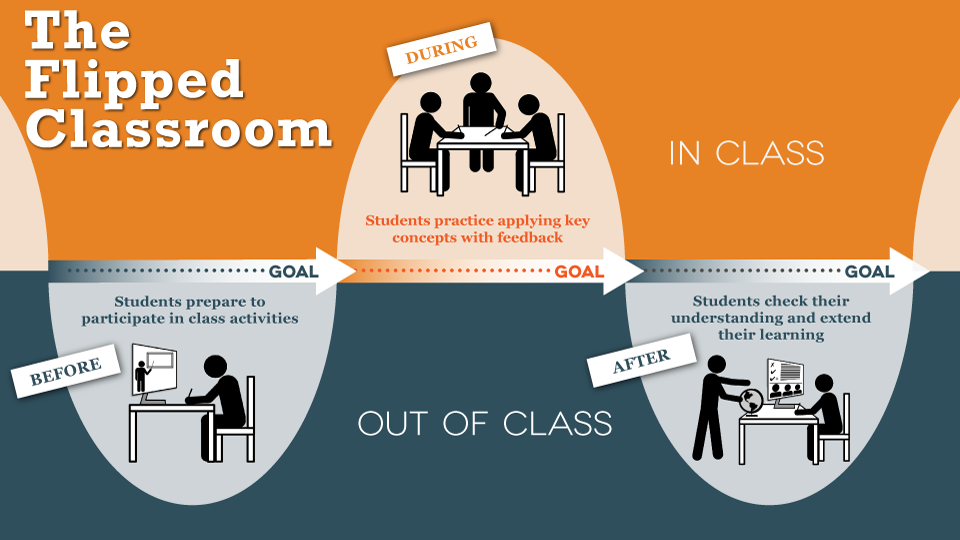
1. What is it? The flipped classroom is an instructional strategy that reverses the traditional learning environment. Students gain first exposure to new material outside of class, usually via video lectures or readings, and then use class time for activities that deepen their understanding through discussion and problem-solving.
2. Why flip? This approach aims to increase student engagement and learning by shifting the focus from passive listening to active participation. It also allows teachers to provide more personalized support and facilitate collaborative learning experiences.
3. Key Components:
- Pre-class Activity: Students engage with learning materials (videos, readings, simulations) before class.
- In-class Activity: Class time is used for active learning, problem-solving, and collaborative projects.
- Assessment: Regular assessments help gauge student understanding and inform instruction.
Resources:
- [Flipped Learning Network](https://flippedlearning.org)
- [Edutopia: Flipped Classrooms](https://www.edutopia.org/flipped-classroom)
- [Flipped Classroom Definition and Meaning](https://www.thetechedvocate.org/what-is-a-flipped-classroom/)
Step 2: Exploring Connectivism and Constructivism
1. Connectivism: This learning theory emphasizes the importance of networks and connections in acquiring knowledge. In a connectivist classroom, students learn by forming connections between ideas, resources, and people.
- How it applies: Encourage students to use online platforms, social media, and collaborative tools to share ideas and resources.
2. Constructivism: This theory posits that learners construct their own understanding and knowledge of the world through experiencing things and reflecting on those experiences.
- How it applies:Design activities that allow students to explore concepts, solve problems, and create their own solutions.
Resources:
- [Connectivism in the Age of Networks](https://www.connectivism.ca/)
- [The Constructivist Flipped Classroom](https://www.educause.edu/)
- [Connectivism Learning Theory & Definition] (https://edtechmagazine.com/higher/article/2019/07/connectivism-learning…)
Step 3: Biology-Specific Flipped Classroom Activities
1. Cellular Processes:
- Pre-class: Watch a video lecture on cellular respiration.
- In-class: Conduct a hands-on lab to measure the rate of respiration in yeast.
- Example Video: [Cellular Respiration Explained](https://www.youtube.com/watch?v=1g0KX5w9vH8)
2. Genetics:
- Pre-class: Use an online simulation (e.g., PhET) to explore inheritance patterns.
- In-class: Discuss findings, solve genetics problems, and analyze case studies.
- Example Simulation: [PhET Genetics Simulations](https://phet.colorado.edu/en/simulations/category/new)
3. Ecology:
- Pre-class: Assign a case study on a local environmental issue.
- In-class: Students collaborate to propose solutions, create presentations, and debate different approaches.
- Example Case Study: [Local Environmental Issues](https://www.nrdc.org/stories/environmental-issues)
4. Photosynthesis:
- Pre-class: Watch a video explaining the process of photosynthesis.
- In-class: Engage in a lab activity to demonstrate photosynthesis, such as measuring oxygen production in aquatic plants.
- Example Video: [Photosynthesis Process]
5. Microscopy:
- Pre-class: Watch a video on how to use a microscope and prepare slides.
- In-class: Students examine plant and animal cells, applying their knowledge from the pre-class video.
- Example Video: Using a Microscope
Step 4: Addressing Challenges and Considerations
- Technology Access: Ensure all students have equitable access to technology and the internet.
- Student Readiness: Prepare students for the shift to active learning and self-directed study.
- Engagement: Create engaging and interactive pre-class materials to motivate students to participate.
- Teacher Role: Transition from lecturer to facilitator, providing guidance and support as needed.
Step 5: Creating Your Presentation
Your presentation should include the following sections:
1. Introduction:Define the flipped classroom model and its relevance to biology education.
2. Connectivism and Constructivism:Explain how these theories support and enhance the flipped classroom approach.
3. Biology Activities: Provide detailed examples of flipped classroom activities for various biology topics.
4. Benefits:Discuss the advantages of the flipped classroom, such as increased engagement, personalized learning, and improved outcomes.
5. Challenges: Address the challenges and considerations for implementing a flipped classroom in biology.
6. Conclusion: Summarize your findings and offer recommendations for educators interested in adopting this model.
Step 6: Presentation and Reflection
Present your findings to the class, incorporating visuals, infographics, and videos to enhance understanding. After the presentation, write a self-reflection on your learning experience and how the flipped classroom model can impact future educational practices in biology.
Evaluation
|
Criteria |
Excellent (4) |
Good (3) |
Fair (2) |
Poor (1) |
|
Scientific Accuracy |
No errors, detailed |
Minor errors |
Some confusion |
Many errors |
|
Video Content & Quality |
Clear, creative |
Understandable |
Basic visuals |
Poor visuals/audio |
|
Activity Engagement |
Hands-on, fun |
Relevant |
Repetitive |
Boring |
|
Use of Digital Tools |
Variety and effective |
Moderate use |
Limited tools |
None used |
|
Collaboration |
Equal effort, great teamwork |
Mostly good |
Uneven roles
|
Weak coordination |
|
Reflection & Feedback |
Insightful and deep |
Good effort |
Brief or vague |
None submitted |
Conclusion
Welcome to the future of education. By flipping the biology classroom, you have empowered yourself and others to learn in a more meaningful and memorable way. You have created, collaborated, and connected. This is what real learning looks like in the 21st century.
Remember: science is not just about learning facts — it's about exploring, questioning, and sharing knowledge with the world.
"Tell me and I forget. Teach me and I remember. Involve me and I learn." — Benjamin Franklin

The flipped classroom model emphasizes active learning and student engagement. Use this WebQuest to explore its possibilities and innovate your approach to biology education!
Teacher Page
Level: Honours Degree in Biological Sciences
Grade Level: Secondary School (Forms 3–4)
Subject: Biology
Topic Areas: Photosynthesis, Cell Division, Human Body Systems, Transport in Plants, Immunity, Homeostasis
Purpose: This WebQuest is designed to immerse students in an authentic 21st-century science learning experience through the flipped classroom model. Students create their own biology lesson with instructional videos, peer-based activities, and digital content, promoting independent learning and peer collaboration.
Learning Objectives:
Demonstrate understanding of a biology concept by creating teaching materials
Integrate digital tools in lesson planning and delivery
Collaborate effectively in group projects
Reflect critically on the learning and teaching process
Curriculum Links (Zimbabwean Syllabus):
Understanding of structure and function of living organisms
Skills in ICT integration for science education
Inquiry-based and problem-solving learning
Time Required: Approximately 2 weeks
Materials Needed: Internet access, smartphones or computers, basic lab supplies, art materials for models
Prerequisites: Basic knowledge of selected biology topics and some experience with online platforms like YouTube, Google Docs, and video recording tools