
Introduction
Greetings to the Aspiring Islamic Scholars Did you know that the teachings of four eminent scholars, each representing a distinct school of thought, form the basis of the Islamic legal system? You will discover more about the four founders of Islamic jurisprudence—Imam Ahmad ibn Hanbal, Imam Shafi'i, Imam Abu Hanifa, and Imam Malik—in this WebQuest.
Task
One of the four founders of Islamic jurisprudence will be the subject of student research. Using their designated scholar's life, significant accomplishments, and the tenets of their school of thought (Hanafi, Maliki, Shafi'i, or Hanbali), they will produce a report or digital presentation. Students will present their findings to the class after contrasting and comparing the various schools of thinking.
Process
tudents will follow these steps:
- Step 1: Choose one of the four founders of Islamic jurisprudence (Imam Abu Hanifa, Imam Malik, Imam Shafi'i, or Imam Ahmad ibn Hanbal).
- Step 2: Research the life and teachings of the scholar, focusing on their contributions to Islamic law and how their school of thought (madhhab) differs from the others.
- Step 3: Create a digital presentation (using PowerPoint, Google Slides, or Canva) or write a detailed report, including a comparison of their school with the others.
- Step 4: Prepare a 3-5 minute presentation to share your findings with the class
Students can listen to this online lectures
https://www.youtube.com/watch?v=3KngwuGYqXg&list=PLjehxxa7GZWCVtlumQZsc… https://www.youtube.com/watch?v=N5brync18y0&list=PL9OPVukugS7y-iJAr037v… https://free-islamic-course.org/stageone/stageone-module-4/four-schools…
Evaluation
. Evaluation: Students will be evaluated on:
- Research Quality (20 points) – How accurately and thoroughly does the student present the life and contributions of the chosen scholar?
- Creativity and Presentation (20 points) – Is the presentation engaging, well-organized, and visually appealing?
- Collaboration (for group work) (20 points) – How well did the group work together?
- Presentation Skills (20 points) – Was the presentation clear, confident, and well-prepared?
- Use of Resources (20 points) – How well did students utilize the provided resources for research?
TOTAL 100 PTS.
Conclusion
Congratulations on completing the WebQuest! As you reflect on your research, consider how the four major figures of Islamic jurisprudence shaped the development of Islamic law through their unique schools of thought. Think about how the diversity in legal practices, resulting from their different interpretations, has influenced Muslim communities around the world. Understanding these schools of thought is essential for Muslims today, as it allows for a deeper appreciation of the flexibility and richness within Islamic law. Take a moment to reflect on how this knowledge can contribute to a more informed and respectful understanding of Islamic legal traditions in today’s world.
Credits
Shaykh Ali Hammuda
Shayk Omar Sulayman
https://free-islamic-course.org/stageone/stageone-module-4/four-schools…
Teacher Page
Shaykh Ali Hammuda
Shaykh Ali Ihsan Hammuda is Islam21c's Tarbiya Editor. A UK national of Palestinian origin, he gained Bachelor's and Master's degrees in Architecture & Planning from the University of the West of England, before achieving a BA in Sharī'ah from al-Azhar University in Egypt. He also holds a Masters in Islamic Leadership Theory from Swansea University. Shaykh Ali is the author of several books including The Daily Revivals, The Ten Lanterns, and The Friday Reminder. He delivers sermons, lectures, and regular classes across the country. He is currently based in Wales and is a visiting Imām at al-Manar Centre in Cardiff, and also a senior researcher and lecturer for the Muslim Research & Development Foundation in London.
Follow:
215Articles

We stand tallest
6 Rb2 46 ◦︎ 9 Oct 2422 Min Read
Here's how Israel’s dehumanisation campaign is a tool of oppression — and how to fight back through self-discovery.

Have you found your moment?
26 Saf 46 ◦︎ 30 Aug 2419 Min Read
You are not your sins; a single moment of sincerity and truthfulness can become your gateway to Paradise!
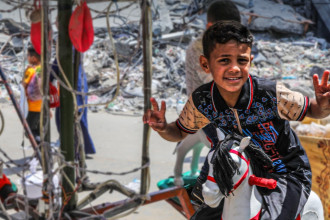
Fight numbness on Gaza by living these virtues
12 Saf 46 ◦︎ 16 Aug 2413 Min Read
At risk of desensitisation, we need to imbue four essential virtues: justice, courage, generosity, and understanding.

We must become organised like the universe
21 Muh 46 ◦︎ 27 Jul 2416 Min Read
Allah has provided us with countless constants in the universe, we should apply such organisation in our lives.

Our family’s journey from Nakba to genocide
28 Hij 45 ◦︎ 4 Jul 2411 Min Read
The life of our grandfather, Mohammad Ali Hammuda — headmaster, calligrapher, linguist, and poet — is emblematic of millions.

Students are the vanguard of justice today
8 Hij 45 ◦︎ 14 Jun 2413 Min Read
By leading anti-genocide protests for Gaza, students are sparking institutional change against oppression.
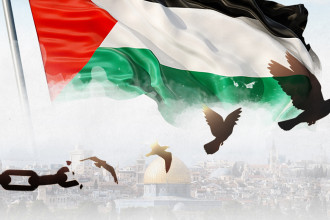
Knowing freedom in light of Palestine
18 Shw 45 ◦︎ 27 Apr 2428 Min Read
Palestine has surely taught us the real meaning of freedom, especially as it remains free despite being oppressed.

Correcting the concept of victory after the ICJ ruling
12 Sha 45 ◦︎ 22 Feb 2421 Min Read
Can you link a boy, a monk, a king, a magician, and the People of the Ditch to the recent ICJ ruling against Israel?

Have you reached the critical limit?
8 Raj 45 ◦︎ 20 Jan 2414 Min Read
When you end up at the critical limit at various points in life, divine care is always sure to follow!

The trait shared by the earliest to accept Islam
10 Jm2 45 ◦︎ 23 Dec 238 Min Read
In part three of a series on responsibility, we find that being responsible is the key to joy and freedom.
Dr. Omar Suleiman
Founder & President (CEO)
Imam Omar Suleiman is the Founder and President of the Yaqeen Institute for Islamic Research, and an Adjunct Professor of Islamic Studies in the Graduate Liberal Studies Program at SMU (Southern Methodist University).
Papers
10 items

The Palestinian Struggle Through the Prophetic Lens

Faithful Activism: A Sunnah Framework

"We Used to Have No Regard for Women": Gender Equity & the Advent of Islam

Is it Cultural or Religious? The Role of Culture in Islam

Why Laylatul Qadr? The Significance & Virtues of the Most Important Night of the Year

Islam and Violence Against Women: A Critical Look at Domestic Violence and Honor Killings in the Muslim Community

Playing the Taqiyya Card: Evading Intelligent Debate by Calling all Muslims Liars

Islam and the Abortion Debate

Exploring the Faith and Identity Crisis of American Muslim Youth

How Muhammad ﷺ Confronted Hate and Became The Most Influential Person in History
Videos
1119 items

Syria, the Umayyad Mosque, and the Messiah’s Return | Al-Aqsa: Past, Present, and Promise

Allah Will Surprise You - Embracing the Unknown | Khutbah

The Prophets, the Messiah, and the Promised Land | Al-Aqsa: Past, Present, and Promise

Consumerism and The Inflation of Self | Black Friday | Dr. Omar Suleiman

The Switch of the Qiblah: Story of Masjid Qiblatayn | Al-Aqsa: Past, Present, and Promise

Is Religion Making Us Complacent? I Dr. Omar Suleiman

The Blessed Land of Al-Sham: Palestine, Lebanon, Syria, Jordan | Al-Aqsa: Past, Present, and Promise

Did the Prophet ﷺ See You in The Future? | Dr. Omar Suleiman

Why is Quds (Jerusalem) So Special? | Al-Aqsa: Past, Present, and Promise

Who Do I Vote For? A message to American Muslims | Khutbah

Tamim al-Dari (ra): The Palestinian Sahabi That Met Dajjal | The Firsts

What if Oppression is Our Destiny? | Khutbah

Jarir ibn Abdullah (ra): The Yusuf of this Ummah | The Firsts

Earning Jannah While Watching a Genocide | Khutbah
Adi ibn Hatim al-Tai (ra): From Christian King to Companion | The Firsts
Showing 1 to 15 of 1119 results
Previous12345...75Next
Blogs
4 items

From Srebrenica to Gaza - How Systematic Dehumanization Leads to Genocide | Blog

10 Ways to Maximize Your Worship in the Last 10 Nights of Ramadan | Blog

Virtues of Shaban: How to Prepare for Ramadan Spiritually | Blog
