
Introduction
This lesson is intended for Grade 7 in Physical Education subject.
It will be focusing on individual and dual sports mainly the sport Badminton.
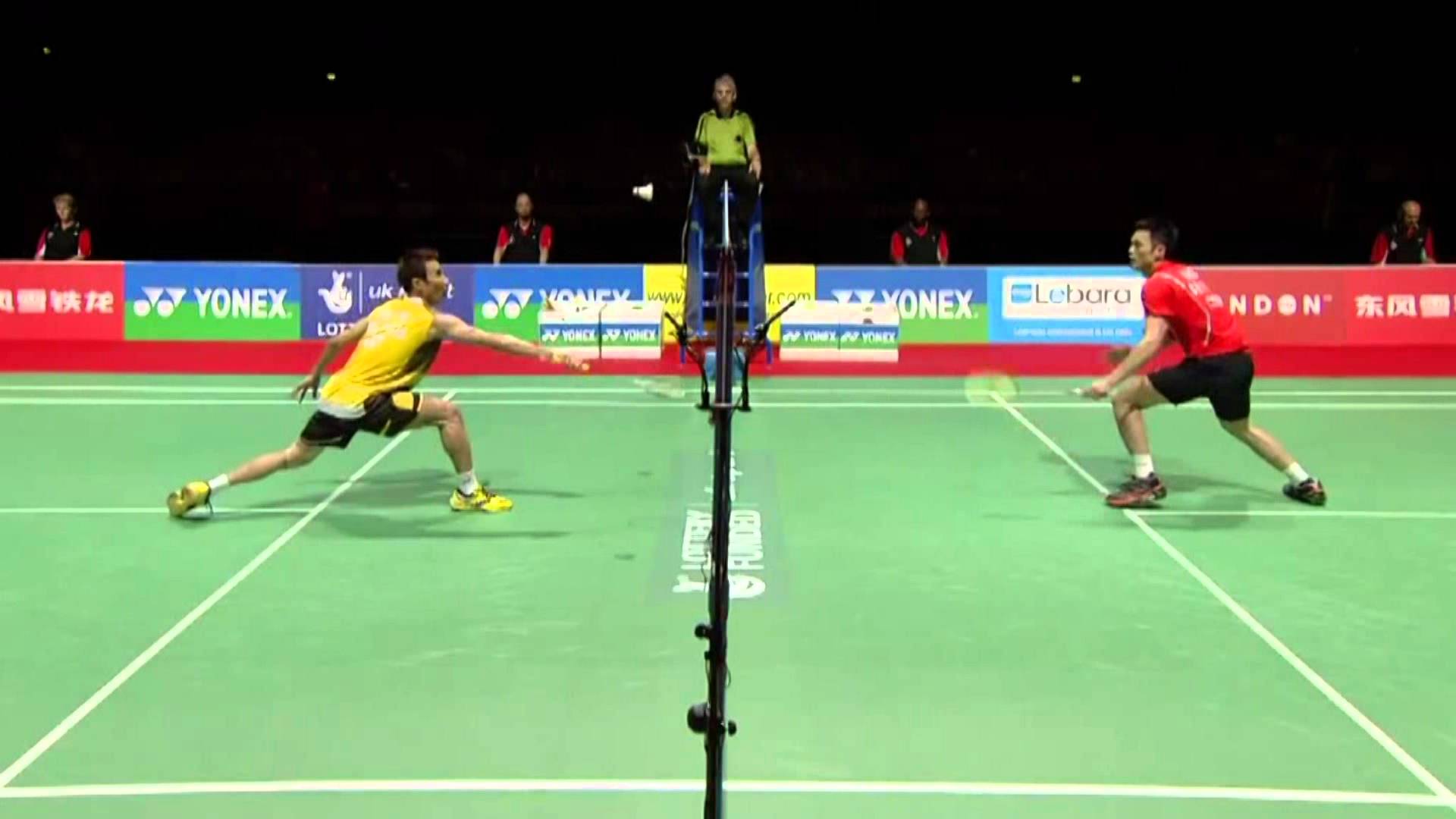
In this lesson, students will be expected to define their understanding of guidelines and principles in exercise program designed to achieve personal fitness.
Badminton is a racquet sport played by either two opposing players (singles) or two opposing pairs (doubles), who take positions on opposite halves of a rectangular court that is divided by a net. Players score points by striking a shuttlecock with their racquet so that it passes over the net and lands in their opponents' half of the court. A rally ends once the shuttlecock has struck the ground, and the shuttlecock may only be struck once by each side before it passes over the net.
Now, before you proceed to the task, write down everything you know about the sport Badminton.
____________________________________________________________________________
____________________________________________________________________________
____________________________________________________________________________
____________________________________________________________________________.
Task
At the end of the lesson, the learner will be able to know the rules of the game Badminton and will be able to appreciate the sport Badminton through reading the History and how the sport Badminton benefits in personal fitness.The learner will be able to define the rules of the game and label the Badminton playing court.
Process
To accomplish the end result of this program. Students are expected to:
1) Read the history of Badminton. https://www.britannica.com/sports/badminton
2) Equipments
- Racket
- Shuttle
- Net

3) Rules of Badminton. https://www.quora.com/What-is-the-rule-for-playing-badminton
4) Basic skills in Badminton. https://www.masterbadminton.com/badminton-basics.html
5) Benefits of playing Badminton. http://www.healthfitnessrevolution.com/top-10-health-benefits-badminton/
6) Badminton playing court. http://www.thesportguide.com/badminton-court/
Evaluation
Label the Badminton playing court. Include the measurements of the court.

Write your answer after the number.
1.
2.
3.
4.
5.
6.
7.
Dimensions ( in Meters)
8.
9.
10.
11.
12.
13.
14.
Bonus
15.
Write 5 Benefits of playing Badminton to your health.
Conclusion
I want you to go back to what you have written on what you know about Badminton and try to reflect about it.
Badminton
The game is named for Badminton, the country estate of the dukes of Beaufort in Gloucestershire, England, where it was first played about 1873. The roots of the sport can be traced to ancient Greece, China, and India, and it is closely related to the old children’s game battledore and shuttlecock. Badminton is derived directly from poona, which was played by British army officers stationed in India in the 1860s. The first unofficial all-England badminton championships for men were held in 1899, and the first badminton tournament for women was arranged the next year.
Badminton, court or lawn game played with lightweight rackets and a shuttlecock. Historically, the shuttlecock (also known as a “bird” or “birdie”) was a small cork hemisphere with 16 goose feathers attached and weighing about 0.17 ounce (5 grams).
Rules of Badminton:
Rule 1: The service is done in cross.
Rule 2: The side box is not included in play area for singles, i.e. if the shuttle falls in the side box in a singles match, it is considered as out or away (also for service)
Rule 3: If any service shuttle falls into the short service box, point is awarded to the opponent. ( Also if the service shuttle falls in the back box for doubles)
Rule 4: The player can stand anywhere between the short service line and the back box for service and can play in the whole court.
Rule 5: (points)
The game start with the score of love all i.e. 0–0. A match can be of 11 points, 15 points, 21 points or 25 points. Generally, 21 points match is played.
For singles: The player stands in the right box for service when he has zero or even number of points i.e 2,4,6,8,10,12,14,16,18 or 20 points and serves from the left box for odd number of points i.e. 1,3,5,7,9,11,13,15,17 or 19.
For doubles: In additional to serving criteria for singles, the players get alternative serves. The same player continues to serve until his serve is broken.
Breaking a service: Supose A serves and the team X ( the team A belongs) to gets the point, A continues to serve. A serves until the opposite team score a point. When the opposite team score a point. Service of A is said to be broken. Then the player from the opposite team serves. When his serve is broken, B (also belonging to team X) serves until his serve is broken.
Rule 6: In back hand service, the racket head should not be above the slow level
Rule 7: If in the game od doubles, the rackets of the partners touch each other (while hitting the shuttle) it is called a clash. If the opposite team does not hit this shuttle, they gain a point but if they hit the shuttle without appeal, the game continues.
Rule 8: If the shuttle is hit more than once (it gets hit twice sometimes), it is known as double tap and the opposite team is awarded a point.
Rule 9: When the shuttle touches the racket and gets dragged with the racket before leaving the racket i.e. it stays on the racket instead of getting hit immediately , it's called drag and the opposite team gains a point.
Rule 10: If a shuttle hits the net instead of falling on the opposite side, it is net and the opposite team gains a point. If the racket crossed the net (even slightly) while hitting the shuttle, it's called net cross and the opposite team gains a point.
Rule 11: Any shuttle falling outside the described boundaries is said to be away or out and the opposite team gains point.
Rule 12: Non-marking shoes are to be used in indoor court.
Rule 13: Enjoy playing! And don't forget about the faults!
Basic skills in Badminton
1.Forehand
2. Backhand
3. Service
4. Smash
5. Drop shot
Benefits of Playing Badminton:
- Physical fitness: Between the running, lunging, diving and ball hitting, playing badminton burns fat at approximately 450 calories per hour. This kind of cardiovascular workout can help keep you in tip top shape, especially if you’re looking for a good alternative cross-training exercise.
- Develops athleticism: The fast-paced nature of the game increases your speed and improves your reflexes. Intelligence is also a factor since players must know how to deceive their opponents in every shot.
- Increased muscle tone: Playing badminton builds and tones the quads, glutes, calves and hamstrings. In addition, your core muscles, arm and back muscles get a workout as well.
- Psychological benefits: Because badminton promotes physical fitness, it helps to reduce stress and anxiety. Exercise increases endorphins, which are the brain’s feel-good neurotransmitters, and has also been found to improve mood and sleep.
- Social health: You’ll need at least one opponent, but you can also play with a teammate and two other opponents. The social interactions of a game will result in positive feelings after a session on the court. Joining a league can also help you become part of a community.
- Good for overall health: As with all forms of physical exercise, badminton can reduce or eliminate your risk for many health problems, such as high blood pressure, diabetes and obesity. It can also reduce your risk for coronary heart disease by reducing your triglyceride levels and increasing your “good” cholesterol.
- Flexibility and muscle strength: The more you move, the more flexible you become, especially in a sport like badminton where swinging and reaching are required. In addition to improving flexibility, players also gain muscle strength and endurance.
- Mobility: As we age, mobility becomes limited, but staying active can help prevent these problems. Keeping mobile lubricates your joints, preventing arthritis and similar conditions from developing.
- Weight loss: Badminton can also help with weight control because of its fat-burning and metabolism boosting qualities. Combined with proper diet, optimal weight loss may be achieved.
- Decrease diabetes: It can decrease the production of sugar by the liver and therefore can decrease fasting blood sugar. In fact, one study from the Diabetes Prevention Program found that exercise decreased the incidence of developing diabetes by 58% even better than medication.
Credits
Teacher Page
Robert P. Basilio Jr.
Educational Technology 2
MWF 9-10am