
Introduction
You've been asked by the Board of Directors of the Museum of (not so) modern mathematics to help promote an exhibit about the golden ratio! The Board feels that people don't know enough about the golden ratio. worse yet, much of the public have come to believe the number holds mysical powers or, conversely, that it shows up repeately in nature, art, and design as a coincidence. The board is hoping that you can put together a flyer that will promote the exhibit, demonstrate some of the interesting properties of the golden ratio, and also dispell some of the myth surrounding it.

Task
The board, having an almost limitless budget, has put together the largest exhibit ever to exist on the golden ratio. Your task will be to design a flyer that will spark the public’s interest, but will also help to demystify the golden ratio. The board would like you to make the flyer by incorporating the golden ratio into the design. Your flyer should include an explanation of what the golden ratio is, examples of the golden ratio's presence in nature, art, or architecture, and an appeal to your audience as to why they should visit the exhibit. Since some of the public seem to see the golden ratio everywhere (even where it doesn't quite fit), your flyer should also address one commonly held belief about the golden ratio that is not accurate.

Process
- Ratios and proportions exist in places other than your math book. First of all, let Mr. Benjamin tell you why he is excited about the fibunacci numbers and the golden ratio at the link below
http://www.ted.com/talks/arthur_benjamin_the_magic_of_fibonacci_numbers
2. Next, look through these websites to get a better idea of how the golden ratio and Fibonacci sequences are related to each other and to the world at large.
http://www.mathsisfun.com/numbers/golden-ratio.html
https://www.khanacademy.org/math/geometry/intro_euclid/v/the-golden-ratio
http://www.mathsisfun.com/numbers/nature-golden-ratio-fibonacci.html
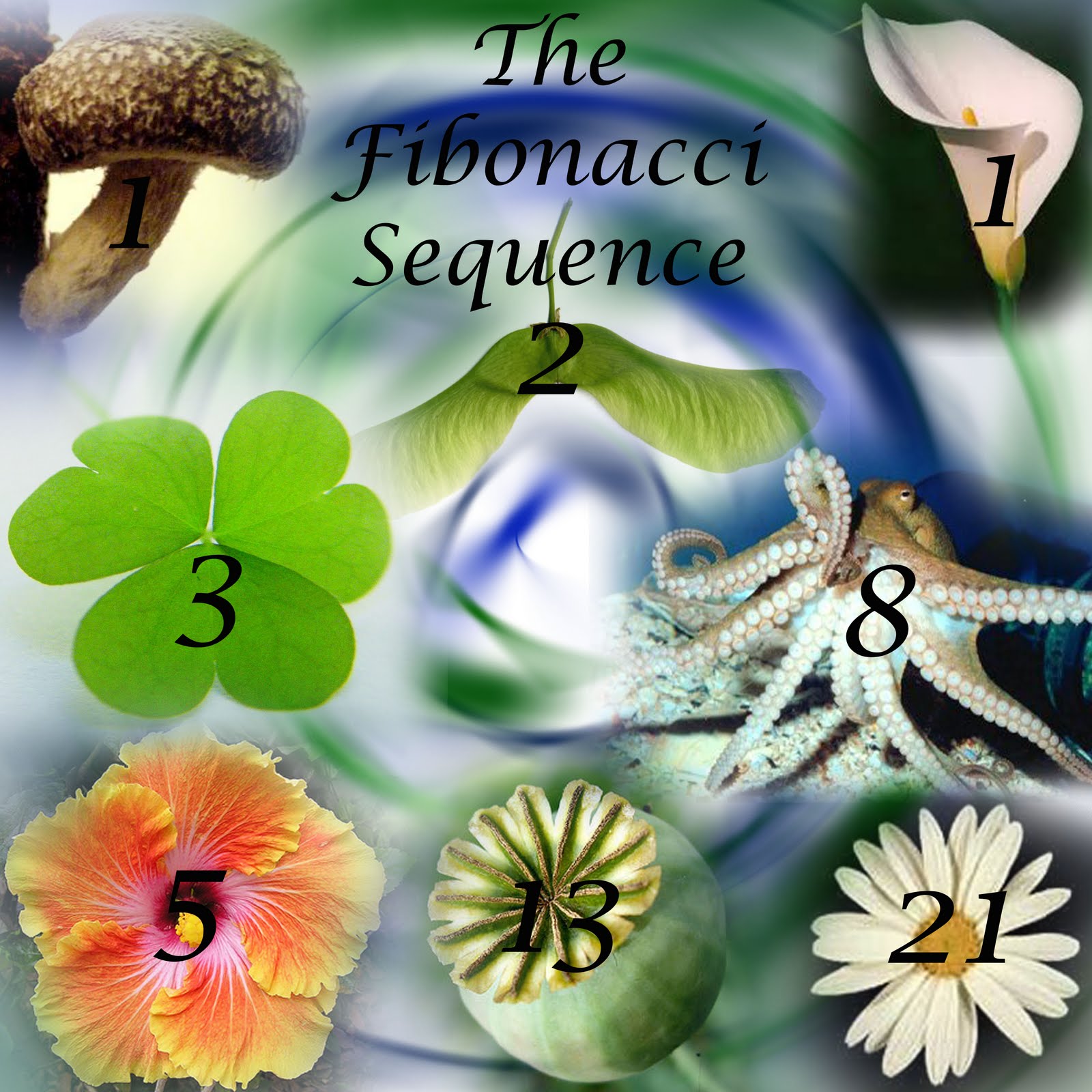
3. Decide what topic you would like your flyer to focus on: nature, space, art, the concept of beauty, architecture, or any other suitable theme in which you can find examples of the golden ratio. These websites will help you find examples and pick a theme. Find 3 examples within your theme and include an explanation of each.
https://www.youtube.com/watch?v=lOIP_Z_-0Hs&feature=youtu.be
http://io9.com/5985588/15-uncanny-examples-of-the-golden-ratio-in-nature
http://www.designmantic.com/blog/the-golden-ratio-in-design/
http://www.goldennumber.net/art-composition-design/

4. Find an example of a misconception about the golden ratio (ideally one that fits your theme), and explain why this idea is inaccurate. Some of these have been mentioned in the links above, but the following links may also be helpful for generating ideas.
http://www.goldennumber.net/golden-ratio-myth/
http://goldenratiomyth.weebly.com/index.html
5. Finally, design your leaflet layout with the golden ratio in mind (whether this means making the whole leaflet a golden rectangle, incorporating a golden spiral, using an “angle-a-tron” to make a flower with the golden ratio, or any other clever means). Make sure that your flyer includes an explanation of the golden ratio and an appeal to the public. This website may help you come up with some ideas. Include something that will grab people’s attention or spark their interest.
http://www.banskt.com/blog/golden-ratio-in-logo-designs/
Evaluation
|
Beginning 1 |
Developing 2 |
Accomplished 3 |
Exemplary 4 |
Score |
|
|
Quality of your explanation of the golden ratio |
Introduces the idea of the golden ratio and demonstrates that they know the value of the golden ratio |
Introduces the idea of the golden ratio and demonstrates a basic understanding of the concept |
Introduces the idea of the golden ratio and clearly demonstrates understanding of the concept |
Introduces the idea of the golden ratio and clearly demonstrates understanding of the concept as well as how the golden ratio and Fibonacci sequence are related |
|
|
Quality of selected examples and explanations
|
At least 2 examples were selected and they include explanations |
Al least 2 examples were selected and explanations state how they are related to the golden ratio |
At least 3 examples were selected and explanations clearly state how they are related to the golden ratio |
At least 3 examples were selected and explanations clearly state how they are related to the golden ratio. and entice the reader to learn more about the subject matter |
|
|
Stated and addressed a common misconception |
A misconception has been included and identified as such |
A possible misconception had been identified and partially addressed by the author |
A possible misconception had been identified which has been clearly addressed by the author |
A common misconception has been identified and has been thoroughly addressed by the author |
|
|
Quality of your flyer design
|
The golden ratio is somehow incorporated into the design of the flyer or the flyer laid out in a way that is visually appealing |
The flyer makes use of the golden ratio and items are laid out sensibly. |
The flyer is appealing and makes use of the golden ratio in some way |
The flyer is visually appealing, captures the audiences interest, or incorporates the golden ratio in several ways |
|
|
Quality of your appeal to the public |
Makes an appeal to the public although not necessarily a logical argument |
Presents and argument as to why the public should visit the exhibit |
Presents a well formed argument as to why the public should visit the exhibit |
Presents a well formed and convincing argument as to why the public should visit the exhibit |
|
|
creativity
|
The assignment is complete but nothing distinguishes the flyer or makes it stand out |
Flyer contains some feature that makes it different from the other design teams |
Makes use of interesting examples, design elements, or explanations |
For using unique examples, ideas, explanations, or design elements |
Conclusion
Ratios come in an infinite number of shapes and sizes (all right… maybe not shapes and sizes but there is still infinite variety) but one ratio in particular is “the most irrational.” The golden ratio has interesting properties that have made it, and the associated Fibonacci sequence, appear again and again in nature and engineering. For some reason, whether it be conditioning or something innate, human beings find the golden ratio appealing. The debate as to the real significance of the golden ratio continues, and by helping to pull members of the public into the exhibit, you also help to encourage a deeper level of interest in modern (and not so modern) mathematics anf brng the debate into the public eye

Teacher Page
Introduction
This web quest was designed as part of an assignment for Alliant International University
This lesson will be introduced on the second day of a Unity on similarity and proportionality. The purpose of the assignment is for students to apply the knowledge that they gain on day 1 of the Unit to investigate proportionality (and scaling). Through this investigation students will work with only 1 ratio (the golden ratio) and see how it applies to the natural world and to design. Through the production of a flyer, students will demonstrate their knowledge of ratios by using the golden ratio in their designs.
Learners
This lesson was designed for a “discovering geometry” class. These students have failed Geometry in the past and many of them lack basic algebra skills. The aim of the course is to expose students to geometric concepts while focusing on building their algebra skills.
Students need to know what ratios are and how to use ratios to create similar figures of different sizes. Students will need to know how to form an argument by making a claim and supporting this claim with evidence and sound reasoning.
Curriculum Standards
CCSS.MATH.CONTENT.6.RP.A.1
Understand the concept of a ratio and use ratio language to describe a ratio relationship between two quantities. For example, "The ratio of wings to beaks in the bird house at the zoo was 2:1, because for every 2 wings there was 1 beak." "For every vote candidate A received, candidate C received nearly three votes."
CCSS.MATH.CONTENT.6.RP.A.3.D
Use ratio reasoning to convert measurement units; manipulate and transform units appropriately when multiplying or dividing quantities.
Additionally, Students will present an argument in written form using evidence that they have gathered in their own research of the topic to support a claim.
Process
- Ratios and proportions exist in places other than your math book. First of all, let Mr. Benjamin tell you why he is excited about the Fibonacci numbers and the golden ratio at the link below
http://www.ted.com/talks/arthur_benjamin_the_magic_of_fibonacci_numbers
- Next, look through these websites to get a better idea of how the golden ratio and Fibonacci sequences are related to each other and to the world at large.
http://www.mathsisfun.com/numbers/golden-ratio.html
https://www.khanacademy.org/math/geometry/intro_euclid/v/the-golden-ratio
http://www.mathsisfun.com/numbers/nature-golden-ratio-fibonacci.html
- Decide what topic you would like your flyer to focus on: nature, space, art, the concept of beauty, architecture, or any other suitable theme in which you can find examples of the golden ratio. These websites will help you find examples and pick a theme. Find 3 examples within your theme and include an explanation of each.
https://www.youtube.com/watch?v=lOIP_Z_-0Hs&feature=youtu.be
http://io9.com/5985588/15-uncanny-examples-of-the-golden-ratio-in-nature
http://www.designmantic.com/blog/the-golden-ratio-in-design/
http://www.goldennumber.net/art-composition-design/
- Find an example of a misconception about the golden ratio (ideally one that fits your theme), and explain why this idea is inaccurate. Some of these have been mentioned in the links above, but the following links may also be helpful.
http://www.goldennumber.net/golden-ratio-myth/
http://goldenratiomyth.weebly.com/index.html
- Finally, design your leaflet layout with the golden ratio in mind (whether this means making the whole leaflet a golden rectangle, incorporating a golden spiral, using an “angle-a-tron” to make a flower with the golden ratio, or any other clever means). Make sure that your flyer includes an explanation of the golden ratio and an appeal to the public. This website may help you come up with some ideas. Include something that will grab people’s attention or spark their interest.
http://www.banskt.com/blog/golden-ratio-in-logo-designs/
the biggest challenge that an instructor will face will be helping students to make design decision that will allow them to demonstrate their understanding of ratios. I anticipate that when students get to the last step they may have difficulty in deciding how to incorporate the golden ratio into their flyers. The best solution would be to have a short list of ideas that you can present to students and then encourage them to build upon them, or combine them, if this does not spur their creativity.
Resources Needed
Describe what's needed to implement this lesson. Some of the possibilities:
- Class sets of computers (lab setting would be ideal)
- E-mail accounts for all students
- Software: photoshop or other image editing software
- Class set of headphones
Given the large number of students working independently, it may be helpful to have an aid or a technical expert on hand who can help to resolve technical difficulties.
Evaluation
I will consider the lesson successful if the vast majority of students are able to make a flyer design that incorporates the golden ratio at whatever scale will be required for the flyer. As a secondary objective, students in this class have been learning how to form arguments (mathematical and semantic); I will be looking to see that they can construct and present and argument to the public.
finally, my students ask me every single day how what we are learning applies to the outside world, I hope this will give them just one more connection