
Introduction
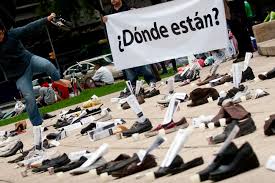
Between the years 1976 and 1983, during the Argentine 'Dirty War', approximately 30,000 citizens disappered... some without a trace.
In order to become more familiar with those who disappeared, visit the Wall of Memory.
Over 30 years have passed since the disappearances of so many Argentine citizens and their families and friends still demand justice in honor of their memory.
This webquest is designed to help students learn not only about those who vanished, but also to introduce them to the political backgrounds of the war and the memory of the disappeared that still lives on today.

"Those who cannot remember the past are doomed to repeat it."
- George Santayana
"In the Spanish language, there is no word for accountability."
- Ernesto Cussianovich
Task
The year is 1979, and you and a partner are reporters for the Columbus Dispatch. You have heard rumors of a "Dirty War" and disappearances of citizens in Argentina, but the American media (TV, newspapers, etc.) is not saying much about the subject. You decide to travel to Argentina and see for yourselves what is occuring in the country and write an article to publish in the Dispatch when you return,
In order to inform those who read your article about what is happening in Argentina, you must find out about the current government, those who are going missing, and the people who defend them.
You are the only reporters brave enough to investigate this story, so your research is very important and must be taken very seriously!
Process
You will spend 4 days in Argentina completing the research for your article.
You should write the answers to the questions on notebook paper.
Day 1- The Government
The following questions must be answered:
1. What is the capital of Argentina? What countries and/or bodies of water border the country?
2. How long did the Dirty War last? In what year did it begin and end?
3. Why is it called the Dirty War?
4. Who is in charge of the country and for how long?
5. How did he gain power? What is a coup d'etat? What is a junta?
6. What influence does the military have over the government?
Resources:
http://www.countryreports.org/country/Argentina/geography.htm
http://www.globalsecurity.org/military/world/war/argentina.htm
http://www.biography.com/people/jorge-rafa%C3%A9l-videla-40374
http://www.merriam-webster.com/dictionary/coup%20d%27%C3%A9tat
http://en.wikipedia.org/wiki/Military_junta
Day 2 - The Leftists
The following questions must be answered:
1. What do the leftists want from their government?
2. Who opposes the President of Argentina during the Dirty War?
3. What happens to those who oppose the government or who are viewed as 'suspicious'?
4. What is the National Reorganization Process? Did it help or hurt the leftists?
5. Can leftists demonstrate their political beliefs publically during this time? Why?
6. Name 2 famous leftist Argentine citizens who publically opposed the government. What did they do to show opposition? What happened to them?
Resources:
http://idontgetpolitics.co.uk/right-left-wing
http://ibhistoryryder.wikispaces.com/Peron%27s+Sources+of+Support+and+Opposition
http://tvtropes.org/pmwiki/pmwiki.php/UsefulNotes/NationalReorganizationProcess
http://aliciapatterson.org/stories/argentinas-dirty-war
Day 3 - Los desaparecidos
The following questions must be answered:
1. Why are they referred to as "disappeared"?
2. In general, who are the disappeared? About how old are they?
3. Who was targeted for kidnappings?
4. Approximately how many people have been kidnapped?
5. Who is responsible for the kidnappings?
6. What is the government doing about this problem?
7. What are some things that happen to them after they have been kidnapped?
Resources:
http://digitalunion.osu.edu/r2/summer06/herbert/dirty_war/desaparecidos.html
http://www.bbc.com/news/world-latin-america-21884147
http://www.yendor.com/vanished/
Day 4 - Las madres y las abuelas de la plaza del mayo
The following questions must be answered:
1. Why was the association Las madres de la plaza de mayo (Mothers of the Plaza Mayo) founded?
2. Why was the associating Las abuelas de la plaza de mayo (Grandmothers of the Plaza May) founded?
2. What are the 'madres' searching for? What are the 'abuelas' searching for?
3. When was the "madres" association founded? Who were the main founders?
4. When did the madres first march in front of the presidential palace?
5. What do their white scarves symbolize?
6. What happened to children who were born to imprisoned parents or who were kidnapped during the Dirty War?
Resources:
http://www.womeninworldhistory.com/contemporary-07.html
http://www.tolerance.org/activity/madres-de-plaza-de-mayo
http://www.abuelas.org.ar/english/history.htm
http://womennewsnetwork.net/2010/10/21/argentina-mothers/
http://en.wikipedia.org/wiki/Mothers_of_the_Plaza_de_Mayo
http://en.wikipedia.org/wiki/Grandmothers_of_the_Plaza_de_Mayo
Evaluation
When you have completed your research, you and your partner will return to the United States to write your article for the Dispatch. Your article should meet all of the following criteria for full credit:
-Your article should have an interesting title to catch your reader's attention. Make them want to read it!
-You should include both your name and your partner's name as authors.
-The body of your article should contain the following:
- Introduce the Dirty War - What was it? Who was in charge? When did it begin? Etc.
- Talk about the disappearances - Who is responsible? Who is disappearing? Who is defending them and their memory? Etc,
- What should your readers do next? Now that your readers are informed, what actions do you suggest they take to stop these actions?
- Your article may be handwritten (neatly) or typed and printed in English.
- Your article must be at least 3 paragraphs long (as outlined above) and should include no fewer than 5-7 sentences per paragraph (15-21 sentences total).

Rubric:
Your research and article will be graded based upon a rubric, which Mrs. Porterfield will give to you. This research and article is worth 40 points of your quarter grade.
Conclusion
Congratulations! You have completed the webquest!

By completing the webquest, you have demonstrated mastery of the following:
1. Utilizing internet resources to uncover information.
2. Working as a team to conduct research.
3. Utilizing technological resources and 21st century skills.
4. Understanding the influences of the Dirty War in Argentina.
5. New Spanish vocabulary words.
Credits
Full credit is given to the authors of all websites listed for student research on the 'Process' section of the webquest.
Mrs. Porterfield would also like to thank the authors of the following webquests for creating excellent examples from which she could base her first webquest.
THANK YOU! THANK YOU! THANK YOU!
- Maquina del tiempo by Señorita Duffield
- Advanced Spanish Student Webquest by S.Casares
Teacher Page
This webquest was developed as part of a cultural unit focusing on the Dirty War in Argentina and the human rights violations that occured during that time. This webquest will be the first activity in the unit, in which students will learn about the Dirty War, the government during that time period, the disappeared and the mothers & grandmothers of the Plaza Mayo. After completing the webquest, students will watch and analyze the movie "La historia oficial" and/or "Cautiva" (I haven't decided which yet!) and will read the short novel The Disappeared by Gloria Whelan in English.
This 4-5 week unit was designed for use in my 7th grade Spanish classroom. I have used mostly English resources as my students' knowledge of Spanish is very limited. We are focusing more on the culture than the language in this unit!
[img_assist|nid=20881|title=flag|desc=|link=none|align=center|width=276|height=183]
ACTFL Standards addressed in the webquest:
Standard 1.2 Students understand and interpret written and spoken language on a variety of topics.
Standard 2.1 Students demonstrate an understanding of the relationship between the practices and perspectives of the culture studied.
Standard 3.1 Students reinforce and further their knowledge of other disciplines through the foreign language.
Standard 4.2 Students demonstrate understanding of the concept of culture through comparisons of the cultures studied and their own.