
Introduction
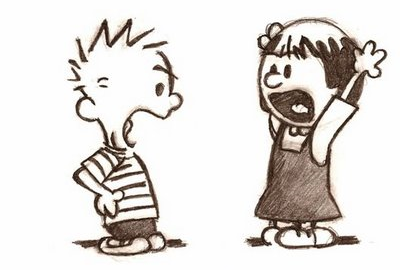
All good stories have conflict – and not necessarily the epic battle-style of conflict. The conflicts that bring characters alive are the smaller conflicts that occur between two people, a small group and the internal conflicts we deal with on a daily basis.
Conflict adds an incredible amount of depth to characters and the plot of the story. Without conflict, a story falls flat. No one wants to read about Joe Schmoe and his easy life where everything goes his way.
Understanding conflict is essential to comprehending all the layers of meaning a story offers.
Task
Imagine you are answering an advertisement for a job with a major Hollywood studio! They have a screenplay that needs work and they want you to save the day! It seems the screenplay lacks conflict.
To get the job, you need to prove to them that you can create conflict in a film. To do this, you will need to understand the four basic literary conflicts, make a plan for short video clip that demonstrates one of the conflict types , shoot the video with an iPad, then edit the scene using WeVideo. You will show your videos to the studio executives!
Good luck!
Process
1. You will be assigned a group of four.
2. Every member will research the four literary conflicts and the group will return to class with three examples of either films or novels from each of the four types (click on each one to see the explanation):
3. You will view some You Tube videos and identify which type of conflict is represented in the video clip. You will hand in a worksheet to the teacher. Each group member is responsible for handing this in!
4. The group will then choose one of the conflicts to shoot. You will make your own video clip of a scene that demonstrates your chosen conflict.
5. As a group, you will plan for your scene. To help you, click here to plan your ideas. NOTE: Physical combat is not allowed! Show conflict without violence.
6. You will shoot your scene with an iPad. Each group member MUST have a job. The four jobs are: DIRECTOR (says "action" and "cut." Discusses with the actor(s) how they might interpret and carry out their action; PRODUCER (makes sure everything/everyone is working and that the director stays true to the decisions of the group; says "quiet on the set;" and asks loud groups to be quiet for their taping); CINEMATOGRAPHER: operates the camera; and ACTOR(s) (if more than one is necessary, individuals can take on more than one roll or trade off roles during production.)
7. You will edit your scene using . When you edit your video clip using WeVideo adding text at the beginning and end of the clip.
Beginning text: A title for the video clip
Ending text: An explanation of why this scene effectively portrays the conflict.
8. You will peer review the other groups' work.
Evaluation
Literary Conflict Video WebQuest Rubric
Group # ___________
|
CATEGORY |
4 |
3 |
2 |
1 |
Score |
|
Teamwork |
All students contribute to the discussion and all are listened to respectfully. All team members contribute a fair share of the work. |
Most students contribute to the discussion and are listened to respectfully. All team members contribute a fair share of the work. |
Most students contribute to the discussion and are listened to respectfully. Most team members contribute a fair share of the work. |
Meetings are not held AND/OR some team members do not contribute a fair share of the work. |
|
|
Use of Conflict
(2x value) |
Maintains a clear focus on the literary conflict and illustrates the conflict clearly |
Focuses on the conflict and illustrates the conflict rather clearly |
Some evidence of communicating with an audience the specific conflict |
Limited awareness of the conflict; conflict may be hard to figure out |
|
|
Editing |
Engaging; cuts are smooth and unnoticeable; superior knowledge of editing technique; video is no more than 2 minutes |
Engaging; cuts are smooth and somewhat unnoticeable; good knowledge of editing technique; video is no more than 2 minutes |
Some pacing problems; cuts are sloppy or noticeable; fair amount of editing technique shown; video may be over 2 minutes or too short with less than 1 minute |
Pacing is off; cuts are jumpy; shows little knowledge of editing technique; video may be over 2 minutes or too short with less than 1 minute |
|
|
Audience Reception |
Audience is deeply and emotionally engaged. |
Audience is emotionally engaged. |
Audience lapses in emotional engagement. |
Audience has little to no emotional engagement. |
|
|
Total points
Grade |
_____ /20 |
Conclusion
You've done it! You were able to illustrate in visual terms basic literary conflict!!
You got the job! Pack your bags,

you're going to Hollywood!

When you have finished this WebQuest, make sure you have completed:
- Your own three examples of the four literary conflicts.
- The Worksheet matching the silent films to the literary conflicts.
- A "silent film" no more than 2 minutes in length.
- A Peer Review Sheet as you rate the other groups' videos.