
Introduction
Capital punishment in the Philippines has a varied history and was suspended on June 24, 2006—the second time since 1987.
Filipinos have mixed opinions about the death penalty, with many opposing it on religious and humanitarian grounds, while advocates viewing it as a way of deterring crimes.
Introduction to the Death Penalty
The first established death penalty laws date as far back as the Eighteenth Century B.C. in the Code of King Hammaurabi of Babylon, which codified the death penalty for 25 different crimes. The death penalty was also part of the Fourteenth Century B.C.'s Hittite Code; in the Seventh Century B.C.'s Draconian Code of Athens, which made death the only punishment for all crimes; and in the Fifth Century B.C.'s Roman Law of the Twelve Tablets. Death sentences were carried out by such means as crucifixion, drowning, beating to death, burning alive, and impalement.
In the Tenth Century A.D., hanging became the usual method of execution in Britain. In the following century, William the Conqueror would not allow persons to be hanged or otherwise executed for any crime, except in times of war. This trend would not last, for in the Sixteenth Century, under the reign of Henry VIII, as many as 72,000 people are estimated to have been executed. Some common methods of execution at that time were boiling, burning at the stake, hanging, beheading, and drawing and quartering. Executions were carried out for such capital offenses as marrying a Jew, not confessing to a crime, and treason.
The number of capital crimes in Britain continued to rise throughout the next two centuries. By the 1700s, 222 crimes were punishable by death in Britain, including stealing, cutting down a tree, and robbing a rabbit warren. Because of the severity of the death penalty, many juries would not convict defendants if the offense was not serious. This lead to reforms of Britain's death penalty. From 1823 to 1837, the death penalty was eliminated for over 100 of the 222 crimes punishable by death. (Randa, 1997)
Britain influenced America's use of the death penalty more than any other country. When European settlers came to the new world, they brought the practice of capital punishment. The first recorded execution in the new colonies was that of Captain George Kendall in the Jamestown colony of Virginia in 1608. Kendall was executed for being a spy for Spain. In 1612, Virginia Governor Sir Thomas Dale enacted the Divine, Moral and Martial Laws, which provided the death penalty for even minor offenses such as stealing grapes, killing chickens, and trading with Indians.
Laws regarding the death penalty varied from colony to colony. The Massachusetts Bay Colony held its first execution in 1630, even though the Capital Laws of New England did not go into effect until years later. The New York Colony instituted the Duke's Laws of 1665. Under these laws, offenses such as striking one's mother or father, or denying the "true God," were punishable by death. (Randa, 1997)
The abolitionist movement finds its roots in the writings of European theorists Montesquieu, Voltaire and Bentham, and English Quakers John Bellers and John Howard. However, it was Cesare Beccaria's 1767 essay, On Crimes and Punishment, that had an especially strong impact throughout the world. In the essay, Beccaria theorized that there was no justification for the state's taking of a life. The essay gave abolitionists an authoritative voice and renewed energy, one result of which was the abolition of the death penalty in Austria and Tuscany. ( Schabas 1997)
American intellectuals as well were influenced by Beccaria. The first attempted reforms of the death penalty in the U.S. occurred when Thomas Jefferson introduced a bill to revise Virginia's death penalty laws. The bill proposed that capital punishment be used only for the crimes of murder and treason. It was defeated by only one vote.
Also influenced was Dr. Benjamin Rush, a signer of the Declaration of Independence and founder of the Pennsylvania Prison Society. Rush challenged the belief that the death penalty serves as a deterrent. In fact, Rush was an early believer in the "brutalization effect." He held that having a death penalty actually increased criminal conduct. Rush gained the support of Benjamin Franklin and Philadelphia Attorney General William Bradford. Bradford, who would later become the U.S. Attorney General, led Pennsylvania to become the first state to consider degrees of murder based on culpability. In 1794, Pennsylvania repealed the death penalty for all offenses except first degree murder. (Bohm, 1999; Randa, 1997; and Schabas, 1997)
In the early to mid-Nineteenth Century, the abolitionist movement gained momentum in the northeast. In the early part of the century, many states reduced the number of their capital crimes and built state penitentiaries.In 1834, Pennsylvania became the first state to move executions away from the public eye and carrying them out in correctional facilities.
In 1846, Michigan became the first state to abolish the death penalty for all crimes except treason. Later, Rhode Island and Wisconsin abolished the death penalty for all crimes. By the end of the century, the world would see the countries of Venezuela, Portugal, Netherlands, Costa Rica, Brazil and Ecuador follow suit. (Bohm, 1999 and Schabas, 1997).
Although some U.S. states began abolishing the death penalty, most states held onto capital punishment. Some states made more crimes capital offenses, especially for offenses committed by slaves. In 1838, in an effort to make the death penalty more palatable to the public, some states began passing laws against mandatory death sentencing instead enacting discretionary death penalty statutes. The 1838 enactment of discretionary death penalty statutes in Tennessee, and later in Alabama, were seen as a great reform. This introduction of sentencing discretion in the capital process was perceived as a victory for abolitionists because prior to the enactment of these statutes, all states mandated the death penalty for anyone convicted of a capital crime, regardless of circumstances. With the exception of a small number of rarely committed crimes in a few jurisdictions, all mandatory capital punishment laws had been abolished by 1963. (Bohm, 1999)
 During the Civil War, opposition to the death penalty waned, as more attention was given to the anti-slavery movement. After the war, new developments in the means of executions emerged. The electric chair was introduced at the end of the century. New York built the first electric chair in 1888, and in 1890 executed William Kemmler. Soon, other states adopted this execution method. (Randa, 1997)
Early and Mid-Twentieth Century
Although some states abolished the death penalty in the mid-Nineteenth Century, it was actually the first half of the Twentieth Century that marked the beginning of the "Progressive Period" of reform in the United States. From 1907 to 1917, six states completely outlawed the death penalty and three limited it to the rarely committed crimes of treason and first degree murder of a law enforcement official. However, this reform was short-lived. There was a frenzied atmosphere in the U.S., as citizens began to panic about the threat of revolution in the wake of the Russian Revolution. In addition, the U.S. had just entered World War I and there were intense class conflicts as socialists mounted the first serious challenge to capitalism. As a result, five of the six abolitionist states reinstated their death penalty by 1920.(Bedau, 1997 and Bohm, 1999)
In 1924, the use of cyanide gas was introduced, as Nevada sought a more humane way of executing its inmates. Gee Jon was the first person executed by lethal gas. The state tried to pump cyanide gas into Jon's cell while he slept, but this proved impossible, and the gas chamber was constructed. (Bohm, 1999)
From the 1920s to the 1940s, there was a resurgence in the use of the death penalty. This was due, in part, to the writings of criminologists, who argued that the death penalty was a necessary social measure. In the United States, Americans were suffering through Prohibition and the Great Depression. There were more executions in the 1930s than in any other decade in American history, an average of 167 per year. (Bohm, 1999 and Schabas, 1997)
In the 1950s, public sentiment began to turn away from capital punishment. Many allied nations either abolished or limited the death penalty, and in the U.S., the number of executions dropped dramatically. Whereas there were 1,289 executions in the 1940s, there were 715 in the 1950s, and the number fell even further, to only 191, from 1960 to 1976. In 1966, support for capital punishment reached an all-time low. A Gallup poll showed support for the death penalty at only 42%. (Bohm, 1999 and BJS, 1997)
Task
Spanish and American periods
 A 1901 execution at the Old Bilibid Prison, Manila, Philippines
During Spanish colonial rule, the most common methods of execution were death by firing squad (especially for treason/military crimes, usually reserved for independence fighters) and garrotte (a notable case would be the Gomburza). Death by hanging was another popular method.
A prominent example is the national hero, José Rizal, who was executed by firing squad on the morning of December 30, 1896, in the park that now bears his name.[1]
In 1926, the electric chair (Spanish: silla eléctrica; Filipino: silya eléktrika) was introduced by the United States' colonial Insular Government, making the Philippines the only other country to employ this method. The last colonial-era execution took place under Governor-General Theodore Roosevelt, Jr. in February 1932. There were no executions under Manuel L. Quezon, the first President of the Commonwealth.[2]
1946 to 1986
The capital crimes after regaining full sovereignty in July 1946 were murder, rape and treason. However, no executions took place until April 1950,[3] when Julio Gullien, executed for attempting to assassinate President Manuel Roxas;.[4] Other notable cases includes Marciál "Baby" Ama, electrocuted at the age of 16 on October 4, 1961 for murders committed while in prison for lesser charges.[5] Ama notably became the subject of the popular 1976 film, Bitayin si... Baby Ama! (Execute Baby Ama!).[6]
Another famous case was of former powerful Governor of Negros Occidental Rafael Lacson and 22 of his allies, condemned to die in August 1954 for the murder of a political opponent.[7] Ultimately, Lacson was never executed.
In total, 51 people were electrocuted up to 1961. Execution numbers climbed under President Ferdinand Marcos, who was ironically himself sentenced to death in 1939 for murder of Julio Nalundasan—the political rival of his father, Mariano; the young Ferdinand was acquitted on appeal. A well-publicised triple execution took place in May 1972, when Jaime José, Basilio Pineda, and Edgardo Aquino were electrocuted for the 1967 abduction and gang-rape of the young actress Maggie dela Riva. The state ordered that the executions be broadcast on national television.[8]
Under the Marcos regime, drug trafficking also became punishable with death by firing squad, such as the case with Lim Seng, whose execution in December 1972 was also ordered broadcast on national television. Future President and then Chief of the Philippine Constabulary, General Fidel V. Ramos, was present at the execution.[9]
The electric chair was used until 1976, when execution by firing squad eventually replaced it as the sole method of execution. Under Marcos' 20-year authoritarian rule, however, countless more people were summarily executed, tortured, or simply disappeared for opposition to his rule.[neutrality is disputed]
After Marcos was deposed in 1986, the newly drafted 1987 Constitution limited the application of the death penalty to only a few crimes. This meant that it was abolished in practice, making the Philippines the first Asian country to do so.
Reinstatement and moratorium
President Fidel V. Ramos promised during his campaign that he would support the reintroduction of the death penalty in response to increasing crime rates. The new law, drafted by Ramos, restored capital punishment by defining "heinous crimes" as everything from murder to stealing a car.
This law provided the use of the electric chair until the gas chamber (chosen by the government to replace electrocution) could be installed.
The death of Leo Echegaray in 1999 by lethal injection took place under Ramos' successor, Joseph Estrada, marking the first execution after the reinstatement of the death penalty. Following on a personal appeal by his spiritual advisor, Bishop Teodoro Bacani, Estrada called a moratorium in 2000 to honour the bimillenial anniversary of Christ's birth.[10] Executions were resumed a year later.
Estrada's own successor, Gloria Macapagal Arroyo, was a vocal opponent and also approved a moratorium, but later permitted executions and denied pardons.
Second suspension
 An old embarkation card (erroneously) warning visitors of the death penalty for drug trafficking. The caveat has since been removed from subsequent versions.
On 15 April 2006, the sentences of 1,230 death row inmates were commuted to life imprisonment, in what Amnesty International believes to be the "largest ever commutation of death sentences".[11]
Capital punishment was again suspended via Republic Act No. 9346, which was signed by President Gloria Macapagal-Arroyo on 24 June 2006. The bill followed a vote held in Congress earlier that month which overwhelmingly supported the abolition of the practise.[12] The penalties of life imprisonment and reclusion perpetua (detention of indefinite length, usually for at least 30-years) replaced the death penalty.[13] Critics of Arroyo's initiative called it a political move meant to placate the Roman Catholic Church, some sectors of which were increasingly vocal in their opposition to her rule.
Process
Once the police have reason to believe you are the person who commited a capital crime they arrest you. If the case looks solid and there seems to be sufficient evidence that you did indeed commit the crime, the District Attorney asks that you be arraigned and a court trial date is set in a county felony court or district court that tries capital cases. At this point it is decided whether or not you are eligible for bail.
Next comes the trial. Assuming there is no mistrial and that the prosecution proves its case, you are then convicted of the crime. Once you have been convicted of a captial crime your case then goes to the penalty phase, where the jury decides whether the death penalty should indeed be imposed and where sentence of death is actually pronounced.
You are then transferred to the prison where Death Row is. Once on death row, you are allowed one and only one appeal. However, this can take years because the appeal has to go through multiple steps. It took 17 years for the man who shot and killed my friend's fiance to actually be executed.
After a judgment of death has been pronounced, a defendant's appeal process must pass through four basic levels/stages of reviewing his conviction and sentence before the state can kill her/him: i. Automatic Appeal, ii. State Habeas Corpus Petition, iii. Federal Habeas Corpus Petition, and iv. Clemency. The appeal process is intended as a safeguard of a citizen's Constitutional Rights (state & federal), and demands that a defendant have access to every level of America's court system; it's called "Due Process."
Once the appeal has been exhausted and clemency denied an execution date is set. Execution method depends on the state the convict is in. Prior to the actual execution, the prisoner is often allowed a visit with family, and always allowed a visit with a minister or priest, and a last meal (see http://www.deadmaneating.com/dmearch.html if you want to know exactly what these last meals have comprised).
Currently lethal injection is the method used or allowed in 37 of the 38 states which allow the death penalty. Nebraska requires electrocution. Other states also allow electrocution, gas chambers, hanging and the firing squad. Regardless of the method, an hour or two before the execution, the condemned person is offered religious services, and a last meal. Executions are carried out in private with only invited persons, prison staff and a medical doctor able to view the proceedings.
The body is then released to the family for burial if there is family who wishes to claim the body, or buried by the state.
---------------------------------------------
----------------
Evaluation
MANILA, Philippines—The hearing of a Senate panel on the proposed re-imposition of the death penalty in the Philippines was met by strong opposition on Tuesday from various groups led by the Catholic Bishops’ Conference of the Philippines (CBCP).
Rev. Fr. Jerome Secillano, executive secretary of the CBCP, read before the Senate committee on justice joint with committees on constitutional amendments and public order the statement of CBCP President, Archbishop Socrates Villegas, describing the death penalty as “cruel” and “inhumane.”
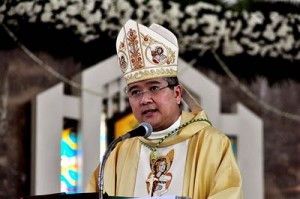
Archbishop Socrates Villegas. FILE PHOTO
“There is something terribly self-contradictory about the death penalty, for it is inflicted precisely in social retaliation to the violence unlawfully wielded by offenders. But in carrying out the death penalty, the State assumes the very posture of violence that it condemns,” read the statement, which was signed last July 2, 2014.
Villegas said death penalty is “cruel and inhumane in two senses.”
“First, the terrible anxiety and psychological distress that come on one who awaits the moment of execution constitute the cruel and inhuman punishment that most legal systems today proscribe including the Constitution of our country. It has been rightly said that the anticipation of impending death is more terrible a torture than suffering death itself,” he said.
“Second, the members of the family of the condemned persons, many times including children, are, for their life-times, stigmatized as members of the family of an executed person, bearing with them the price of a crime they never committed,” he further said.
The most important consideration, the CBCP said, is the “imperfection of our judicial system.”
“While the CBCP has every respect for respectable judges, the fact is that the judicial system — including the process of evaluating and weighing evidence — is, like all human systems, liable to error,” said the statement.
“But the death penalty, once executed, is irreversible and no repentance or regret can ever make up for the horrible injustice of a person wrongfully executed.”
The CBCP also pointed out as a state-party to the Second Optional Protocol of the Covenant on Civil and Political Rights, the Philippines assumed its principal obligation to abolish the death penalty.
“We cannot and should not renege on our international obligations, especially when these are not only lawful but moral. Pacta sunt servanda is not only a legal principle. It is key ethical imperative as well,” Villegas added.
The Philippine Human Rights Center or PhilRights, represented in the hearing by Nymia Simbulan, also “strongly” opposed the reimposition of the death penalty, also citing the country’s obligation to the international covenant on civil and political rights and a series of UN resolutions against the use of the death penalty.
“There’s no place for state-sanctioned killing in a modern justice system,” Simbulan said.
She said it would be “embarrassing for the Philippines to spouse universal abolition at the international arena while taking thousands of steps back to the dark ages of state sanctioned execution.”
“In deliberating on the prosed measure, we respectfully request this august body to consider the above mentioned points and to kill the bill reimposing the death penalty…” Simbulan added.
Amnesty International said it also opposes the death penalty in all cases without exemption “regardless of the nature of the crime, the characteristic of the offender or the method used by the state to kill the prisoner.”
“The death penalty is the ultimate denial of human rights,” Wilnor Papa, campaign coordinator of Amnesty International, told the committees.
Papa said death penalty is “discriminatory” and often use “disproportionately against the poor, the minority and members of racial, ethnic and religious community.”
“It is imposed and carried out arbitrarily,” he added.
Read more: http://newsinfo.inquirer.net/657514/cbcp-other-groups-oppose-death-penalty-reimposition#ixzz3OasBTzKJ
Follow us: @inquirerdotnet on Twitter | inquirerdotnet on Facebook
Conclusion
“TO ABOLISH OR NOT TO ABOLISH THE DEATH PENALTY LAW”
05/07/2006 at 18:25 (Social Issues)
Sometime in 1999, Leo Echegaray was the first to have gone through lethal injection. He was sentenced to suffer the death penalty for raping his stepdaughter, Baby.
According to Republic Act 7659 or the Death Penalty Law, An Act to Impose Death Penalty on Certain Heinous Crimes, Amending for that Purpose the Revised Penal Laws and for Other Purposes, specifically Art. 335, “The death penalty shall also be imposed if the crime of rape is committed with any of the following attendant circumstances:
1. When the victim is under eighteen (18) years of age and the offender is a parent, ascendant, step-parent, guardian, relative by consanguinity or affinity within the third civil degree, or the common-law spouse of the parent of the victim.
2. …x x x
Because of the foregoing, Echegaray was found guilty.
For death penalty to apply, the offense committed must be a heinous crime which, according to the law, must be grievous, odious and hateful and which, by reason of their inherent or manifest wickedness, viciousness, atrocity and perversity are repugnant and outrageous to the common standards and norms of decency and morality in a just, civilized and ordered society.
It is not only the crime of rape that is punishable by death. Other crimes, depending on their attendant circumstances, like treason, qualified piracy, parricide, murder, kidnapping, robbery and arson also carries with it the penalty of death.
On June 24, 2006, President Gloria Macapagal-Arroyo signed Republic Act no. 9346 or “An Act Prohibiting the Imposition of Death Penalty in the
Philippines. Because of this, the Arroyo government has gained criticisms. To the aggrieved parties – condemnation and to the accused and sentenced to death – Hope!
But for me, it is therefore necessary for us to consider both sides of the issues before jumping into a desirable conclusion.
The following are the cited disadvantages of the law: (1) death penalty fails to rehabilitate.
It is not true that when there is “fear of death” it will prevent one from committing a crime because most crimes are done on the “heat of passion”, that is when a person cannot think rationally.
(2) Death penalty failed as a deterrent. Death is one penalty which makes error irreversible and the chance of error is inescapable when based on human judgment. Contrary to public belief, the death penalty does not act as a deterrent to crime based on studies and researches conducted. “Expert after expert and study after study have emphasized and emphasized the lack of correlation between the threat of the death penalty and the occurrence of violent crime”(Meador 69).
Actual statistics about the deterrent value of capital punishment are not available because it is impossible to know who may have been deterred from committing a crime.
(3) Death penalty does not discourage crime. Everyday there are many reports of robbery hold-up, murder and kidnapping. It is noted that what we need is an extreme penalty as a deterrent to crime. This could be a strong argument if it could be proved that the death penalty discourages murderers and kidnappers.
(4) Conviction of the innocent occurs. “It is better to free a criminal than kill an innocent man”. Conviction of the innocent does occur and thus resulted to miscarriage of judgment and it is irrevocable.
(5) Death penalty violates human dignity/rights. An argument against the death penalty is the basic moral issue of conservation of human rights and humanity. The argument of retribution would be even easier to dismiss if it consisted only of a base thirst for revenge. According to the opponents of the death penalty, “it demeans the moral order and execution is not legalized murder – nor is imprisonment legalized kidnapping – but it is the coldest, most premeditated for of homicide of all. It does something almost worse than lowering the state to the moral level of the criminal: it raises the criminal to moral equality with the social order” (Hertzberg, 49). Indeed, one of the ironies of death penalty is that it focuses attention and sympathy on the criminal.
Despite the presence of several disadvantages, the law also has advantages.
(1) Death feared. Most people have a natural fear of death – it’s a trait man have to think about before acting. The death penalty is important because it could save the lives of thousands of potential victims who are at stake. Death is an experience that cannot be experienced and ends all experience. Because it is unknown as it is certain, death is universally feared.
(2) Innocent executed – no proof. According to those who are anti-death penalty law, there were lots of innocent men wrongly executed. But there was no proof to the contrary!
(3) Death penalty saves lives. There is never a chance given to criminals to “pay-back” or commit revenge to the family members of the victims who never stopped until the case is closed. Repeat murders are eliminated and foreseeable murders are deterred. Potential victims are avoided. One must consider the victim as well as the defendant. Hence, the death penalty is vital to protect a person’s right to live!
(4) Death penalty deterrent effect. If we do not know whether the death penalty will deter others from committing a crime, we will be confronted with two uncertainties. If we have the death penalty and achieve no deterrent effect, then, the life of convicted criminals has been expanded in vain. If we have the death sentence, and deter future murderers, we spared the lives of future victims – the prospective murderers gain, too; they are spared from punishment because they were deterred.
Death penalty is not excessive, unnecessary punishment, for those who knowingly and intentionally commits murder in premeditation to take lives of others. Even though it is not used more often, it is still a threat to the criminals.
(5) Less expensive. The belief that execution is more expensive than imprisonment is false. The expenses in maintaining in prison many criminals for almost their lifetime far outweighs the cost of the apparatus and maintenance of the procedures attending the death penalty.
These are only some among the many advantages and disadvantages provided by the proponents and opponents of the death penalty law.
If people will weigh the arguments properly, and have empathy for the victims, they will be more inclined to favor the death penalty. Death penalty help to curtail future murderers thus, can save more lives, more innocent lives. In a moralist point of view, on the other hand, it is a mortal sin to take another’s life. That we need not put the law into our own hands. That there is God who will judge each one on Earth with fairness and equality.
Whether or not death penalty law is enforced, the effectiveness of which depends on its implementation and execution and the quality of our criminal justice system. It is an internal problem. It is to be noted however, that in our society, seldom have we found a rich and wealthy criminal sentenced to death or even sent to jail. Because it is them who can afford to avail the services of a great lawyer who can twist and turn the arguments.
The recent admission of Chief Justice Artemio Panganiban that a “judicial error” has been committed in the conviction and execution of Leo Echegaray has prompted a hail of criticisms regarding the infallibility of the High Court magistrates. According to Panganiban, Echegaray should only be penalized by reclusion perpetua since it was not proven during the trial that he was the father, step-father or grandfather of the victim, a qualifying circumstance for him to have been meted the capital punishment.
The existence or non-existence of a death penalty law is not an accurate measure for one to say that security and peace in the society cannot be fully achieved. It will all depend on us. If we are only God fearing and morally upright, responsible enough to know the consequences of our actions, no penalty of any sort is necessary.
But it is indeed true that there is no perfect society. All we have are only wishes and hopes to at least have a community that supports the needs of the inhabitants in an orderly manner.
Whether or not to abolish the death penalty law is a question that will forever be talked about. One cannot actually say yes to it if he has been a victim or a relative of such injustice, so to speak. Once death penalty it is carried out there is no reversing the outcome. Death penalty is a matter of justice and equality.
Thus, we need to weigh both sides of the arguments carefully and make our decisions based on the action that will serve the best humanitarian purpose of criminal law.
Credits
http://askville.amazon.com/process-death-penalty-starting-arrest-execut…
http://en.wikipedia.org/wiki/Capital_punishment_in_the_Philippines
https://jennyjavier.wordpress.com/2006/07/05/to-abolish-or-not-to-aboli…
http://newsinfo.inquirer.net/657514/cbcp-other-groups-oppose-death-pena…
http://www.deathpenaltyinfo.org/part-i-history-death-penalty