
Introduction
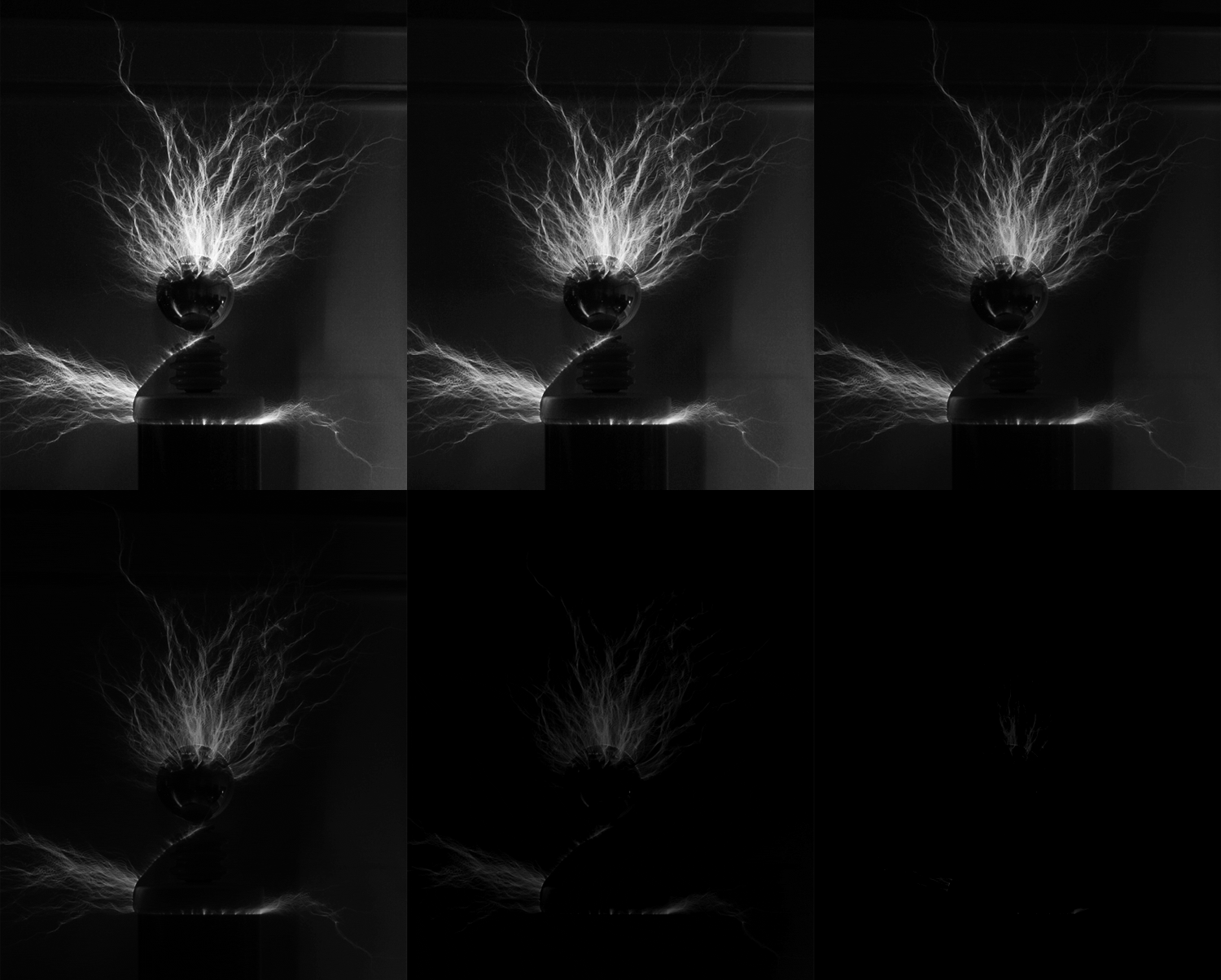
Have you ever used a television, a cell phone, or perhaps a computer? Probably yes. Now, have you ever realized what would happen today if electricity doesn’t exist? Without electricity, we would still be stuck in the past or an endless cycle of stagnancy. Electricity dominates an extremely huge part of our lives that it has become a necessity. Unknowingly, it has changed our lives in so many ways and we have to admit that without electricity, the modern day humans would still be called cavemen. It has become our ride towards a near future full of infinite possibilities that we can’t imagine. Electricity is a power and a weapon to achieve evolution.
Task
This webquest aims to:
Define what static electricity is.
Differentiate conductors from insulators.
Figure out what electric currents are.
Exercise safety rules.
Process
Here are some basic knowledge about electricity.
Static Electricity— results from the movement of electrons from one surface to another. An example of static electricity is when you get a shock when you touch someone else.
Conductors— are materials that don’t hold tight to their electrons and allow them to flow easily through them. Metals like copper wires are good conductors.
Insulators— holds their electrons tight and don’t let them flow easily. Rubber is an insulator.
Electric Current— is electricity that flows along a metal wire or other conductor. There are 2 types of electric current:
- Alternating Current (AC) — type of current that is fed into our homes.
- Direct Current (DC) — usually battery powered.
Safety Rules—AC is a powerful stuff. Here are some basic safety rules to keep you from harm’s way:
- Never touch a wall socket with anything but a plug.
- Never touch the metal part of a plug when you plug it in.
- Check cords to make sure they’re not torn or frayed. Don’t use a cord that is torn or has a hole in it.
- Don’t pull the cord to remove a plug.
- Don’t overload a wall plug or extension cord with too many devices.
- Stay away from high-voltage cables and train rails.
- Never use electric devices when you are wet or standing in water.
Evaluation
Give what is asked:
1. It results from the movement of electrons from one surface to another.
2. Materials that don’t hold tight to their electrons and allow them to flow easily through them.
3. Holds their electrons tight and don’t let them flow easily.
4&5. 2 types of electric current.
True/False:
1. Never touch a wall socket with anything but a plug.
2. Pull the cord to remove a plug.
3. Never use electric devices when you are wet or standing in water.
4. Never touch the metal part of a plug when you plug it in.
5. Overload a wall plug or extension cord with too many devices.
Conclusion
Static electricity results from the movement of e-s from one surface to another. Materials can be classified into conductors like wires or into insulators like rubber. Electric current is electricity that flows along a metal wire and this could be either AC or DC. Electricity could be veryharmful so you should follow some basic safety rules to prevent yourself from getting a "ZAP" or a "SHOCK".
Teacher Page
Author: Almira Mari R. Alcantara
Source: Popular Science for Kids