
Introduction
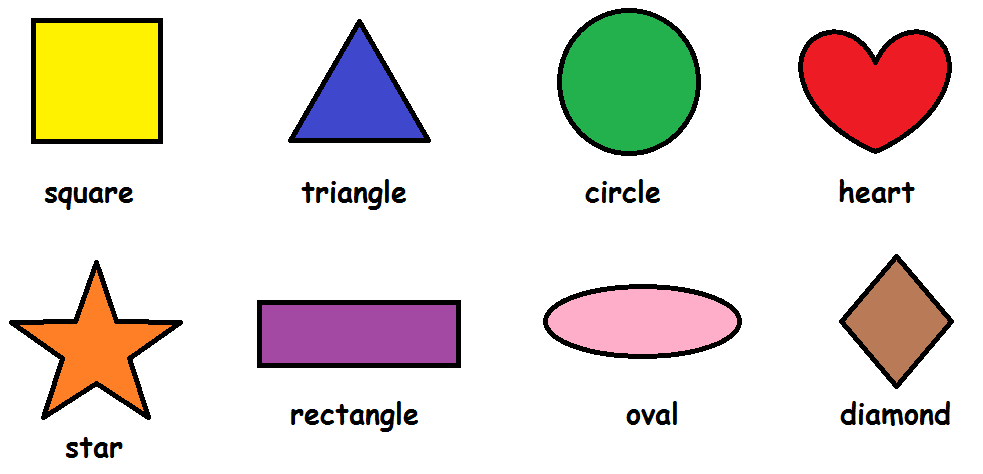
There are shapes all around us, everywhere we look! Even in your classroom. The purpose of this activity is for your students to be able to identify different shapes in and around the classroom. Weather it be the rectangular chalkboard or the circle clock. They should be able to identify the following shapes: Circle, square, rectangle, Star, oval, heart, triangle, and diamond. Prior to this lesson background knowledge of these shapes are to be presented so that the students can independently identify them.
Task
What to do
Students will go around the classroom and identify shapes of everyday objects. The students will record their discoveries and present their findings to the class. Each student will work independently so that they will be able to depict the shapes on their own without the assistant from their peers or the teacher. They should be able to identify and find the shapes around the classroom for the following shapes: Heart, square, rectangle, diamond, star, oval, circle, and triangle.
Suggested ways to record your findings
- Worksheet (hand written)
- Poster
- Draw the object you find and color it
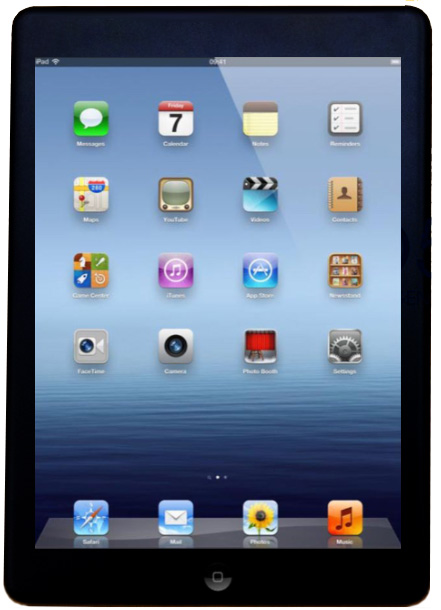
- Take pictures with the classroom Ipads and print them out
- Write a summary of your findings
- Do a presentation
- Other (present the information how you want, if approved by the teacher)
Process
Step-By-Step
- First background knowledge of all the shapes should be done prior to the lesson starting. (Done by the teacher)
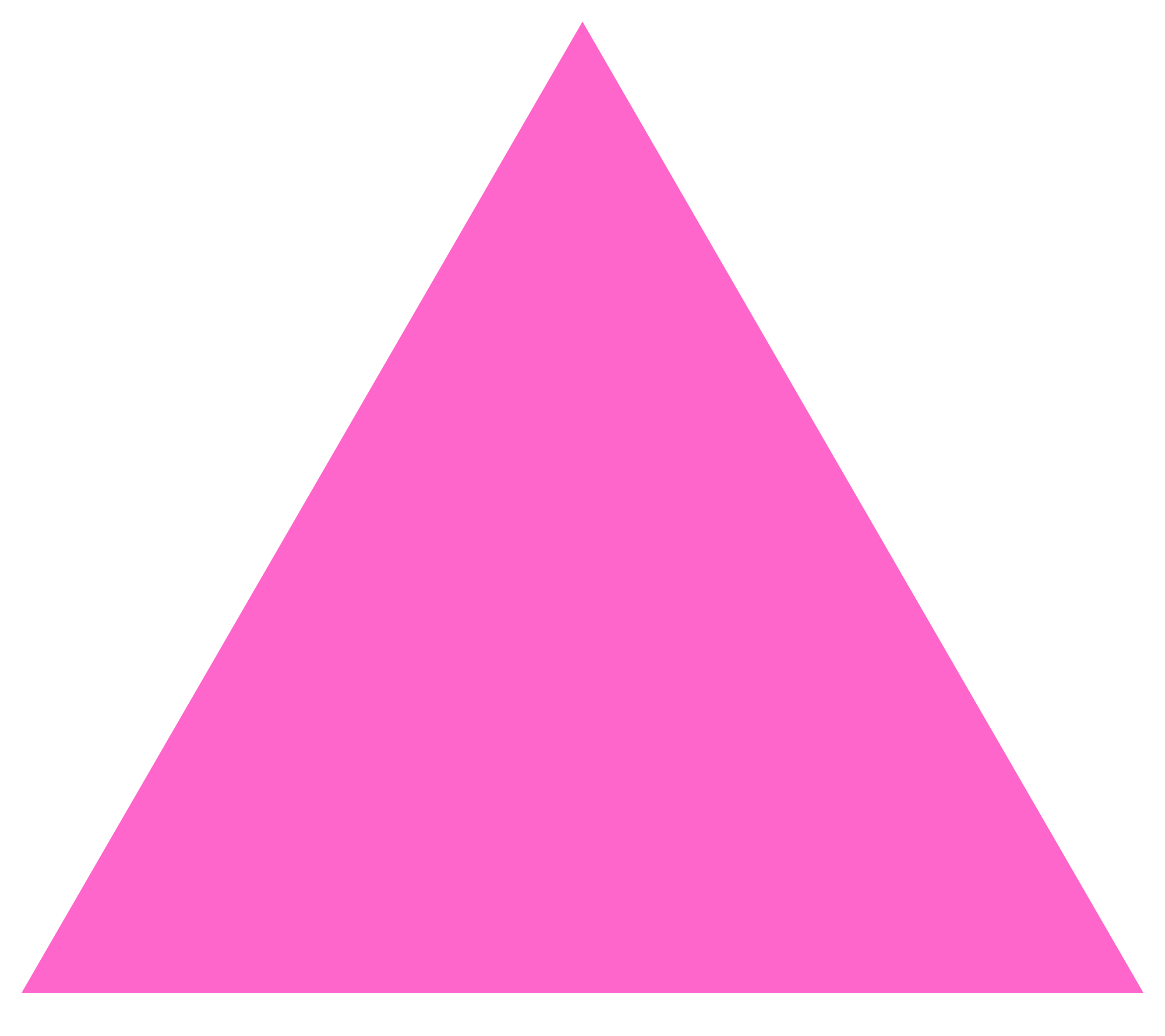
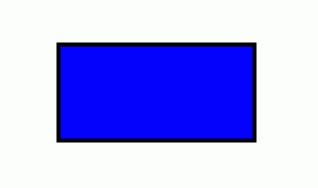
- The student should identify all of the shapes that they are suppose to search for (example Square: ) 8 shapes total!
- Then begin to look for all of the shapes





- If you get stuck refer to your resources
- When completed all the 8 shapes, raise yourhand and ask the teacher to check yourwork
- When the whole class is done the students will present their findings to the class.
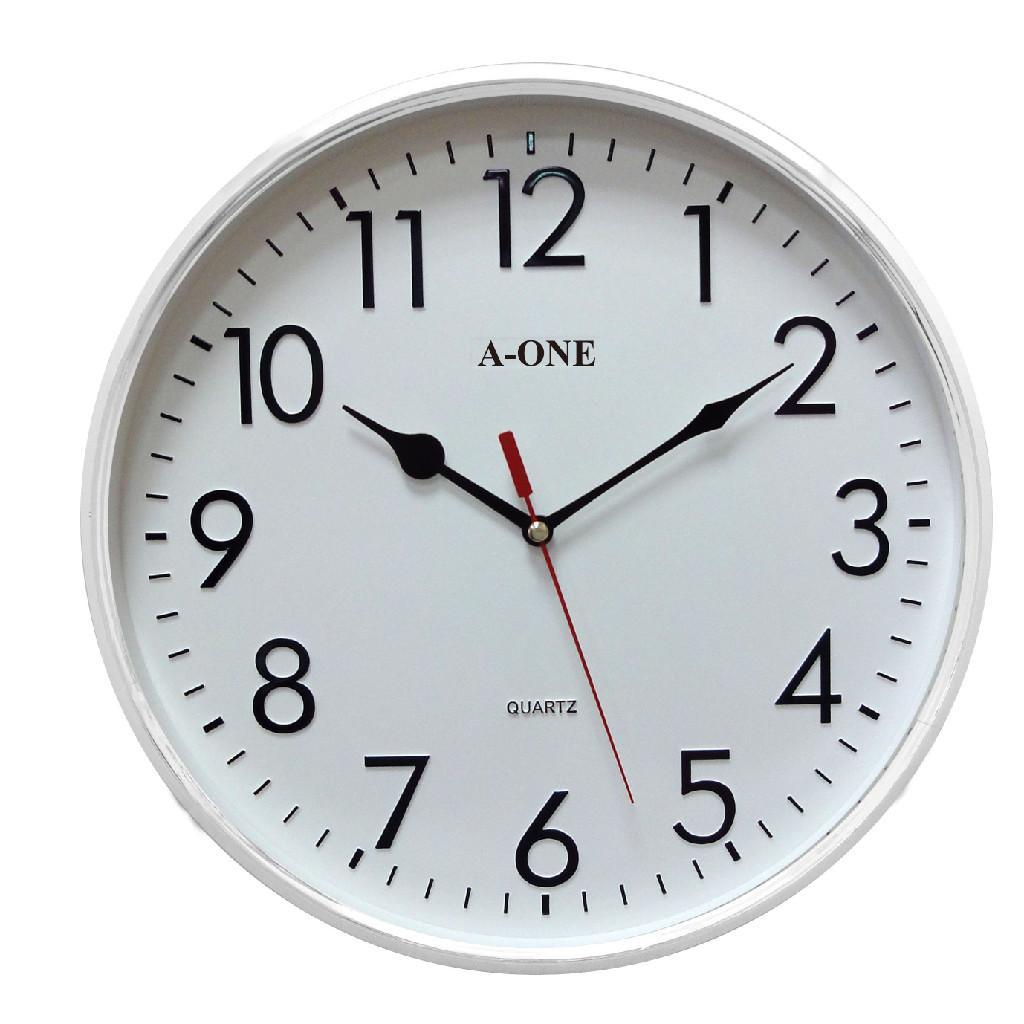
Example: Circle - Classroom clock
Evaluation

If the work is present in another format besides hand written/worksheet apply to pervious concepts to the child's work.
Example: If the student did a poster the poster needs to be neat, complete, spelled correctly, and have good shape to real object comparison.
Conclusion
By the end of the webQuest the students will have a better understanding of the shapes in everyday life. They will be able to identify the shapes on their own and correctly name them without any assistance.
Credits
Identifying shapes practice:
http://www.ixl.com/math/grade-1/identify-2-dimensional-shapes
http://www.softschools.com/math/geometry/shapes/identifying_shapes/
[video:https://youtu.be/WTeqUejf3D0]
Teacher Page
What You Can Do As The Teacher
- As the Facilitator, you want to make sure everything runs as smoothly as possible.
To do this you want to make sure you have all the materials you need before you start. Such as Worksheets, pencils, markers, crayons, color pencils, ipads (to take pictures), printer with color, sissors, glue,etc. - Make sure that the Ipads are charged, so they do not die.
- Make sure that all the shapes on the worksheet can esily be idenified somewhere in the classroom
Example: there is a star on the worksheet, so there needs to be a star somewhere in the classroom (Like on the flag) - If the students get stuck on finding one of the shapes remind them that there is a refernce page with all of the shapes on it. So they can refer back to it. Also encourage them go get up and look around.
Some of the objects may be large and easy to see and other object may be small and might take some looking to find. - [img_assist|nid=23694|title=teacher|desc=|link=none|align=middle|width=228|height=221]