
Introduction
"The Latin American cause is about all a social cause: the rebirth of Latin America must start with the overthrow of its masters, country by country. We are entering times of rebellion and change. there are those who believe that destiny rests on the knees of the gods; but the truth is that it confronts the conscience of man with a burning challenge." - Eduardo Galeano
"In order to attain the impossible, one must attempt the absurd." - Miguel de Cervantes
"You must not judge people by their country. In South America, it is always wise to judge people by their attitude." -Paul Theroux
"Castilian Spanish speaking Spain is big, but is bigger in addition with Catalonian speaking Spain, Galician speaking Spain and Basque speaking Spain. Democratic Spain, Constitutional Spain, can not be separated from diversity and the respect to the citizenship" - José Luis Rodríguez Zapatero
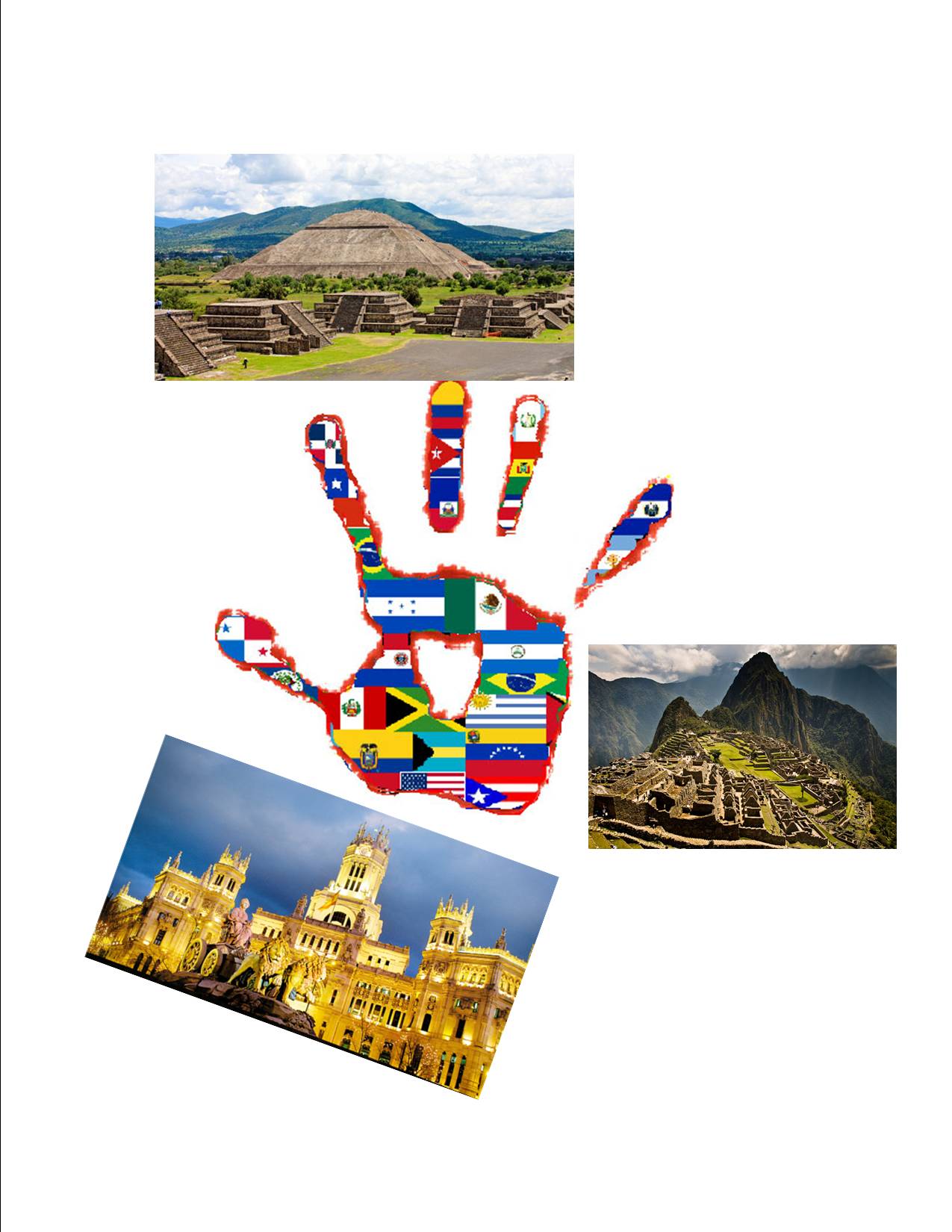
The history, geography, and literature of Latin America and Spain have been intertwined since 1492. From Latin America's indigenous culture and Spain's "discovery" of it to the present day existence, the Hispanic and Spanish history, culture, and geography are indcredible and vast. Don Quijote de La Mancha provides a deep criticism and evaluative persepctive of Spain in the Renaissance period. Machu Picchu, Peru is one of the most ancient and currently in-tact ruins in the world. Mexico is the host of drug cartels and the fight for personal freedoms and basic human rights. Argentina hosts a strangely mixed Italian and Spanish culture that has separated itself from the rest of Latin America but has not quite joined the ranks of Western Europe. Among all of these palces are hidden gems of histories untold and peoples unseen.
Task
For the next four to five days you will complete the following tasks which will be compiled into a collection of assessments for a unit grade (criteria listed under the evaluation tab). The overall purpose of these tasks is for you to:
- develop a deep understanding of your chosen country that incorporates literature, art, geography, and overall culture
- integrate multiple disciplines into one complex whole and understand the conncetion among the different aspects
Task 1
- Find two major authors (one male, one female) that are from your chosen country.
- Create an outline of each author's top two most famous works which includes: plot, literary movement, major themes, cultural significance
Task 2
- Find two famous artists from your chosen country (one male, one female). It may be eaiser to find two artists from the same artistic style.
- Write a summary of each artist's style, masterpiece, and common themes.
Task 3
- Create an interactive map of your chosen country through Powerpoint, smartboard technology, or another online program. You must incorporate the major geographical features of your country for full credit (Hint: review your word-webs!)
- In Spanish, write a paragraph about how the themes and objects of attention in the literary pieaces and artistic works you found are related to geography. (Ex: setting of literary works, background in paintings, etc.)
Task 4
- Create a timeline of historial events from pre-Columbian times to present with the most impactful events listed (between 10-20 wars/government changes/revolutions will be sufficient).
- In Spanish, write a paragraph that related these historical events to the geography of your chosen country. (Ex: what cities were fought over, where did this/that event take place).
Task 5
- Create a powerpoint presentation that encompasses all of the above elements and present them in class in front of your peers. Text on screen should be in Spanish, but speaking will be done only in English (bonus points for those who use at least 5 complex Spanish sentences).
Process
Use the following websites or any approved resource book found in the library to complete each task. All of the sites listed are valid and creditable resources; however, use discression when deciding which is helpful for which task!
Britannica. (n.d.). History of Latin America. Retrieved April 12, 2015, from Britannic Online website: http://www.britannica.com/EBchecked/topic/331694/ history-of-Latin-America
culpsclass. (2013, September 19). Geography of Latin America Overview [Video file]. Retrieved from https://www.youtube.com/watch?v=doqlR4eqNtM
D. L. (Ed.). (n.d.). History of the Dominican Republic. Retrieved April 12, 2015, from Hispaniola website: http://www.hispaniola.com/dominican_republic/info/history.php
Nations Online. (n.d.). Retrieved from Nations Online website: http://www.nationsonline.org/oneworld/index.html
Puerto Rico's History. (n.d.). Retrieved April 12, 2015, from Welcome to Puerto Rico! website: http://www.topuertorico.org/history.shtml
Questia. (n.d.). Literature of Specific Countries. Retrieved April 12, 2015, from Questia: trusted online research website: https://www.questia.com/ library/literature/literature-of-specific-countries
Spanish Books. (n.d.). Spanish Literature. Retrieved April 12, 2015, from Class Spanish Books website: http://www.classicspanishbooks.com/
Spanish Language Learning. (n.d.). Spanish History [Don Quijote]. Retrieved April 12, 2015, from http://www.donquijote.org/culture/spain/history/
Evaluation
| Task | 1 point | 2 points | 3 points | 4 points |
| Task 1 | Student does not research any authors and/or researches only one author and/or only includes one or none of the required talking points. | Student either researches only one author or two authors of the same gender, and/or includes only two of the required talking points. | Student either researches two authors of separate genders and/or includes only two of the three required talking points and/or student does not research two authors with separate genders. |
Students researches two authors of separate genders and creates an outline which includes all of the following: literary movement, major themes, and cultural significance |
| Task 2 | Student does not research any artists and/or researches only one author and/or includes one or none of the requried talking points. | Student either researches only one artists or two artists of the same gender, and/or includes only two of the required talking points. | Student either researches two artistis of separate genders and/or includes only two of the three required talking points or does not research two artisits with separate genders. | Student researches two artists of separate genders and writes a summary without any grammatical errors and with excellent writing mechanics that includes the artists' styles, famous masterpiece(s), and any common themes. |
| Task 3 | Student does not create an interactive map and/or is missing 8+ major geographical locations and/or has over 16 grammatical or vocabulary errors in the Spanish paragraph. | Student creates an interactive map with between 4-7 major geographical locations missing and/or has between 11-15 grammatical or vocabulary errors in the Spanish paragraph. | Student creates an interactive map with between 0-3 major geographical locations missing and/or has between 5-10 grammatical or vocabulary errors in the Spanish paragraph. | Student creates an interactive map with all of the major geographical locations included. Student has between 0-5 grammatical or vocabulary errors in the Spanish pargraph which elegantly connects the previous two tasks to geography. |
| Task 4 | Student does not create a timeline and/or does not have at least 5 listings and/or does not include all the required time periods and/or has over 16 grammatical or vocabulary errors. | Student creates a historical timeline with at least 5 listings and/or does not include all the required time periods and/or has between 11-15 grammatical or vocabulary errors. | Student creates a historical timeline with at least 8 listings and/or does not include all required time periods and/or has between 5-10 grammatical or vocabulary errors. | Student creates a historical timeline with at least 10 listings that date from pre-Columbian era to modern day. Student links these events elegantly with geography by writing a paragrpah in Spanish and has 0-5 grammatical or vocabulary errors. |
| Task 5 | Student's powerpoint is not created and/or does not have any credible information and/or is not written in Spanish and/or is written in Spanish with more than 16 grammatical or vocabulary errors. | Student's powerpoint includes mostly credible information written in Spanish with between 11-15 grammatical or vocabulary errors. Student relies on slide heavily, does not engage the audience, and/or does not make eyecontact when presenting. | Student's powerpoint includes all credible information written in Spanish with between 6-10 grammatical or vocabulary erors. Student uses slide for help, engages audience, and/or maintains eye contact when presenting. | Student's powerpoint includes all credible information written in Spanish with between 0-5 grammatical or vocabulary errors. Student does not read from the slide, engages the audience, and maintains eye contact when presenting. |
Conclusion
Congratulations! You have adventured through culture and made it out alive. The tasks you completed require higher-level thinking through: the practice of connecting multi-disciplinary information, scanning sources for useful information, and presenting knowledge in multiple formats in two languages. You are done! Hopefully all of your assignments are finished and you received an A+++. I ask that you take this time to reflect on what you have learned. The questions below are not for a grade, but please write them down in your notebook as I will check that they are done. The purpose of this activity is for you to take a step back and try to soak in what you have learned.
- What opinions about your country, Latin America, and/or Spain did you have before doing this study?
- Has that opinion or those opinions changed after completing these tasks? If so, why?
- What was something that really sparked your interest about your chosen country during research? Ex: a particular novel, a literary movement, pictures of the country's geography.
- Do you think this study has helped you understand another culture better? If yes, how?
Credits
References
Barcelona, Spain [Photograph]. (n.d.). Retrieved from http://www.samgasht.ir
Britannica. (n.d.). History of Latin America. Retrieved April 12, 2015, from Britannic Online website: http://www.britannica.com/EBchecked/topic/331694/history-of-Latin-Ameri…
culpsclass. (2013, September 19). Geography of Latin America Overview [Video file]. Retrieved from https://www.youtube.com/watch?v=doqlR4eqNtM
Guitar, D. L. (Ed.). (n.d.). History of the Dominican Republic. Retrieved April 12, 2015, from Hispaniola website: http://www.hispaniola.com/dominican_republic/info/history.php
Latin America [Photograph]. (n.d.). Retrieved from http://libraryguides.binghamton.edu
Machu Picchu [Photograph]. (n.d.). Retrieved from http://www.cntraveller.com/guides/south-america/peru
Nations Online. (n.d.). Retrieved from Nations Online website: http://www.nationsonline.org/oneworld/index.html
Puerto Rico's History. (n.d.). Retrieved April 12, 2015, from Welcome to Puerto Rico! website: http://www.topuertorico.org/history.shtml
Questia. (n.d.). Literature of Specific Countries. Retrieved April 12, 2015, from Questia: trusted online research website: https://www.questia.com/library/literature/literature-of-specific-count…
Ruins of Teotihuacan, Mexico [Photograph]. (n.d.). Retrieved from http://www.titantravel.co.uk
Spanish Books. (n.d.). Spanish Literature. Retrieved April 12, 2015, from Class Spanish Books website: http://www.classicspanishbooks.com/
Spanish Language Learning. (n.d.). Spanish History [Don Quijote]. Retrieved April 12, 2015, from http://www.donquijote.org/culture/spain/history/
Teacher Page
Why a webquest? Why study literature and art to understand geography? How is a map related to literacy in Spanish?
These may be some of the questions you have been asking while completing your webquest study. Well, I am here to answer them! Here are my basic principles as to why this study is important, particulary why the format and the information required:
- First, history can be boring for students and this type of activity makes it fun (I hope).
- More importantly, learning history is not just learning dates, battles, etc. To understand history you need to understand the literary, artistic, and geographical implications that all relate to those big political movements like dictatorships and wars. Reading literature helps you understand how the people in that place and time felt, what the ideas surrounding each aspect of history were, and how people who agreed and disagreed with the country's state of affairs expressed their beliefs.
- Expressing your knowledge of something using varied formats only helps you rather than me (more grading). You get to speak, read, write, and present. If creative map-making is not your thing, maybe writing a well-worded essay is. Yet, sometimes people who do not write well have fabulous speaking skills and can captivate an audience of zombies. Presenting material in multiple formats provides you different areas of expression as well as multiple opportunities to succeed.