
Introduction
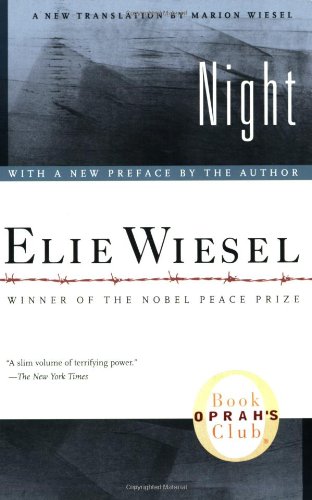
Why should we remember the Holocaust - an event in World history that took place over 60 years ago, before and during World War II? It's an important question. The answer lies in reflecting on what the Holocaust has to teach us, not only in this generation but in future generations to come. It is a sad fact, but we must recognize that the crimes committed against humanity during the Holocaust have been repeated elsewhere in the world such as Bosnia, Rwanda and Darfur. The repetition of these human tragedies reminds us that we must be vigilant and continue to learn and remember the lessons of the Holocaust. In this Nobel Peace Prize speech, Elie Wiesel said that if we forget "we are victims, and we are accomplices" and that he would never forget what happened because through remembrance we both honor and learn, love and hate, and become all the more human in the eyes of the world.
GUIDING QUESTIONS:
- How can we be more like Elie Wiesel today?
- What can this class do to remember the Holocaust and be a defender against genocide?
- Why is learning about holocaust still relevant today
Task
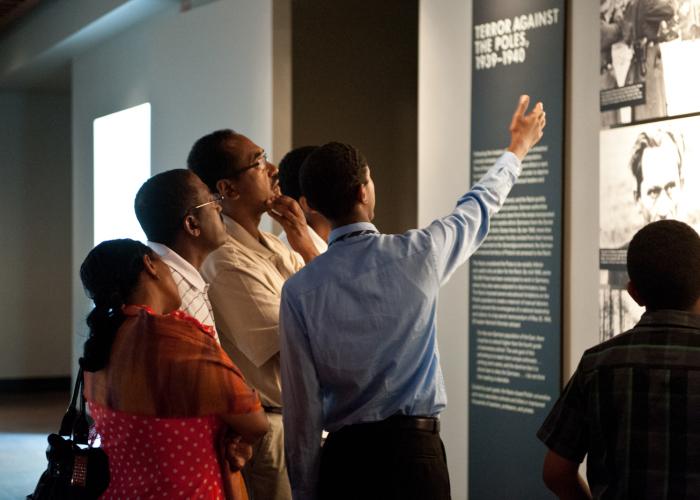
In this assignment students will research specific topic information and present their findings by creating a museum, which that will be open to the entire school. Students at some point must answer why the topic the researched is still relevant today.
GROUP ROLES
Director- Overall coordinator of the project/museum. Make sure everyone is on task. Coordinates all of the meetings. Presents the overview to me. Is responsible for the group and museum meeting all that is on the criteria.
Tour guide/ historian (2)- Give tours and educates the visitors of museum. Study the materials thoroughly to answer any questions anyone on the tour has.
Researcher- Researches the topic, collects the historical artifacts and works together with the director by getting the right material for the exhibits
Interior decorator- actually sets up and decorates the exhibits and executes the director's and researcher’s vision.
Process
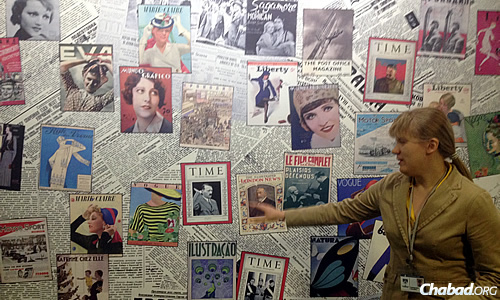
Each student will be given a large piece of poster board, and then asked to randomly select one of the following topics to research and create an overview of what students will do, each of which has been adapted from the website of the United States Holocaust Memorial Museum, www.ushmm.org :
- Jewish life in Europe before the Holocaust
- The role of Nazi propaganda in causing the Holocaust
- The Hitler Youth for Boys and Girls
- Kristallnacht
- The Nuremberg Laws
- The concentration camp system
- The Nazi takeover of Europe
Once these posters are completed, the students will honor Elie Wiesel’s work by creating a “living” Holocaust museum of their own(posters will serve as an interview. To do so, the teacher will follow these steps: Groups will display their museum in chronological order of their topics, which will be displayed larger display area like the school’s library, cafeteria during lunch time or after school. Doing so has the added benefit of having the students take more of an ownership role at their museums, which in the end is what this project is all about!
Evaluation
|
|
1 |
2 |
3 |
5 |
|
Preparation |
Project lacks outline Outline does not and is incomplete. represent whole; Lacks props and resources. |
Outline does not respresent and props few or innappropiate. |
Outline is complete; resources and props are appropriate. |
Outline is complete and well organized; resources and props are outstanding. |
|
Subject Matter |
Student does not have grasp of information; students cannot answer questions about subject. |
Student is uncomfortable with information and is able to answer rudimentry questions. |
Student is at ease with expected answers to all questions without elaborate. |
Student demonstrates fill knowledge by answering all class questions with explanations and elaboration. |
|
Organization |
Audience cannot understand presentation because there is no sequence of information. |
Audience has difficulty following presentation because student jumps around. |
Student presents information in logical sequence which audience can follow. |
Student presents information in logical, interesting sequence which audience can follow. |
|
Visuals |
Media Graphics and props missing do not add information. |
Media, graphics have and props only have minor value. |
Media, graphics and props relate to script, add information, help explain and keep interest. |
Media, graphics and props relate to script, add information, help explain and keep interest. |
Conclusion
GOALS FOR STUDENT UNDERSTANDING
Ultimately, I want students to walk away from this lesson with these three things in mind:
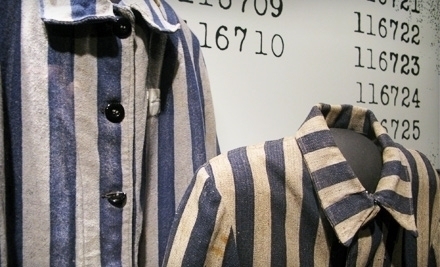
- Commemoration: The Holocaust is not just about the six million. It is also about the loss of future generations. What future doctors, scientists, artists, writers, philosophers were never allowed to develop? As the Jews were killed, their offspring, our future leaders and our human potential were also lost.
- Significance: Students must understand that the lessons of the Holocaust are present in our daily lives and directly connected to world events. The names and places may change, but the lessons are still applicable.
- Responsibility: Students need to recognize their own responsibility in making sure that genocide does not happen again. We must all take action and respond whenever we see hatred, prejudice, and anti-Semitism.
Credits
This page was created by Jeremy Roberts
Teacher Page
WHAT STUDENTS WILL DO TO BUILD THEIR UNDERSTANDING: LESSON OBJECTIVES
- Students recognize the impact of the Holocaust on postwar and future generations.
- Students begin to understand the importance of moral decision making in both their individual and public lives.
- Students define and learn to appreciate their role and importance as a citizen of their own communities and the larger global community.
CONTENT STANDARDS
World History
10.8 Students analyze the causes and consequences of World War II.
5. Analyze the Nazi policy of pursuing racial purity, especially against the European Jews; its transformation into the Final Solution; and the Holocaust that resulted in the murder of six million Jewish civilians.
COMMON CORE STANDARDS
RI 10.9 Analyze seminal U.S. documents of historical and literary significance (e.g., Washington’s Farewell Address, the Gettysburg Address, Roosevelt’s Four Freedoms speech, King’s “Letter from Birmingham Jail”), including how they address related themes and concepts.
SL 10.4 . Present information, findings, and supporting evidence clearly, concisely, and logically (using appropriate eye contact, adequate volume, and clear pronunciation) such that listeners can follow the line of reasoning and the organization, development, substance, and style are appropriate to purpose (e.g., argument, narrative, informative, response to literature presentations), audience, and task. CA a. Plan and deliver an informative/explanatory presentation that: presents evidence in support of a thesis, conveys information from primary and secondary sources coherently, uses domain specific vocabulary, and provides a conclusion that summarizes the main points. (9th or 10th grade) CA b. Plan, memorize, and present a recitation (e.g., poem, selection from a speech or dramatic soliloquy) that: conveys the meaning of the selection and includes appropriate performance techniques (e.g., tone, rate, voice modulation) to achieve the desired aesthetic effect. (9th or 10th grade) CA
TIME REQUIREMENT: 2 weeks (1 week preparation, 1 week presentation)
OBJECTIVES: After this lesson, students will be able to
• Know who Elie Wiesel is and why he is a human rights defender.
• Learn how his example provides the inspiration for students to stand up to genocide today.
STUDENT SKILLS:
• Drawing inferences
• Making conclusions
• Organizing and interpreting information
• Participating in group planning and discussion
• Cooperating to accomplish goals
MATERIALS: Poster board for each member of the class • Handouts of his profile from Speak Truth to Power
ANTICIPATORY SET:
• Show the following video in which Oprah Winfrey interviews Elie Wiesel
at the Auschwitz concentration camp in Poland.
http://www.YouTube.com/watch?v=mUEEYa0pvgU&feature=related
• Distribute to the students the interview of Elie Wiesel from Speak Truth to Power (symbol for link)
• The teacher should emphasize that in addition to speaking around the world
for peace, perhaps Mr. Wiesel’s greatest accomplishment is helping create the
United States Holocaust Memorial Museum in Washington, D. C., to
which he was the founding chairman. The teacher should then explain that it was due to Mr. Wiesel’s influence that the museum was started in 1993 as a living memorial for the victims of the Holocaust, and as a reminder of the cost of hatred in the world. Since that time, over 34 million visitors have witnessed its exhibits, most of which can be seen through this short video produced by the museum: http://www.ushmm.org
• United States Memorial Holocaust Museum http://www.YouTube.com/ watch?v=6MPeKNBZW6o
ACTIVITY:
• The teacher will suggest that one way the students can follow in Elie Wiesel’s
footsteps is to promote awareness of genocide to themselves and their community by creating an in-class Holocaust museum of their own.
• Each student will be given a large piece of poster board, and then asked to randomly select one of the following topics to research and create an overview of what students will do, each of which has been adapted from the website of the United States Holocaust Memorial Museum, www.ushmm.org :
- Jewish life in Europe before the Holocaust
- The role of Nazi propaganda in causing the Holocaust
- The Hitler Youth for Boys and Girls
- Kristallnacht
- The Nuremberg Laws
- The concentration camp system
- The Nazi takeover of Europe
Once these posters are completed, the students will honor Elie Wiesel’s work by creating a “living” Holocaust museum of their own(posters will serve as an interview. To do so, the teacher will follow these steps: Groups will display their museum in chronological order of their topics, which will be displayed larger display area like the school’s library, cafeteria during lunch time or after school. Doing so has the added benefit of having the students take more of an ownership role at their museums, which in the end is what this project is all about!