
Introduction
 Why are mathematicians obsessed with pi?
Where did pi come from?
When am I ever going to use pi in my life?
Why pi?
Maybe you’ve asked one (or all) of these questions at some point in your math classes. Well, now it’s time to find some of those answers.
Continue to “Task” to learn more.
Task
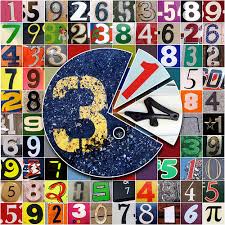 You and your fellow group members are going to embark on an exploration of pi, its history, its significance, and its applications.
After your group is done researching, you will combine your information into one report. This report will be in the form of either a podcast, newspaper or magazine article, or a Power Point presentation. Your group can decide which one you create.
Your group will be depending on you and your information, so make sure you find good sources and good information. In addition to Ms. Pier’s grade on your report, you will receive a grade from your group members on your participation, communication, and the quality of your information.
Go to the “Process” page to find out what to do next.
Process
Step 1: Your next step is to decide your role in your group (scroll down to learn more about each role). Each person in your group should pick a different role. Then begin your research.
- Pi Historian
- Mathematician
- Pi Applier
Step 2: When you all have completed your research, you need to create a podcast, newspaper/magazine article, or a Power Point presentation compiling your information. Make sure you include information from every member of your group.
- Option 1: Podcast (use Audacity.com)
- Option 2: Newspaper/magazine article (use Microsoft Publisher)
- Option 3: Power Point presentation
Make sure you look at the “Evaluation” page to see what you will be graded on.
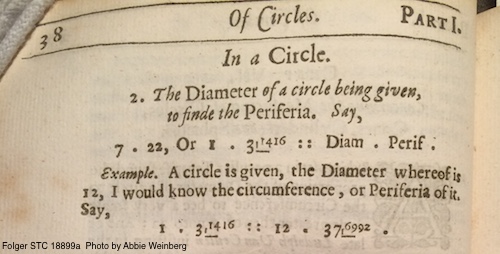 Pi Historian
As pi historian, you are responsible for the following:
- Explore the history of pi. Identify and describe at least 6 interesting facts you learned through your exploration.
- Research different ancient civilizations’ methods for approximating pi. Perform two of these methods of pi approximation and determine which method you preferred. Justify your reasoning.
Resources to use:
- http://www.exploratorium.edu/pi/history_of_pi/index.html
- http://www.math.com/tables/constants/pi.htm
- http://www.ms.uky.edu/~lee/ma502/pi/MA502piproject.html
 Mathematician
As mathematician, you are responsible for the following:
- Identify at least 6 formulas that use pi and describe their connection.
- Compare and contrast real numbers, irrational numbers, and transcendental numbers. Provide 3 examples of each classification, and explain which classification includes pi.
- Pi or tau? Explain the controversy and construct an argument to persuade use of one or the other.
Resources to use:
- http://www.math.com/tables/geometry/volumes.htm
- http://www.tpub.com/math1/18e.htm
- http://www.math.com/tables/geometry/areas.htm
- http://www.math.utah.edu/~palais/pi.html
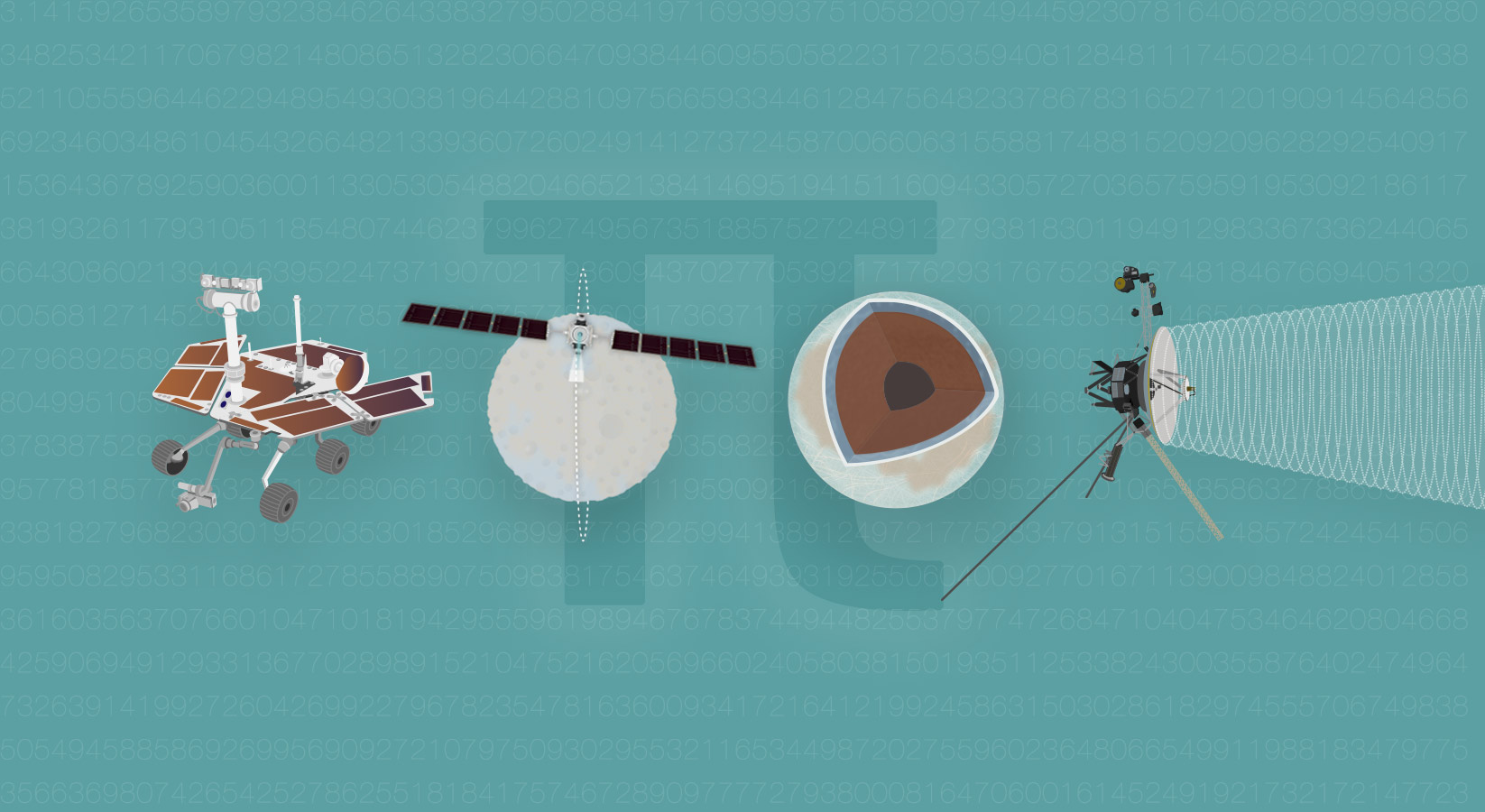 Pi Applier
As pi applier, you are responsible for the following:
- Find at least 4 occupations that utilize applications of pi on a regular basis. Summarize how pi is used in each.
- Identify 2 real life situations where you, personally, would need to use pi. (You cannot say math class).
- Choose one activity from http://www.exploratorium.edu/pi/pi_activities/index.html. Record your observations throughout the activity and explain the significance of Pi.
Resources to use:
Evaluation
Power Point Rubric
|
CATEGORY |
4 |
3 |
2 |
1 |
|
Content – Accuracy |
All content throughout the presentation is accurate. There are no factual errors. |
Most of the content is accurate but there is one piece of information that might be inaccurate. |
The content is generally accurate, but one piece of information is clearly flawed or inaccurate. |
Content is typically confusing or contains more than one factual error. |
|
Presentation |
Information is organized in a clear, logical way that is exceptionally interesting to audience. Graphics are attractive and support theme/content. |
Most information is organized in a clear, logical way that is interesting to audience. A few graphics are not attractive but all support theme/content. |
Some information seems out of place and is only marginally interesting to audience. All graphics are attractive but few support theme/content. |
There is no clear plan for the organization of information and the information presented is uninteresting. Several graphics are unattractive AND detract from the content of the presentation. |
|
Spelling and Grammar |
Presentation has no misspellings or grammatical errors. |
Presentation has 1-2 misspellings, but no grammatical errors. |
Presentation has 1-2 grammatical errors but no misspellings. |
Presentation has more than 2 grammatical and/or spelling errors. |
|
Cooperation |
Group delegates tasks and shares responsibility effectively all of the time. |
Group delegates tasks and shares responsibility effectively most of the time. |
Group delegates tasks and shares responsibility effectively some of the time. |
Group often is not effective in delegating tasks and/or sharing responsibility. |
|
Requirements |
All of the required content was present. |
Almost all the required content was present. |
At least 75% of the required content was present. |
Less than 75% of the required content was present. |
Newspaper/Magazine Rubric
|
CATEGORY |
4 |
3 |
2 |
1 |
|
Content – Accuracy |
All content throughout the presentation is accurate. There are no factual errors. |
Most of the content is accurate but there is one piece of information that might be inaccurate. |
The content is generally accurate, but one piece of information is clearly flawed or inaccurate. |
Content is typically confusing or contains more than one factual error. |
|
Presentation |
Articles are organized in a clear, logical way. Facts, figures and/or word choices make the articles exceptionally interesting to readers. Graphics are in focus, well-cropped and are clearly related to the articles they accompany |
Lacking in (1): Article organization is logical. Information presented is interesting. Graphics are in focus/well-cropped and related to articles they accompany |
Lacking in (2): Article organization is logical. Information presented is interesting. Graphics are in focus/well-cropped and related to articles they accompany |
Lacking in (3): Article organization is logical. Information presented is interesting. Graphics are in focus/well-cropped and related to articles they accompany |
|
Spelling and Proofreading |
No spelling or grammar errors remain after one or more people (in addition to the typist) read and correct the newspaper. |
No more than a couple of spelling or grammar errors remain after one or more people (in addition to the typist) read and correct the newspaper. |
No more than 3 spelling or grammar errors remain after one or more people (in addition to the typist) read and correct the newspaper. |
Several spelling or grammar errors remain in the final copy of the newspaper. |
|
Cooperation |
Group delegates tasks and shares responsibility effectively all of the time. |
Group delegates tasks and shares responsibility effectively most of the time. |
Group delegates tasks and shares responsibility effectively some of the time. |
Group often is not effective in delegating tasks and/or sharing responsibility. |
|
Requirements |
All of the required content was present. |
Almost all the required content was present. |
At least 75% of the required content was present. |
Less than 75% of the required content was present. |
Podcast Rubric
|
CATEGORY |
4 |
3 |
2 |
1 |
|
Content – Accuracy |
All content throughout the presentation is accurate. There are no factual errors. |
Most of the content is accurate but there is one piece of information that might be inaccurate. |
The content is generally accurate, but one piece of information is clearly flawed or inaccurate. |
Content is typically confusing or contains more than one factual error. |
|
Presentation |
Information is organized in a clear, logical way. Presentation is exceptionally interesting to readers. Volume is loud enough to be heard by all audience members throughout the presentation. |
Lacking in (1): Information is organized in a clear, logical way. Presentation is exceptionally interesting to readers. Volume is loud enough to be heard by all audience members throughout the presentation. |
Lacking in (2): Information is organized in a clear, logical way. Presentation is exceptionally interesting to readers. Volume is loud enough to be heard by all audience members throughout the presentation. |
Lacking in (3): Information is organized in a clear, logical way. Presentation is exceptionally interesting to readers. Volume is loud enough to be heard by all audience members throughout the presentation. |
|
Vocabulary & Clarity |
Uses vocabulary appropriate for the audience. Extends audience vocabulary by defining words that might be new to most of the audience. Speaks clearly and distinctly 95-100% of the time. No mispronunciations. |
Lacking in (1): Uses vocabulary appropriate for the audience. Extends audience vocabulary by defining new words. Speaks clearly and distinctly 95-100% of the time. No mispronunciations. |
Lacking in (2): Uses vocabulary appropriate for the audience. Extends audience vocabulary by defining new words. Speaks clearly and distinctly 95-100% of the time. No mispronunciations. |
Lacking in (3+): Uses vocabulary appropriate for the audience. Extends audience vocabulary by defining new words. Speaks clearly and distinctly 95-100% of the time. No mispronunciations. |
|
Cooperation |
Group delegates tasks and shares responsibility effectively all of the time. |
Group delegates tasks and shares responsibility effectively most of the time. |
Group delegates tasks and shares responsibility effectively some of the time. |
Group often is not effective in delegating tasks and/or sharing responsibility. |
|
Requirements |
All of the required content was present. |
Almost all the required content was present. |
At least 75% of the required content was present. |
Less than 75% of the required content was present. |
Conclusion
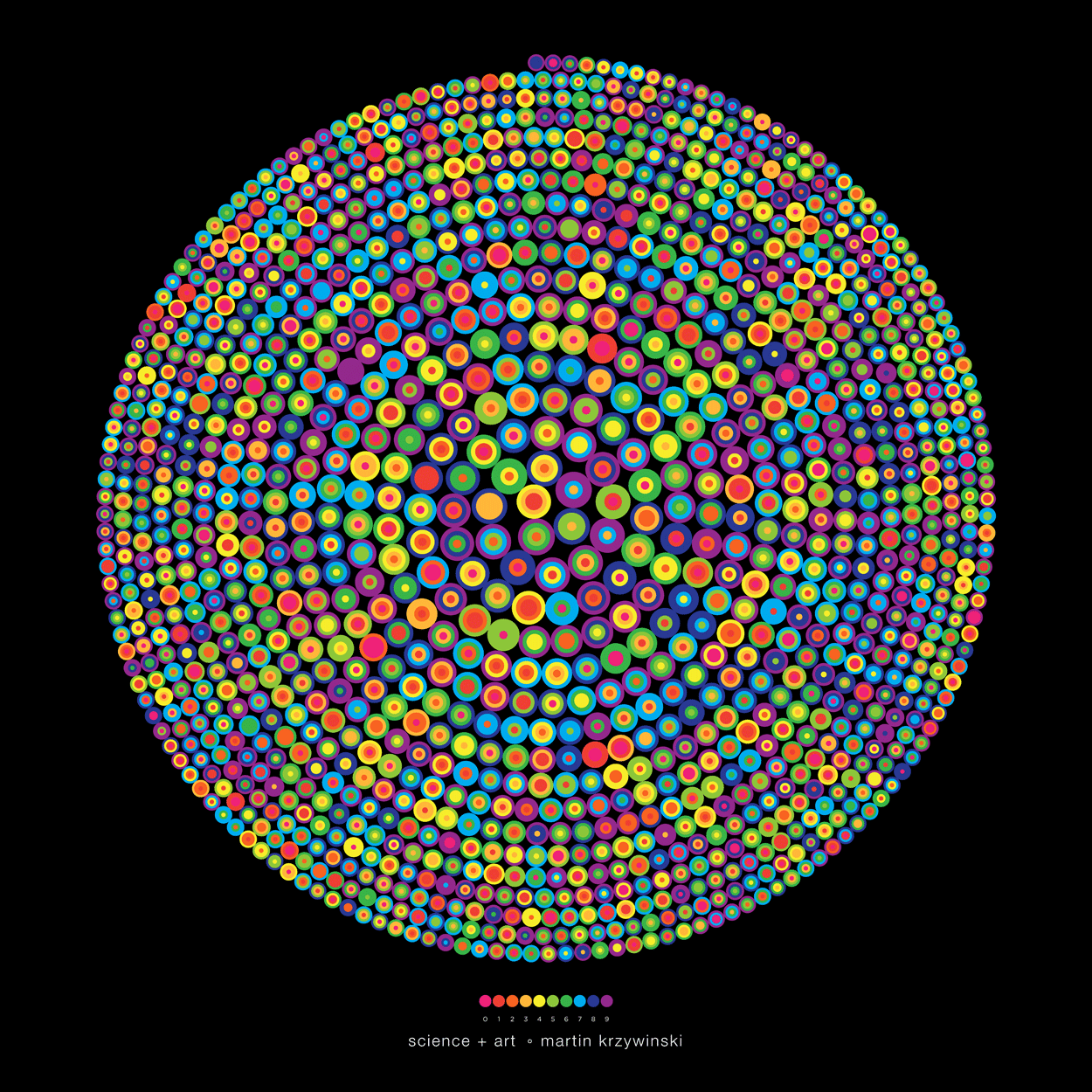
Congratulations! You are now pi experts!
Pi is one of the most significant numbers in mathematics.
It has been critical in the building of civilizations.
Its applications span our natural world and our most technologically advanced undertakings.
For more on the beauty and significance of pi, check out "Why Pi Matters."
Credits
References:
Johnson, E. (2010) What do you know about Pi?: Pi Webquest. Retrieved from http://pi-webquest.ericaajohnson.com/?m=201008
Mook, A. (2006). North Carolina Council of Teachers of Mathematics (NCCTM) 2006 – Celebrating Culture through Mathematics. Retrieved from users.wfu.edu/mccoy/culture/pi.pdf
Solli, A. (2005). A chronological history of pi with development activities in problem solving. Retrieved from http://amser.org/index.php?P=AMSER--ResourceFrame&resourceId=2710
Strogatz, S. (2015) "Why pi matters." The New Yorker. Retreived from http://www.newyorker.com/tech/elements/pi-day-why-pi-matters
Student Resources
Photos
credit unknown
 Artwork by Myki Roventine
William Oughtred’s The Circles of Proportion and the Horizontal Instrument. Photo by Abbie Weinberg
credit unknown
Artwork by NASA/JPL-Caltech
Artwork by Martin Krzywinski