Introduction
Watch this short clip from a news broadcast talking about a movie trailer for The Adjustment Bureau:
[video:https://www.youtube.com/watch?v=eteqiVBrmSA align:center]
Think to yourself: Do you believe in free will or do you believe in fate? Or a mixture of both?
Task
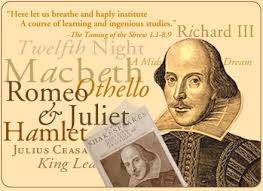 Shakespeare was a compelling author of his time who often wrote about fate and free will in his classics. Here are a couple of quotes from Shakespeare regarding this topic:
Our remedies oft in ourselves do lie,
Which we ascribe to heaven: the fated sky
Gives us free scope, only doth backward pull
Our slow designs when we ourselves are dull.
(All's Well that Ends Well, 1.1.209), Helena
What fates impose, that men must needs abide;
It boots not to resist both wind and tide.
(3 Henry VI, 4.3.60), King Edward IV to Warwick
You will successfully complete an essay answering the following prompt:
Fate or free will? Do you believe in destiny or do you believe that life’s outcome is strictly the result of choice and circumstance? What experiences or evidence has led you to your position on free will vs. fate?
Process
Your writing must include, but is not limited to, using sources from all categories listed below (at least one from each category):
*Note: These are just some links to literature to get you started, you do not have to use these links, however you must use literature from each of the categories*
American Literature
- American Literature-William Shakespeare
- Macbeth Navigator
- Shakespeare in American Communities
- Live Science
- New York Times
- NPR
- Philosophy Now
British Literature
- Determinism and free will
- George Orwell
- George Orwell-Polical and Religious free will
- Anthony Burgess
- The IIliad
- All's Well That Ends Well
- Romeo and Juliet
- Julius Caesar
- Complete Works of Shakespeare
World Literature
Multicultural Literature
- UNLV Resources of Fate vs. Free Will
- Greek, Buddhist, and Christian View on Free Will vs. Fate
- Hinduism
Young Adult Literature

Evaluation
Your essay will be evaluated using this rubric:
| CATEGORY | 4 | 3 | 2 | 1 | NS/0 |
| Content: FOCUS 1 | Topic/subject is clear, though it may/may not be explicitly stated. | Topic/subject is generally clear though it may not be explicitly stated. | Topic/subject may be vague. | Topic/subject is unclear or confusing. | This code may be used for compositions that are entirely illegible or otherwise unscorable: blank responses, responses written in a foreign language, restatements of the prompt, responses that are off-topic or incoherent. |
| Content: ORGANIZATION 1 | Organizational structure establishes relationship between/among ideas/events. | Organizational structure establishes relationships between ideas/events, although minor lapses may be present. | Organizational structure establish some relationship between/among some of the ideas/events. The structure is minimally complete. | Organizational structure does not establish connection between/among ideas/events. The overall stucture is incomplete or confusing. | This code may be used for compositions that are entirely illegible or otherwise unscorable: blank responses, responses written in a foreign language, restatements of the prompt, responses that are off-topic or incoherent. |
| Content: SUPPORT | Support information is related to and supportive of the topic/subject. | Support information has minor weaknesses in relatedness to and/or support of the topic/subject. | Support information has major weaknesses in relatedness to and/or support of the topic/subject. | An attempt has been made to add support information, but it was unrelated or confusing. | This code may be used for compositions that are entirely illegible or otherwise unscorable: blank responses, responses written in a foreign language, restatements of the prompt, responses that are off-topic or incoherent. |
| Content: STYLE - Vocabulary | Exhibits skillful use of vocabulary that is precise and purposeful. | Exhibits reasonable use of vocabulary that is precise and purposeful. | Exhibits minimal use of vocabulary that is precise and purposeful. | Lacks use of vocabulary that is precise and purposeful. | This code may be used for compositions that are entirely illegible or otherwise unscorable: blank responses, responses written in a foreign language, restatements of the prompt, responses that are off-topic or incoherent. |
| Conventions | Conventions scale is 0-2 --> | Conventions scale is 0-2 --> | Exhibits REASONABLE CONTROL of grammatical conventions appropriate to the writing task: sentence formation; standard usage including agreement, tense, and case; and mechanics including use of capitalization, punctuation, and spelling. | Exhibits MINIMAL CONTROL of grammatical conventions appropriate to the writing task: sentence formation; standard usage including agreement, tense, and case; and mechanics including use of capitalization, punctuation, and spelling. | LACKS CONTROL of grammatical conventions appropriate to the writing task: sentence formation; standard usage including agreement, tense, and case; and mechanics including use of capitalization, punctuation, and spelling. |
Conclusion
Once completed, you will upload your essay to turnitin.com for grading. Good luck and enjoy this project! We will have time to discuss our findings on the topic, and possibly even have a friendly debate about it in class. Enjoy philosophers!