
Introduction
What do we know about William Shakespeare? By this point in your educational career, you have studied at least three of Shakespeare's famous plays. It has been over 400 years since William Shakespeare wrote his last play. FOUR. HUNDRED. YEARS. So, why are we still studying his plays in school? Why is it required for students to read and analyze Shakespearean works every year of their high school career?
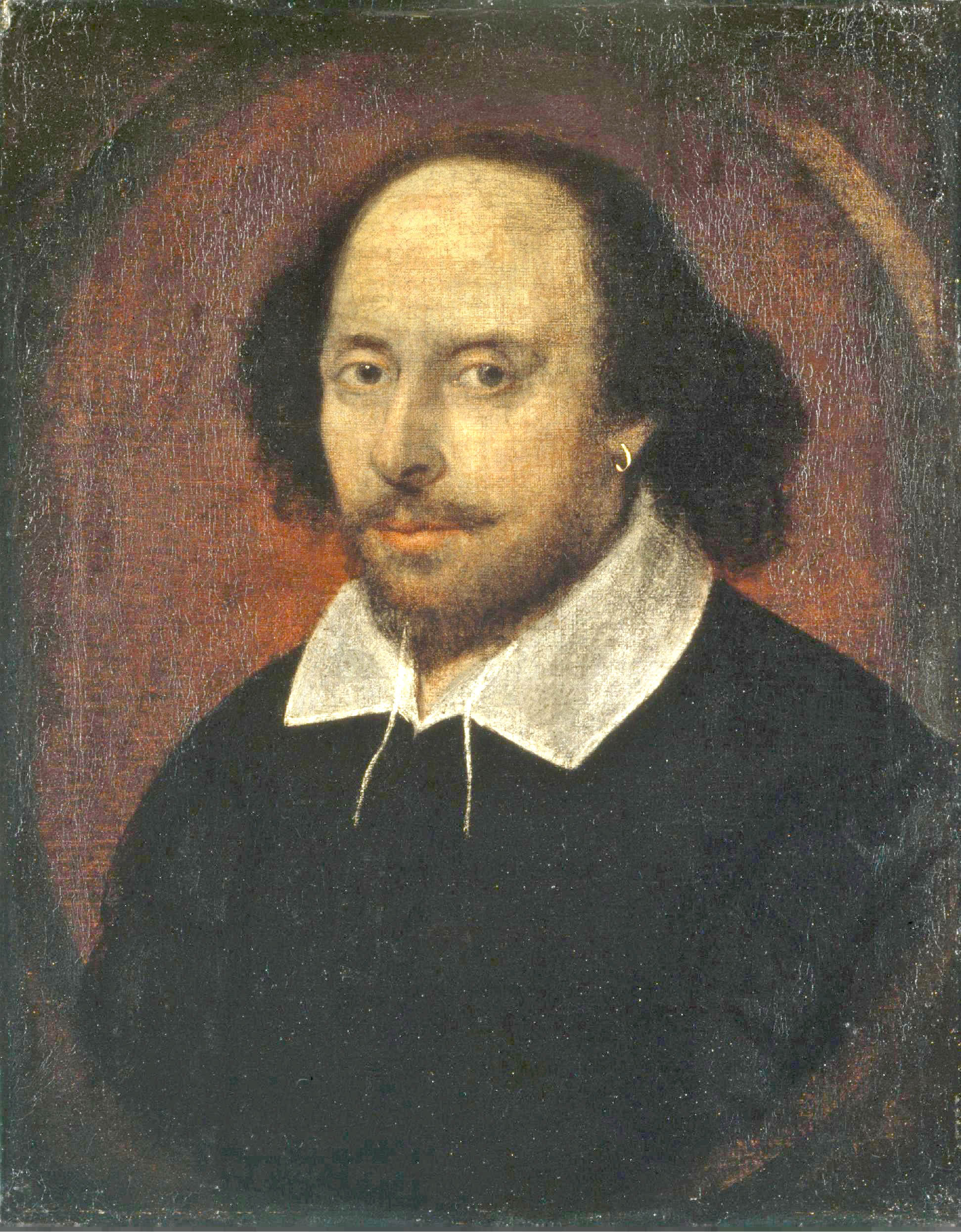
William Shakespeare wrote 38 plays (well, 39 if we include the debatable "Double Falsehood") and published a plethora of poems, as well. The plays of William Shakespeare are very much alive and thriving today, and Shakespeare has been dubbed one of the most prolific writers in history. The truth is, Shakespeare teaches us that not much has changed in 400 years. His characters, stories, conflicts, comedy and dramatic moments are still relevant, exciting and entertaining to people in today's society. The language is rich, the characters are complex and many of his basic themes – love, treachery, honour, bravery and political intrigue – still resonate today.
Shakespeare wrote for theatre. He did not write with the assumption that his plays would be studied by high school students hundreds of years later, he wrote plays that were meant to be performed for people who could connect to the content. So, why do people wonder why we still study Shakespeare? Humans still experience love, loss, betrayal, war, humour and tragedy, which gives Shakespeare a place in modern times.
Perhaps students can make a personal connection to Shakespeare if we take a look at his writing in a modern context. Although Shakespeare wrote his plays in Early 'Modern' English, I think it is safe to say nobody speaks that way today. If we can break the barrier of Shakespearian language, perhaps students would have a stronger handle on the timeless ideas and themes of his plays, and the undeniable entertainment value with which William Shakespeare provided the world.
Come on! Let's make Shakespeare Current!!!!
Task
Your task is to become familiar and comfortable with William Shakespeare's Hamlet, by putting his words and ideas into a modern context. In order to do this, you must delve into the original script, analyze the characters and conflict, consider relationships between characters and put the plot and characters from Hamlet into a context that today's youth can understand. I know this sounds like a lot, but it is broken down into five well-defined missions in the WebQuest Process. These missions include:
- Shakespearean Scavenger Hunt: Hamlet Edition
- Diary of a Shakespearean Kid
- Respecting the Dead
- Bear Hamlet Like a Soldier to the Stage
- To Thine Own Self Be True
Have Fun, Enjoy the Quest!
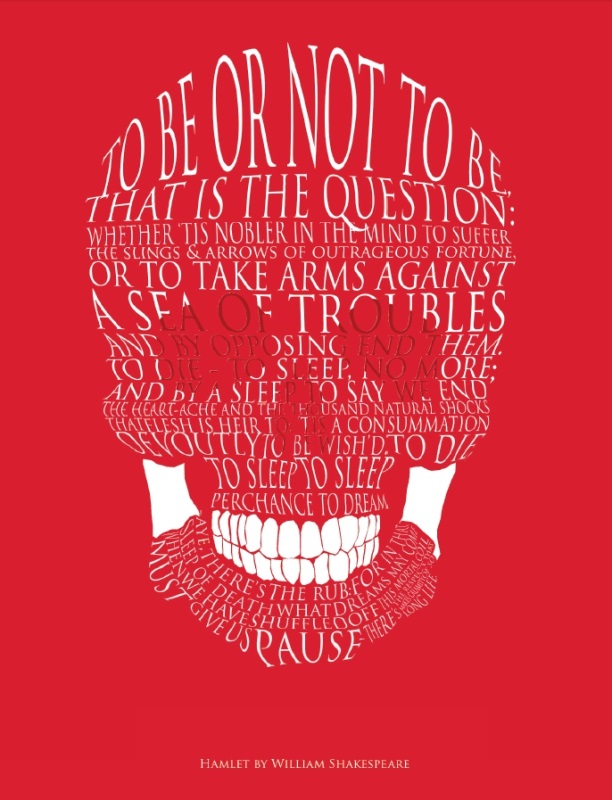
What Does this mean? You'll soon find out!
Process
Mission #1: Shakespearean Scavenger Hunt (Ongoing)
1. As a class, you will read William Shakespeare's Hamlet during the class periods. You will read from your assigned book, or from "No Fear Shakespeare: Hamlet" which will be projected at the front of class. No Fear Shakespeare puts Shakespeare's language side-by-side with a facing-page translation into modern English—the kind of English people actually speak today. So, the hard part is already done for you!
2. With a partner or in a small group (determined by your teacher) you will answer the following questions (see the link below.) The teacher will provide the class with 'group conferencing time' at the end of act. Submit each set of questions at the end of each act.
https://docs.google.com/document/d/10oSY-bLDPtQ2_2nsPpn-WtmlBREhUXaToJf…
3. Along with the act-by-act questions, you must also decide, with your group, on a significant symbol from the play.
- Describe where we find this symbolism in the play
- Describe who or what is connected to this symbol
- Describe what the symbol represents and why it is significant
Submit your symbolism report when you hand in your questions for Act V. Whatever team gains the most correct answers will win a Quest Reward!
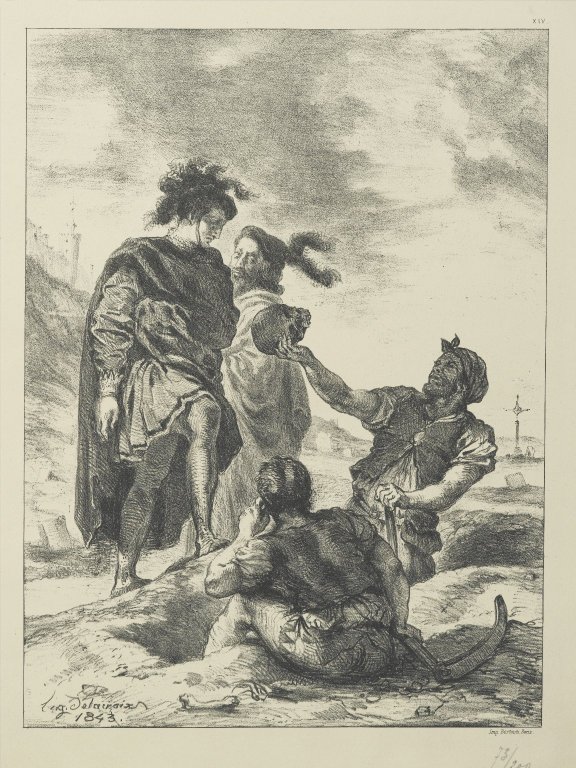
Mission #2: Diary of a Shakespearian Kid (Ongoing)
1. After each act, students will reflect upon their readings and write a 1-2 page diary entry from the perspective of the character, Hamlet. (500-800 words)
2. The diary entries can be written in Modern English (the way we speak today) or Early Modern English (the way the characters speak in Shakespeare's plays.) The choice is yours.
3. Students must bear in mind the notion of 'Dramatic Irony', where the audience/reader knows more about the plot than the characters do. Make sure you do not write the recollection of events about which Hamlet does not know.
4. After the class has finished reading the play in its entirety, assemble your diary entries together, in a neat, organized, and aesthetically pleasing fashion, and submit the complete package of diary entires to your teacher.
Mission #3: Respecting the Dead (After Reading)
1. It's sad, but true, several people die in Hamlet. In order to honour these people (whether or not they are honourable people is irrelevant), you are going to choose three different characters, and write a one-page eulogy for each.
2. The description of the person, relationships with other characters, events, and hobbies should all be taken from the script, or by using inferences about the character.
3. Refer to the guidelines in the link below to structure the eulogies:
http://resource2.rockyview.ab.ca/ela102_2013/how_to/eulogy.pdf
4. Share your eulogies with a partner. Together, you can decide which is the best one to recite in front of the class in a memorial service for the characters in Hamlet to celebrate life, and celebrate your hard work.
5. Submit all three eulogies to your teacher.
Mission #4: Bear Hamlet like a Soldier to the Stage (After Reading)
1. If you were the most successful Shakespearean Scavenger Hunt team, this is where you get to redeem your Quest Reward! Your team gets first choice for a scene from Hamlet, for which you create a dramaturgical transposition. The second and third place teams will choose next, and all other teams will be selected by draw.
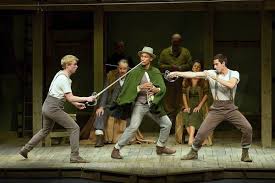
2. Each group will choose a scene (no duplicates) from the play, and create a script using 'Modern English' to creatively represent the events from the scene in a current context. Your challenge is to accurately depict the themes, conflict and entertainment value, while transposing the content of the scene into something contemporary.
3. This script should be 4-8 pages in length, and can be performed as a live theatre event or on a video recording.
4. Costumes, props, and special effects should be incorporated in order to enhance the presentation.
Mission #4: Bear Hamlet like a Soldier to the Stage (After Reading)
1. Students will write a 1-2 page personal reflection or a "play review" to sum up their feelings about Hamlet, as a play and whether or not they feel it is important and relevant for students to study Shakespeare in high school.
2. This can be delivered in a Newspaper Review, A Journal, A Video News Report, A Digital Story, or another topic with the approval of your teacher.

Evaluation
Attached are the Rubrics for the "Shaking Up Shakespeare" Missions:
You must copy and paste the link into your web address bar.
Mission #1: Shakespearean Scavenger Hunt :
Students will achieve one mark per correct answer.
Mission #2: Diary of a Shakespearian Kid:
https://docs.google.com/document/d/1WMl9XWC2mULoVZxu04x1oxO0a6R4_WW6ao2…
Mission #3: Respecting the Dead
https://docs.google.com/document/d/1pHW7I-P5kxwvNMKxk4rmGLBTcpev6JbOgE-…
Mission #4: Bear Hamlet like a Soldier to the Stage
SCRIPT: https://docs.google.com/document/d/1seX_El69JN7cI9Fx5U-StvkWJfsuXe239_L…
PERFORMANCE: https://docs.google.com/document/d/1wtDSpKKgn_pW6aPeO-StkQ_Awk6Pf0z_e0u…
PEER EVALUATION: https://docs.google.com/document/d/1XTYAEnlSsK9M-pHF6lgr6Ck1dHr1Afn6pXT…
Mission #5: To Thine Own Self Be True
https://docs.google.com/document/d/1kRj0C6t_ymSUjuWQ2Qx_cswPXqnp80DFB4N…
Conclusion
In Conclusion...
Now that we have taken a modern look at Hamlet by William Shakespeare, it is clear that the conflicts, themes, and entertainment are still alive today. Throughout our exploration of Shakespeare we have addressed several items from the Ontario Curriculum, including: Oral Communitcation, Reading and Writing (for a variety of purposes), and using media literacy. You should congratulate yourself on a job well done. Take a bow - it's time for your curtain call!
Credits
Credit and References:
Ontario Language Curriculum- Grade 11-12 (2007) https://www.edu.gov.on.ca/eng/curriculum/secondary/english1112currb.pdf
No Fear Shakespeare: Hamlet - Sparknotes. http://nfs.sparknotes.com/hamlet/
Writing a Eulogy, Amy C. Stumbo. http://resource2.rockyview.ab.ca/ela102_2013/how_to/eulogy.pdf
Hamlet Online. Shakespeare, MIT. http://shakespeare.mit.edu/hamlet/index.html
Shakespeare Online. http://www.shakespeare-online.com/
Four Rules for Modernizing Shakespeare. Article. Jordan Kaplan, Backstage.com, http://www.backstage.com/advice-for-actors/backstage-experts/4-rules-mo…
Teacher Page
For Teachers:
- The use of the projection of "No Fear Shakespeare:Hamlet" is entirely up to you. I have found, in the past, it saves time with students stopping frequently to ask the meaning of a miniscule word or phrase.
-Extension Possibilites include:
- Watch a film or theatrical version of Hamlet, write a comparative essay about the movie/play/script.
- Have students wriet a "Newspaper Review" of Hamlet, a film or play version.
- Read "Rosencrantz and Guildenstern Are Dead" By Tom Stoppard, which was first staged in 1966. Compare the potrayal of characters in the different ways Tom Stoppard and William Shakespeare present them.
- Compare Hamlet with another Shakespearean play.
This unit meets the following curriculum strands for the Grade 12 University Prep. English Standards:
Oral Communication:
1.1 identify the purpose of a wide range of listening tasks and set goals for specific task
1.4 identify the important information and ideas in oral texts, including complex and challenging texts, in a variety of ways
1.5 develop and explain interpretations of oral texts, including complex and challenging texts, using evidence from the text and the oral and visual cues used in it insightfully to support their interpretations.
1.8 identify and analyse in detail the perspectives and/or biases evident in oral texts, including complex and challenging texts, commenting with understanding and increasing insight on any questions they may raise about beliefs, values, identity, and power
1.9 evaluate the effectiveness of a wide variety of presentation strategies used in oral texts, including complex and challenging texts, and suggest other strategies that could be used effectively
2.1 communicate orally for a wide range of purposes, using language effective for the intended audience
2.3 communicate in a clear, coherent manner, using a structure and style effective for the purpose, subject matter, and intended audience
2.5 identify a variety of vocal strategies, including tone, pace, pitch, and volume, and use them effectively and with sensitivity to audience needs and cultural differences
2.6 identify a variety of non-verbal cues, including facial expressions, gestures, and eye contact, and use them effectively to help convey their meaning and with sensitivity to audience needs and cultural differences
Reading and Literature Studies:
1.1 read a variety of student- and teacher-selected texts from diverse cultures and historical periods, identifying specific purposes for reading
1.2 select and use, with increasing facility, the most appropriate reading comprehension strategies to understand texts, including complex and challenging texts
1.3 identify the most important ideas and supporting details in texts, including complex and challenging texts
1.4 make and explain inferences of increasing subtlety and insight about texts, including complex and challenging texts, supporting their explanations with well-chosen stated and implied ideas from the texts
1.6 analyse texts in terms of the information, ideas, issues, or themes they explore, examining how various aspects of the texts contribute to the presentation or development of these elements
1.7 evaluate the effectiveness of texts, including complex and challenging texts, using evidence from the text insightfully to support their opinions
2.2 identify a variety of text features and demonstrate insight into the way they communicate meaning
2.3 identify a variety of elements of style in texts and explain how they help communicate meaning and enhance the effectiveness of the texts
Writing:
1.1 identify the topic, purpose, and audience for a variety of writing tasks
1.2 generate, expand, explore, and focus ideas for potential writing tasks, using a variety of strategies and print, electronic, and other resources, as appropriate
1.3 locate and select information to fully and effectively support ideas for writing, using a variety of strategies and print, electronic, and other resources, as appropriate
1.5 determine whether the ideas and information gathered are accurate and complete, interesting, and effectively meet the requirements of the writing task
2.1 write for different purposes and audiences using a variety of literary, informational, and graphic forms
2.2 establish a distinctive and original voice in their writing, modifying language and tone skilfully and effectively to suit the form, audience, and purpose for writing
2.3 use a wide range of descriptive and evocative words, phrases, and expressions precisely and imaginatively to make their writing clear, vivid, and compelling for their intended audience
2.4 write complete sentences that communicate their meaning clearly and effectively, skilfully varying sentence type, structure, and length to suit different purposes and making smooth and logical transitions between idea
2.6 revise drafts to improve the content, organization, clarity, and style of their written work
2.7 produce revised drafts of texts, including increasingly complex texts, written to meet criteria identified by the teacher, based on the curriculum expectations
3.1 use knowledge of spelling rules and patterns, a variety of resources, and appropriate strategies to recognize and correct their own and others’ spelling errors
3.2 build vocabulary for writing by confirming word meaning(s) and reviewing and refining word choice, using a variety of resources and strategies, as appropriate for the purpose
3.3 use punctuation correctly and effectively to communicate their intended meaning
3.4 use grammar conventions correctly and appropriately to communicate their intended meaning clearly and effectively
3.5 regularly proofread and correct their writing
3.6 use a variety of presentation features, including print and script, fonts, graphics, and layout, to improve the clarity and coherence of their written work and to heighten its appeal and effectiveness for their audience
3.7 produce pieces of published work to meet criteria identified by the teacher, based on the curriculum expectations
4.1 demonstrate insight into their strengths and weaknesses as writers, and practise the strategies they found most helpful when writing particularly complex texts to improve their writing skills
4.3 select a variety of types of writing that they think most clearly reflect their growth and competence as writers, and explain the reasons for their choice
Media Literacy:
3.1 describe the topic, purpose, and audience for media texts they plan to create
3.2 select the media form best suited to the topic, purpose, and audience for a media text they plan to create, and explain why it is the most appropriate choice
Scavenger Hunt Answer Key: https://docs.google.com/document/d/1W07BFdF79UC5POtcILofCyWFe_3zex0qg73…