
Introduction
Hello everyone, this is Ms Rozreen Ali here and I welcome you to Consumer choice virtual fieldwork.
In here, you will understand the topic "Choosing where to buy" and after the completion of learning activies you will develop a thorough understanding in this topic.
Task
[video:https://youtu.be/xuBKfJ5P9Wk]
Please view the video and attempt the learning activities. I hope you enjoy!
Good luck!
Process
Webquest 1
The purpose of this activity is to construct a table on Microsoft Word.
1. Create a table on Microsoft Word and answer the following questions
a) Present the advantages you observed for shopping at retail outlets
b) Present the disadvantages you observed for shopping at retail outlets
The purpose of this activity is to test life skills of processing a payment independently.
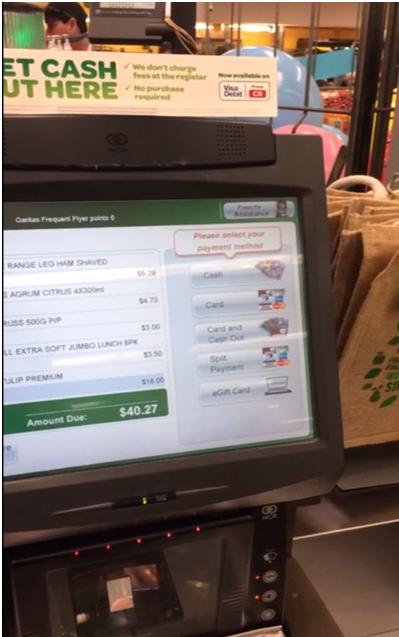
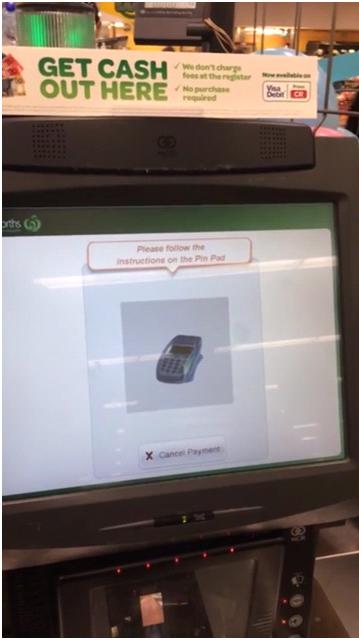
2. Below picture is a self-serve kiosk at Woolworths similar to the one you saw on the virtual video. Using the picture and the virtual video answer the following questions.
.
.
.
.
.
.
a) If you want to purchase the items using your savings ATM card, which payment method will you select from the picture?
.
.
.
.
.
.
b) Explain the procedure of paying by your ATM card.
c) You realised you do not have enough funds in your ATM card and decided that you wish to pay by cash. State what will you do now and explain how will you pay by cash?
.
.
.
.
.
.
The purpose of this activity is to test numeracy skills
3. Calculations.
a) In Target (at 5.22 minute of the virtual video) there was a red top which was placed where 20% off sale items were located. As seen on the tops tag the actual price was $49 but the reduced price indicates that the item is $15. Solve the price of the product after 20% reduction of $49? How much percentage was this top reduced to?
b) In Target (at 5.42 minute of the virtual video) women’s jewellery were 50% off the sale price. The earring we saw had an original price of $10 but the reduced price indicated that the item was now $3. Solve the price of the earring after 50% reduction of $10. How much percentage was this earring reduced to?
c) Coles had a sale and advertised 2 cartons of water for $17 (at 7.55 minute of the virtual video). By looking at the video if we do not want the sale price record the original price of 2 cartons of water? Why do you think Coles put a condition on the sale by saying if we buy 2 cartons then we get it for a discounted price but if we buy 1 carton then we are being charged the full price?
The purpose of this activity is to test observation skills. Refer to the virtual video to answer the following questions.
4. Identify types of marketing signs used for advertising sale in retail outlets (at. 9.18 minute of virtual video).
5. Choose the sale sign which you think is the best for attracting customers and why?
6. Express why the drinks which are located near the registers in the fridge so expensive compared to the drinks located in the aisle?
7. Interpret why the cream iced sponge cake in Coles is going for a “quick sale” and is reduced to $4? (at 8.35 minute of the virtual video).
8. Target has many customer service assistants and mostly all products have prices listed on them. Demonstrate the purpose of the price check point located inside Target?
9. Do you think having a Flybuys card is worth it? Why? (at 8.55 minute of the video). You may do additional internet research to answer this question.
10. Imagine you are the WHS officer who came for inspection at retail outlets. Investigate which WHS hazards you observed in retail outlets and what will you do about it?
Webquest 2
The purpose of this activity is to understand online shopping. Watch the YouTube video to answer the following questions. https://www.youtube.com/watch?v=kDmawiW_MXw
- Create a table on Microsoft Word demonstrating the advantages and disadvantages of shopping online.
- How many people use the internet on a daily basis?
- If a woman earns $65,000 per year and spends $400 on shopping, calculate how much will a woman spend on online shopping if she earned $80,000 per year?
- Interpret what Monica suggests doing for a safe online shopping experience.
- Inspect what you need to look for on a web-page if paying by credit card.
- Evaluate for which things you might actually need to go to retail outlets and cannot be done online?
The purpose of this activity is to interpret graphs.
7.Answer the following by interpreting the graphs
.
.
.
http://evigo.com/18781-survey-tips-succeed-global-ecommerce/
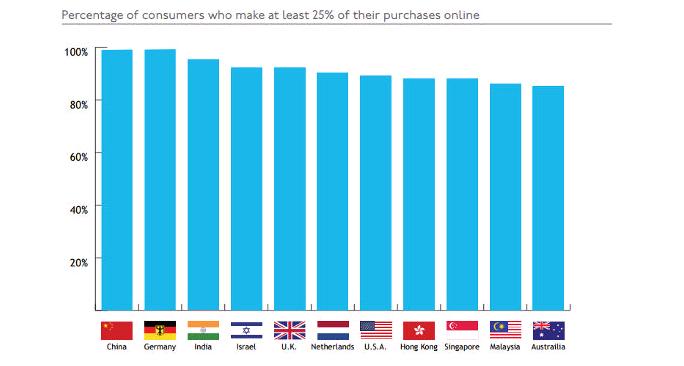
a)Inspect Australia’s online purchasing compared to the rest of the countries.
b)Which country uses online shopping the most?
c)Which two countries online shopping is the same percentage and approximately what percentage is it?
.
.
.
.
http://evigo.com/18781-survey-tips-succeed-global-ecommerce/
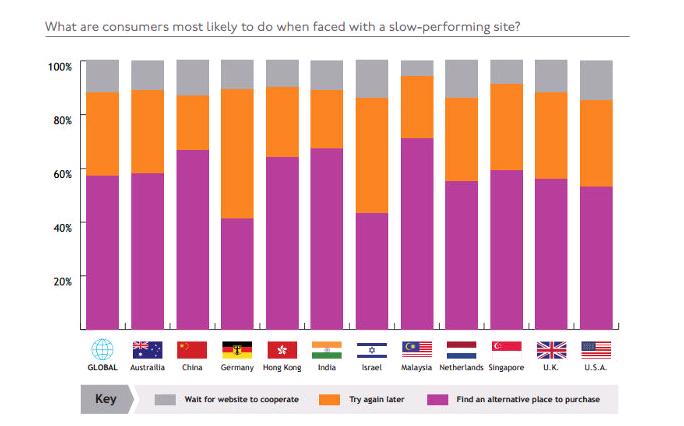
d)Solve what Australian consumers do when faced with a slow-performing site?
e)Select the country which prefers to “try again later” the most?
f)Inspect which country “finds an alternative place to purchase” the most?
http://evigo.com/18781-survey-tips-succeed-global-ecommerce/
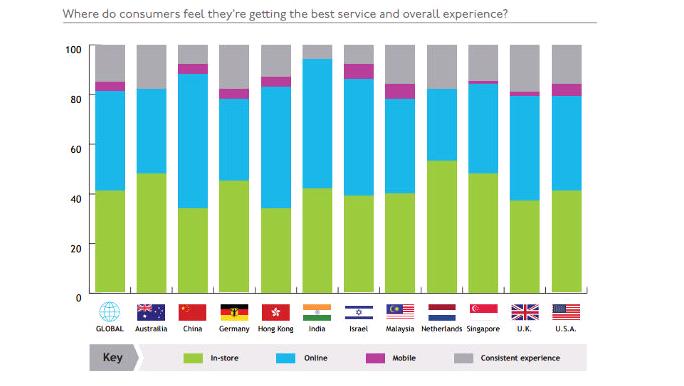
g) Identify which country buys “in store” the most?
h) inspect which country buys online the most?
i) Investigate what service Australian consumers prefer the most?
i) from a global perspective, which is preferred by the world buying in store or buying online?
The purpose of this activity is to test critical thinking skills.
8. Out of retail shopping and online shopping, assess where you think is the best to buy and why?
9. As seen on the virtual video, convince why going shopping is a good experience for children?
The purpose of this activity is to collect primary data.
10.Homework: interview your family members asking them which do they prefer buying in store or buying online? Why?
Webquest 3
The purpose of this activity is to create a pie graph. Watch the YouTube video for assistance on how to create a pie graph. https://www.youtube.com/watch?v=FVRJU--8YMY
1.Illustrate your interview findings by creating a pie graph on Microsoft Excel demonstrating how many of your interviewees’ preferred buying in store and how many participants preferred to buy online.
The purpose of this activity is to understand branding.
2. Visit the following website and compare the price of an Australian souvenir hat compared to the hat seen on the virtual video in 3.58 minutes at the bargain shop “Smart Dollar”.
http://www.zazzle.com/capital9/i%20heart%20Australia
Watch the video on YouTube to answer the following question
https://www.youtube.com/watch?v=tQVkO7WFX8A
3.Why might prices at discount stores be less than other stores?
4.At 11.08 minute of the virtual video shows the children’s shop Pumpkin Patch and the price of couple clothing. Would you spend that amount buying your younger sibling those items? Why/ why not?
The purpose of this activity is to observe advertising techniques.
5.Investigate the things you observed on the windows of retail shops? Why do you think they display their windows that way?
6.List the retail outlet which appeals to you the most and argue why it is attractive than every other store?
The purpose of this activity is to test creative thinking skills.
7.Choose a retail outlet which you like the most from the virtual video. Imagine that you’re the head of marketing and the business is downgrading due to high demand of online shopping. You need to save your business and you have to create an advertising poster which will appear on top of the Harbour Bridge to attract customers to your shop.
Evaluation
|
Criteria |
Mark |
|
Fail 0 - 14 |
|
Pass 15 - 19.4 |
|
Credit 19.5 – 22.4 |
|
Distinction 22.5 – 25.4 |
|
High Distinction 25.5 - 30 |
Conclusion
Thank you everyone for attempting your learning activities. I'm sure everyone did well :)