
Introduction
Introduction
We know that Earth's climate affects everything that lives on our planet. Around the globe, seasons are shifting, temperatures are climbing and sea levels are rising. And meanwhile, our planet must still supply us – and all living things – with air, water, food and safe places to live. Learning about Climate change and dangerous consequences of climate change will give us incentives to find better solutions to protect our Earth.
Learning objectives
- Differentiate between climate and weather.
- Define the term “climate change” in an acceptable way.
- List some consequences climate change impact on life of people, plants and animals.
- Compare and contrast weather in some different areas that students have known/have ever visited/have heard or read from news.
Task
Task 1:
You will learn about what is difference between Climate and Weather by a game:
- 8 students stand in a circle. 8 students represents for 8 cities with different weathers in a month.
- 1 student stant in the center of the circle and represent for climate in a month.
* Reflection on the game:
- Weather describes what is happening in the atmosphere over a short period of time (days or hours) at a specific place. Weather descriptions include temperature, humidity, winds, cloudiness, and atmospheric pressure.
- Climate is the average of these weather conditions over many years.
* Discover by yourself

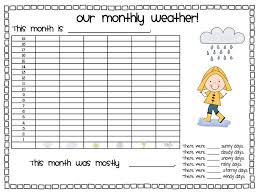
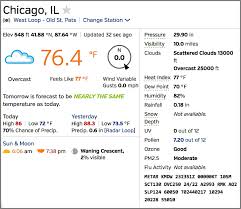
- Using your temperature sensor: to record a series of temperature measurements from the same place over a long period of time, and to measure temperature in places that can't be reached with a liquid-filled thermometer.
- Measure your daily weather
- Investigate water quality
Task 2:
Students will learn about serious consequences of climate change:
- Watch this video and take note what you learnt from watching this video:
[video:https://www.youtube.com/watch?v=9h7P8gWpolQ align:center]
- Discuss main issues as below:
1. Higher temperature - facts and consequences
- During the 20th century, the Earth’s average temperature rose one degree Fahrenheit to its highest level in the past four centuries.
- Increase in heat-related deaths and illness, stronger storms, rising seas.
2. Wildlife - facts and consequences
- Rising temperature are changing weather and vegetation patterns across the globe, forcing animal species to migrate to new, cooler areas in order to survive
- Experts predict that one-fourth of Earth’s species will be headed for extinction by 2050 if the warming trend continues at its current rate.
3. Increased Risk of Drought, Fire and Floods
- Climate change is intensifying the circulation of water on, above and below the surface of the Earth
- High temperature increases the amount of moisture that evaporates from land and water, leading to drought in many areas and likelihood of forest fires.
4. Heat-Related Illness and Disease
- In 2013, the extreme heat waves caused more than 20,000 deaths in Europe and more than 1,500 deaths in India.
- Climate change may increase the spread of infectious diseases.
* Do in group: Give some of your opinions for below questions.
1. How do deforestation and burning fossil fuels affect the abundance of carbon in the atmosphere?
2. How many climate change affect human communities?
3. The primary source of energy for Earth's climate system is....?
Task 3:
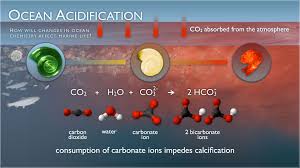
Students will learn about how increased carbon dioxide makes the ocean more acidic:
- Increased atmostpheric carbon dioxide is causing serious changes in the chemistry of Earth's ocean. The ocean absorbs about a quarter of the carbon dioxide humans release into the atmostphere every year and causing Earth's ocean to become more acidic.
- Ocean acidification poses potentially serious threats to the health of Earth's ocean and its ecosystem:
+ A more acidic environment has a dramatic effect on some species that build calcium carbonate shells such as oysters. When shelled organisms are at risk, the entire food web also is at risk.
+ Pteropods are an important food source for salmon. According to some research reports, 10% drop in pteropod production could result in a 20% drop in mature body weight of pink salmon.
* Other impacts of global climate change on ocean:
- Seawater is beginning to contaminate sources of fresh water.
- Rising sea level is submerging coastal marshes that help protect the shore from severe storms, and bringing structures on land closer to the edge of the ocean.
Process
Climate Change Project
Humans are at least partially responsible for the global climate change that is happening now, but humans also are able to take actions to reduce climate change and its impact. This project is a chance for students to create a unique message with creative ways to communicate and lead around people to think about climate change. You may work with a partner or by yourself.
Some issues should be included in the project:
1. What is the issue I will discuss? (Hint: You can opt problems such as increase greenhouse gases in the atmosphere; global sea level is rising as a result of warmer temperature; impacts of climate change on global economies, human and environmental health...)
2. What methods will you deliver the message?
3. What is your plan of action ?
4. Write report.
5. Make presentation
Evaluation
|
Rubric |
|
||||
|
Name: |
|
||||
|
|
1-10 |
11-20 |
21-30 |
31-40 |
|
|
why do you chose the specific problem, how you will analyze the nature of this problem
|
Poor Unclear explanation, lack of specificity and no evidence to support your |
Fair Vague explanation, minimal analysis |
Good Clear explanation, clear analysis with some detail of your process |
Excellent Clear and concise explanation of problem with supported evidence. Description of analysis and steps that you used |
/40 |
|
Who you will use as “audience” to present this problem
|
Poor No audience selected |
Fair Unclear selection of audience, lack of addressing how you will establish support |
Good Clear selection of stakeholders buy-in stated with the need of an in depth plan to create buy-in |
Excellent Clear and concise explanation with significance of who the stakeholders are and a feasible plan that will drive support and buy-in |
/40 |
|
How you will roll out the Plan of action to fix this problem and Budget; How you will monitor this; Calendar of events you will put in place to fix this problem with specific detailed steps
|
Poor Plan is not possible |
Fair Plan is vague, budget is unclear, some steps listed but not drilled down for clarity |
Good Plan is manageable and clear but needs more emphasis on steps taken and budget |
Excellent Plan is clearly and concisely aligned with concise and manageable areas of emphasis and components that will aid in roll-out. A budget is presented in conjunction |
/40 |
|
Presentation and PPT appearance |
Poor Slides are wordy and have errors, speaker is not projection and reading from slides during the entire presentation |
Fair Slides are a bit wordy, PPT is able to be read presenter knows some of the material |
Good Slides are adequate and visible and presenter knows most of their material |
Excellent PPT and Presentation are visible, not wordy, informative, exciting, and presenter knows content |
/40 |
|
|
|
|
Total Points |
|
Conclusion
The goal of this WebQuest is to allow students to learn about climate change and serious consequences of climate change on plants, animals, ocean, and human's lives.
The students will learn on their own through short but useful information, visual experience and doing in group.
Credits
The following sites referenced are:
- http://www.nature.org/
- http://www.educationworld.com/
- Youtube
- Discover Climate: Activities from NOAA
Permissions:
- Permission is granted for others to use and mondify this WebQuest for educational and non-commercial purposes as long as the original authorship is credited.
Teacher Page
Teacher Introduction
Introduction about the importance of lesson "Climate change"
Learners: This lesson can be a self-paced guided lesson for students.
Teachers: For this lesson plan, you can divide it into several days of instruction