
Introduction
By the end of this learning experience, students will be able to answer the following:
- Thomas Paine was the author of what pamphlet?
- Thomas Jefferson was the main author of what document?
- The Declaration of Independence was signed when?
Task
Watch the Video Clip and answer the following questions: Copy and paste link into an Internet Explorer Window.
https://www.youtube.com/watch?NR=1&feature=endscreen&v=awlBeITstkE
Points to Answer: Pause video and take your notes!
- Does Sara side more with the patriots or the loyalists?
- How does Thomas Paine feel about the King?
- Why were colonists interested in reading Paine’s pamphlet, Common Sense?
- Who support the ideas in Common Sense? Who were against the ideas in Common Sense?
- Why would George Washington read the pamphlet to his troops?
Process
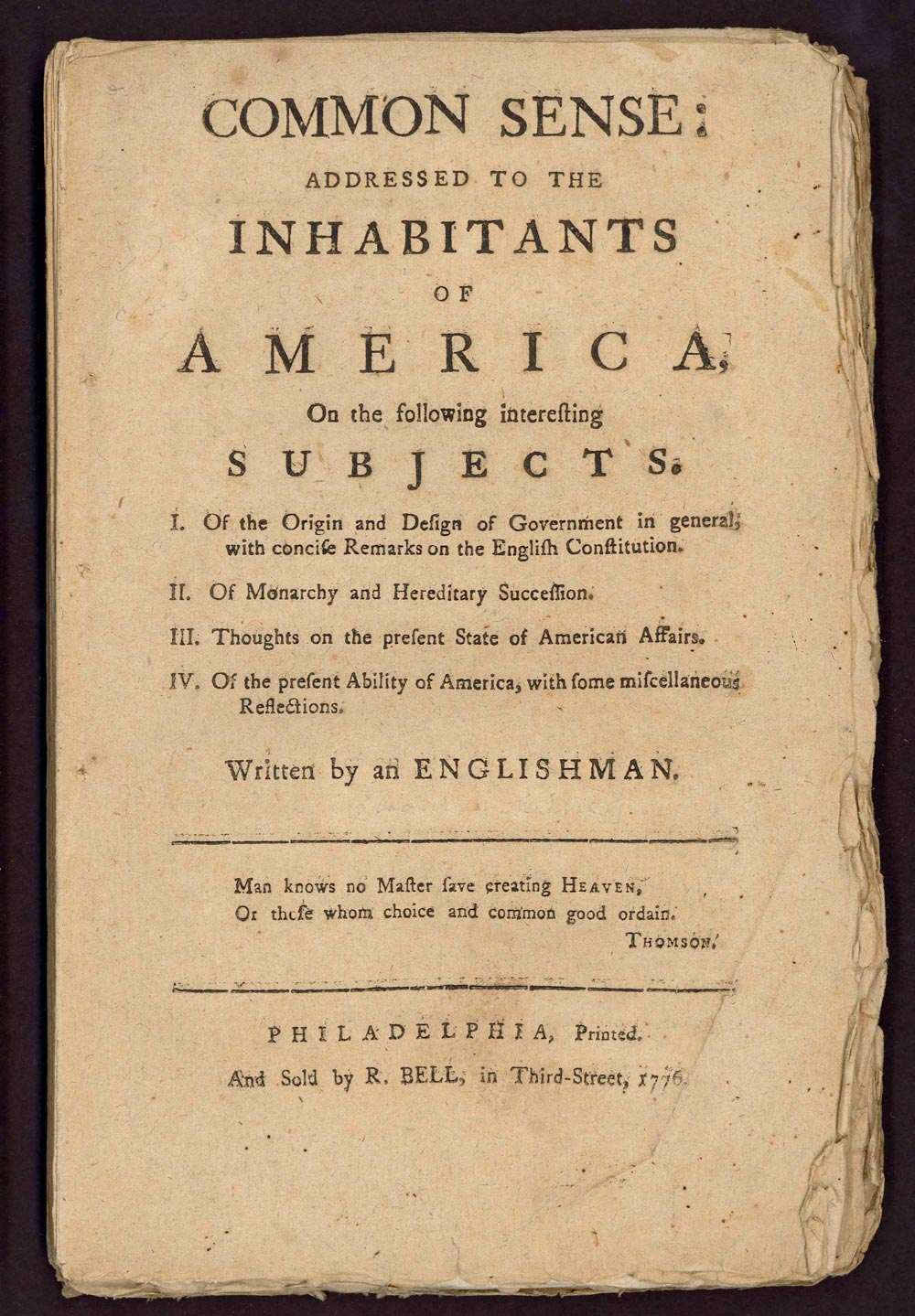
1. Read the background information about Thomas Paine and Common Sense on p. 118 in your new textbook.
2. Read the Common Sense excerpt that follows:
I challenge the warmest advocate for reconciliation, to shew, a single advantage that this continent can reap, by being connected with Great Britain. I repeat the challenge, not a single advantage is derived. Our corn will fetch its price in any market in Europe, and our imported goods must be paid for, buy them where we will.
Every quiet method for peace hath been ineffectual. Our prayers have been rejected with disdain; and only tended to convince us, that nothing flatters vanity, or confirms obstinacy in Kings more than repeated petitioning—and nothing hath contributed more than that very measure to make the Kings of Europe absolute. Wherefore, since nothing but blows will do, for God's sake, let us come to a final separation, and not leave the next generation to be cutting throats, under the violated unmeaning names of parent and child.
As to government matters, it is not in the power of Britain to do this continent justice: The business of it will soon be too weighty, and intricate, to be managed with any tolerable degree of convenience, by a power so distant from us, and so very ignorant of us; for if they cannot conquer us, they cannot govern us. To be always running three or four thousand miles with a tale or a petition, waiting four or five months for an answer, which when obtained requires five or six more to explain it in, will in a few years be looked upon as folly and childishness—There was a time when it was proper, and there is a proper time for it to cease
3. In your Group answer the following about Thomas Paine's message to the colonies, and its impact on the colonies. .
- How did Paine feel about the export of American products such as corn?
- What is meant by "every quite method for peace hath been ineffectual and "nothing but blows will do?".
- Why does Paine feel that Great Britain cannot govern the colonies in the future?.
- What does Paine mean when he says that Great Britain is a "power, who is so very ignorant of us?".
Evaluation
Define Propoganda, write it in your Vocabulary.
Step 1- Summarize one paragraph of Common Sense.
Examples of propaganda in American Revolution: Copy and Paste link in new window
http://www.loc.gov/exhibits/british/brit-2.html
Step 2 -Write about how the paragraph you chose from Common Sense would have affected a soldier at the time. You must address how this was a form of propaganda.
Step 3 In 33 Words in 5 minutes:
Would you have agreed with Thomas Paine? Explain your answer.
Conclusion
- In your opinion, how did Common Sense impact the thinking of colonists?.
- How would a Patriot, a Loyalist and a Neutralist feel about Common Sense?.
Credits
See Process, Evaluation and Conclusion Pages.