
Introduction
"By failing to prepare, you are preparing to fail."
Benjamin Franklin

Web source: https://www.cabarruscounty.us/news-events/communications-outreach/Pages…
Welcome. During this multi-day lesson you are going to assume the roles of weather preparedness experts. That is right! You will be the experts that help prepare your communities of families and friends for any potentially dangerous or severe weather threat. In order to best understand these dangerous or severe weather incidenents, we must have a strong understanding about the differences between "weather" and "climate."
The learning targets for this lesson are:
SPI 0407.8.2 I can distinguish between weather and climate.
I can understand different types of severe weather and know to prepare and stay safe if I ever encounter them.
I can work in a team to research, organize content and present valuable information to my peers.
Task
As weather experts, your families, friends and homes are counting on you to prepare them for potentially dangerous and/or severe weather threats.
Your task is to work in small groups to solve the problem of underpreparedness for various weather incidents. You will each be assigned to one of four expert weather teams and you and your team will be responsible for creating a PowerPoint presentation describing your weather threat, the factors that cause your threat, the difference between weather and climate, who's at risk, recent examples and finally your recommendations to your classmates on how to prepare and protect yourselves, your families and your homes.

Process
You have been divided into four expert weather teams:
- Team Blizzard/Winter Storm
- Team Hurricane
- Team Drought
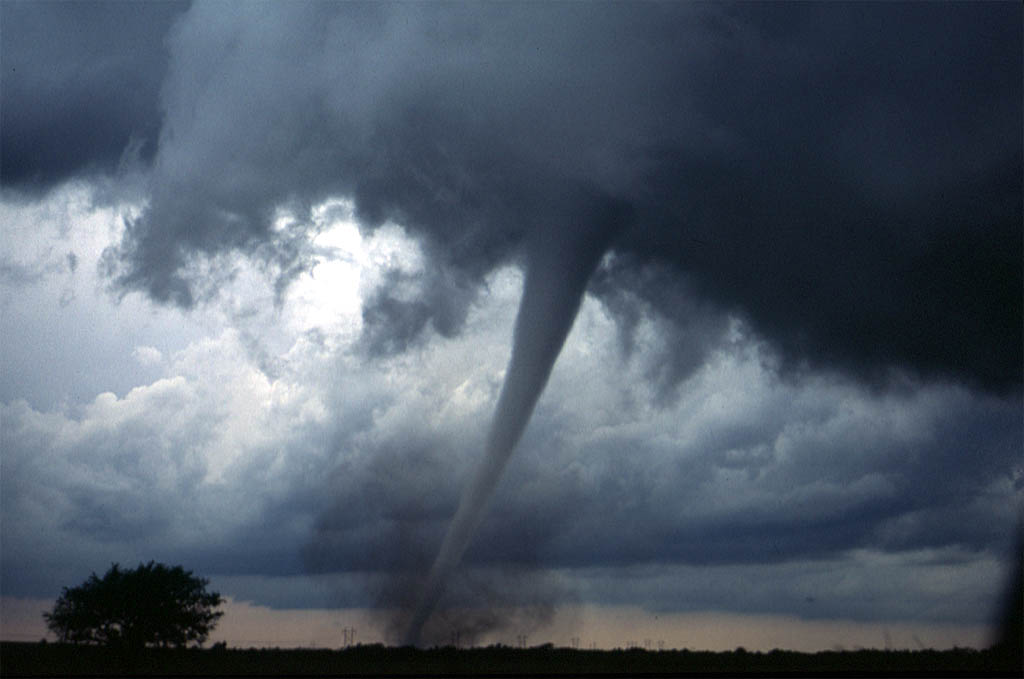
- Team Tornado
Your team is responsble for collaborating together to (1) answer the following questions, (2)create a PowerPoint presentation answering these questions, and (3)present the information to your classmates. Each person in your group must answer one of the questions out loud to the class
Your PowerPoint presentation must answer ALL of the questions below and needs at least 2 APPROPRIATE graphics. Your PowerPoint must contain a title slide, one slide per question and a closing slide.
1.What do the words climate and weather mean? How does climate and weather differ?
2. What is your assigned weather type?
2. What causes your weather threat?
3. Why is your weather type a threat? For example, how can it harm people, animals, food crops, and/or homes?
4. What region(s) of the United States are most effected or at risk of your weather threat?
5. Provide 1-2 real world examples of your weather threat in the United States. For example, Hurricane Sandy devestated the East Coast in fall 2012.
6. What recommendations can you give to classmates on how they can prepare themselves and their families for your weather threat?
Getting Started and Resources:
1. To get started, you will all need to research the words climate and weather. Below you will find a link to a video by NASA. In your own words, your team will need to define the words climate and weather and how they differ.
- Climate versus Weather: Nasa Connect: Climate and Weather
2. Next, go to your team section to find resources to help get your started. Review these resources write down your answers to the questions above in your science notebooks. Your notes will help you create your PowerPoint presentation.
VERY IMPORTANT NOTE: You will be responsible for doing your own web search to find recent examples of these weather types.

Winter Storms and Climate Change
Team Drought

How to prepare/protect for droughts
Team Hurricane

How to prepare for a hurricane
Team Tornado
Evaluation
How you will be evaluated
I will use the rubric provided below to assign your grades. Please read the categories you will graded on and be familiar with what is expected of you and your team in order to get a score of 4. I expect collaboration among all team members and you must show respect to your teammates and their ideas.
|
Category |
4 Excellent |
3 Satisfactory |
2 Needs improvement |
1 Not satisfactory |
Score |
|
Content knowledge on assigned topic |
Answers all 6 questions. Provides information and strong examples for each. |
Answers all 6 questions but does not give extra information or examples. |
Answers all 6 questions but provides incorrect or confusing information |
Does not answer all 6 questions |
|
|
Presentation (Written Language) |
PowerPoint presentation contains no grammatical and/or spelling errors. |
PowerPoint presentation contains 1-2 grammatical and/or spelling errors. |
PowerPoint presentation contains 3-4 grammatical and/or spelling errors. |
PowerPoint presentation contains 5 or more grammatical and/or spelling errors. |
|
|
Presentation (Content Organization) |
PowerPoint includes title and closing slides, one slide per question and at least 2 graphics. |
PowerPoint is missing 1-2 features described in Category 4. |
PowerPoint is missing 3-4 features described in Category 4. |
PowerPoint is missing 5 or more features described in Category 4. |
|
|
Presentation (Oral) |
Each student presents equally on the content. Well rehearsed, demonstrates content knowledge, organized and speaks clearly to the audience. |
Missing 1-2 aspects described in Category 4. |
Missing 3-4 aspects described in Category 4. |
Missing 5 or more aspects described in Category 4. |
|
|
Team Collaboration |
The work was evenly divided among all teammates. Each student equally participated during the presentation. |
The work was evenly divided among all teammates. Each student did not equally participate during the presentation. |
All students contributed but one student did considerably more work then the other students. |
The work was not divided equally one person did more than his or her fair share of the assignment. |
|
Conclusion
Congratulations, weather experts! By the time you have concluded this webquest, you will have shared valuable information with your classmates about your topic and also learned from them about theirs. You have a strong understanding about weather versus climate and know how climate effects the severe weather types you studied. Additionally, you now know exactly what you need to do in the event you ever experience a hurricane, blizzard, tornado and/or drought. Be sure to share you knowledge with your family and friends outside of class so that they might know what to do as well!