
Introduction
You've heard of all kinds of famous people throughout history, but have you ever really gotten to know them? Our country was founded by PEOPLE, much like you and me! Crazy, huh? There are so many people who have done amazing things in this world; it makes me wonder who's next! Now it's your chance to get to know these key leaders on a more personal level and to share what you learned.
Task
Let's take an Internet-based ride down History Lane and get to know some famous people in United States history! You will be collecting information on each person that you and your group are assigned to! Ready...set...let's go!
Essential Questions to Guide You:
What role did the key leaders play?
Who were these key leaders? Where are they from? Use details to help us get to know them.
What significance did they have in the Revolutionary War?
What was their role before, during, and after the war?
[video:https://youtu.be/vuK5RSC29-E align:center]
Process
So here's what you do:
- You will be grouped into 5 groups.
- Each group will be given TWO key leaders whom you will learn about. Groups are:
Red- Patrick Henry & Alexander Hamilton
Blue- Thomas Jefferson & George Washington
Green- Benjamin Franklin & Thomas Paine
Orange- John Adams & Sam Adams
White- John Hancock & Benedict Arnold
PART 1 Research/Collecting Information:
1. Your GROUP will do research on the two key leaders given to you (You will be given a note-taking worksheet). You MUST find out the following (which can be found on the WebQuest):
Why were they significant in history?
Who was this person?
Where did they come from?
Did you learn anything about their family? If so, what did you learn?
If you choose, you may find out more information for your assigment. The more the better!
2. You will begin the WebQuest! You will visit websites that are given and collect the information in your research worksheet. You may access other websites, but they ALL must be cited!!
3. You will bring your information together in your groups and fill out the chart (given to you in class).
The chart has you answer the questions which you were asked above. It also allows your group to stay organized and keep your information in the same place.
4. You will each fill out the worksheet/packet that was given to you. This includes: the chart for your research, the fill-in-the-blank research worksheet - this will guide you through your research.
5. Be sure to keep track of where you are getting your research from. Label the website name on your worksheets. You must use 3 or more websites as sources.
Part 2 Creating a Presentation
1. Together, you will decide what information you think is necessary for your presentations. Don't forget, you must answer these questions:
Why were they significant in history?
Who was this person? (Were they educated? Where did they go to school? Were they a president? Governor? Writer?) Go into detail about who this person was.
Where did they come from? (Where were they born?)
Did you learn anything about their family? If so, what did you learn?
2. Decide what type of presentation you want to do! It may help to take a vote or try to combine ideas!
- For example: you may use a poster board with pictures, written information - like birthdays, where they lived, who their parents were, if they were married; create a timeline on a poster board with significant dates; you may dress up like your characters and present to the class as if you were "in their shoes;" the limits are endless!!
3. Present your information to the class! These should take about 3-5 minutes. Be sure to tell the class who your key leaders were, why they are signficant in history, and more facts you think your classmates should know. Each person in your group must present something! It's easier if you present what research or information you found.
Here are some examples of other presentations (You may use these ideas, but they have to look a llittle different!!!)

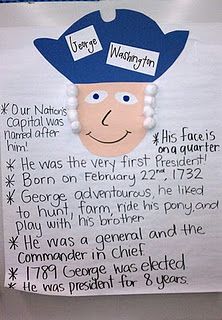
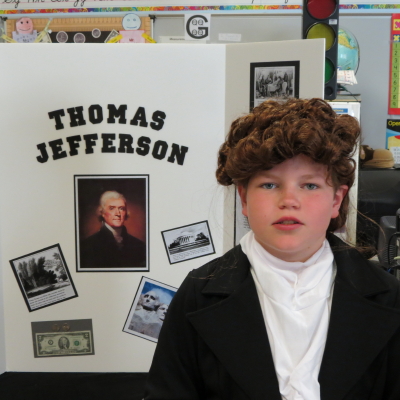
These are all acceptable types of presentations. Not all of them are key leader examples.
PART 3 The Concluding Process/Reflection
1. This is done by yourself!
2. Go to the conclusion page and find the Reflection process.
3. Follow the directions there!
Use the following links for your research:
http://www.libertyskids.com/arch_who.html
http://www.biography.com/people/groups/american-revolution
http://www.theamericanrevolution.org/people.aspx
http://www.campaign1776.org/revolutionary-war/key-figures-patriots.html
Here are some helpful videos, too:
[video:https://youtu.be/3lXnfitSoYw]
[video:https://youtu.be/qCi0NZOMh1A]
[video:https://youtu.be/yOvDTpBbYAE]
Evaluation
The rubric shows how you will be evaluated for this project. Your participation is very important to your group, so doing your part is a must. Be sure to include ALL sources on your worksheets to get full credit and you must use 3 or MORE. Each member of the group must complete their own worksheets! Your presentations should be neat and creative! HAVE FUN; USE YOUR IMAGINATIONS!!
Research Report : Who Are These People? Project
- Student Name: ________________________________________
| CATEGORY | 4 | 3 | 2 | 1 |
| Amount of Information | All topics are addressed and all questions answered with at least 2 sentences about each. | All topics are addressed and most questions answered with at least 2 sentences about each. | All topics are addressed, and most questions answered with 1 sentence about each. | One or more topics were not addressed. |
| Sources | 3 or more sources were used for information | 2-3 sources were used for information | 1-2 resources were used | Sources were NOT used |
| Presentation Participation | Every group member participated in presentation by presenting the information they found.(All 4, at least who were present) | Most group members presented information (3 people) | A couple of group members presented their information | One member of the group presented everyone\'s information |
| Creativity and Neatness | Presentation is neat, organized, colorful, and creative! | Presentation is somewhat neat, organized, colorful, and creative | Presentation is readable, but not neat. Scattered, but a little organized, has a few colors, and is a little creative. | Presentation is plain, not colorful, not organized, and not creative. |
| Worksheet | Worksheet is completed and neat with sources labeled. | Worksheet is completed with most sources labeled. | Worksheet is missing a few things and some answers are labeled with sources. | Worksheet is complete, but there are NO sources labeled. OR worksheet is not complete |
| Participation Overall | Student was here, participating in research and presentation, giving ideas to group, and completed assignment. | Student participated some in research and the presentation, gave a few ideas to the group, and completed assignment. | Student was here, participated in research, but NOT presentation, did not give ideas to the group, and completed most of the worksheet. | Student did not participate in research days. Student did not participate in presentation. Student did not complete assignment. |
TOTAL: _______________________
Date Created: Nov 29, 2015 10:54 pm (CST)
Here is what the sheet that could help you with your research and understanding your peers' presentations looks like:
Key Leaders in The Revolutionary War
Who are these people?
_______________________________ was a symbol of America’s struggle for __________________ and ________________________. He was also famous for his “give me _________________ or give me _____________” speech. He was elected __________ governor of Commonwealth.
___________________________ was a self-made man. He came from an impoverished family. He joined the _____________ and caught General ________________________________________ eye. He led the victorious _______________________________________.
__________________________________ was elected to Virginia’s House of ________________________ in ___________. He was one of ______ men to draft the Declaration of _____________________. He became the ________ president and his most significant accomplishment was the ___________________ Purchase.
George Washington was the _________ president of the United States by an unanimous ____________. He lived on ___________________________________ and played a big role in the ____________________.
Benjamin Franklin was a scientist, _____________________, and writer. He helped draft the _____________________________________________________________. He was one of ______ to come up with the Articles of __________________________. In 1778, he signed the _______________ Alliance and signed the __________________ treaty in 1783-8 4 which ended the ____________________________________.
_______________________________ was a journalist and inventor. He composed many essays; a few being: ___________________ of _____________, Rights of ____________, and ___________________ Sense. Common Sense ___________________ thoughts making people see independence from the ____________________________ was necessary.
______________________________ was elected to the ____________________________ in 1770. In 1796, he was elected as ___________________________ nominee for President. He was the first _________________________________________ of the U.S. and ________________ president.
Sam Adams helped organize the __________________________. He signed the ______________________ of Independence and served as ________________________ of Massachusetts from 1794-1797.
____________________________ was the fist to sign the Declaration of Independence. He was the first governor of _______________________ and had the _________________ signature on the Declaration.
______________________________________ was a member of the __________ of __________________ and was an American Revolutionary War _______________________.
Conclusion
This lesson has taught you (or exercised your ability) to use the Internet as a reserach tool. It has implemented your brainstorming skills in order to get the outcome for your presentations, as well! You have worked with others and by doing so, you have practiced your decision-maknig skills and built on your teamwork skills! Y'all have learned about famous people in our great country's history and in depth, you have discovered what role they played in the American Revolution.
You and your teammates (group-mates) can now answer the questions about who these people were, what was so significant about them, when they were born, and so much more!
(Here is PART 3!) As a part of your conclusion, I want you to think about this:
If you were a famous person in history, what do you think YOUR role in the American Revolution would have been? Would you have been the president? Would you have been one of those who helped craft the Declaration of Independence? Would you have been in the army? Would you have represented "speaking up?" Would you have been a person whom these key leaders valued your opinion? What would you have done? (Yes, girls, you can be presidents and all of the above, too!)
Write a one page reflection/summary page answering that question above. Use the information you learned and decide if you were like one of those key leaders. Decide whether or not you would have played a major role directly (you were there the whole time) or indirectly (you may not have been around all the time, but you were doing things to help anyway).
You will turn these in after your presentations!
Credits
Teacher Page
A WebQuest designed for 4th Grade Social Studies with implementation of English standards
Learning About Key Leaders in the American Revolution
Created by Kaitlin Oscai
Rationale: This WebQuest was created as a different type of instruction for 4th grade students. It follows a TN state standard for 4th grade social studies, along with several 4th grade english/language arts standards, as well. Students should be familiar wtih who the key leaders were because it can help them understand the process of our country gaining independence.
Essential/Enduring Understandings: Students should understand the following- significance behind key leaders ; key leaders roles before, during, and after the Revolutionary War.
Essential Questions: Who were the key leaders? What role did the key leaders play in the Revolution? What signifcance did they have in the War? What was their role before, during, and after the Revolution?
Curriculum Activity: Researching the key leaders and bringing the information together to create a presentation to explain who the leaders were and what their role was.
Skills Development: Thinking Skills and Habits of Mind
- Thinking and communicating with clarity and precision- students will research their given leaders and will present, clearly, to their peers what they have learned.
- Thinking Interdependently- students will be working in groups and must receive and give thoughts in order for this activity to be accomplished successfully.
- Striving for accuracy- students will be researching things on the internet, thus, it is very important for them to get the correct information! They must also cite their resources.
Research skills- Students will be using the Internet to gain research access to videos and articles from website resources.
Technology- Students will use computers and the Internet to get information on key leaders.
Affective Skills- Students will develop an awareness of who each person was, what they did for our country, as well as their cultural differences.
Assessment - Students' projects (research and presentations) and their reflections (conclusion) will be considered their assessment. The rubric is listed in this WebQuest.
Introduction
Students will be introduced to specific, guided instruction done by this WebQuest. This activity follows the class lecture, which included a PowerPoint about the leaders listed in Standard 4.29. Groups were to research their given famous people and find out exactly who those people were by using resources and supporting details. They were to gather their information and bring it all together for a group presetnation.
Learners
This social studies WebQuest is designed to guide 4th grade students, by research and online sources, to find out the significance of the key leaders of the Revolution. Students will research each person and find out facts about their life. These findings will be presented to the class and the student audience will fill out their given timelines as the presentations go on.
Standards
Tennessee State 4th Grade Common Core Standards
Social Studies
(4.29) Analyze the influences of key leaders during this period including: Patrick Henry, Alexander Hamilton, Thomas Jefferson, George Washington, Benjamin Franklin, Thomas Paine, John Adams, Sam Adams, John Hancock, Benedict Arnold
English Language Arts
Literature: Key Ideas and Details (3) Analyze how and why individuals, events, and ideas develop and interact over the course of a text
Informational Text: Integration of Knowledge and Ideas (7) integrate and evaluate content presented in diverse media formats, including visually and quantitavely, as well as in words.
Writing: Research to Build and Present Knowledge (7) Conduct short research projects that build knowledge through investigation of different aspects of a topic
Speaking and Listening: Presentation of Knowledge and Ideas (4) Report on a topic or text, tell a story, or recount an experience in an organized manner, using appropriate facts and relevant, descriptive details to support main ideas or themes; speaking clearly at an understandable rate.
This lesson implements both Social Studies and English standards.
Teacher Process
This WebQuest will be allotted 2-3 days for research and group work with presentations occuring on the last day. Students may not be familiar with WebQuests so the first day of the week/unit (Monday) will be used to show students how to navigate the website.
Typical Schedule:
Monday - show students how to use the website and assign their groups
Tuesday- Thursday - research and group work days
Friday- presentation day
The groups I came up with are as follows:
Red- Patrick Henry & Alexander Hamilton
Blue- Thomas Jefferson & George Washington
Green- Benjamin Franklin & Thomas Paine
Orange- John Adams & Sam Adams
White- John Hancock & Benedict Arnold
Students can do their research at home if they would like, but ALL sources must be listed and everything must return to school the next day. Their group work and research is signed off every day to ensure groups are getting work done. Group interviews can also be conducted.
This WebQuest puts an emphasis on a few of Marzano's Nine Instructional Strategies for Effective Teaching and Learning, too:
- Identifying similarities and differences - students will see how each key leader was different and how some of them were alike
- Summarizing and Note-Taking- students will be gaining research from sources and taking notes on their own. They will also be summarizing at the end (conclusion) with their reflections.
- Reinforcing Effort and Providing Recognition- students will be presenting their information to the class. They will also get their rubrics back as soon as they have presented.
- Homework and Practice- students may have to take home their research as homework.
- Cooperative Learning- students will be working in groups to gain research and to present.
- Setting Objectives and Providing Feedback- the standards that are to be met within this lesson are listed and students will be able to say: "I can identify key leaders and I know their roles in the War."
Resources
Most schools should have libraries with books of the famous people, however, it is a good idea if the teachers have these books in their classrooms. Biographies online are also helpful in this lesson.
More biograhpies and informational texts can be found at: http://www.ducksters.com/biography/
and Barnes & Noble: http://www.barnesandnoble.com/b/books/kids/biography-kids/_/N-29Z8q8Ztva
Students are graded with a Rubric. I created mine based on their presentations, participation in their groups, information that they found, and their creativity.
Research Report : Who Are These People? Project
- Student Name: ________________________________________
| CATEGORY | 4 | 3 | 2 | 1 |
| Amount of Information | All topics are addressed and all questions answered with at least 2 sentences about each. | All topics are addressed and most questions answered with at least 2 sentences about each. | All topics are addressed, and most questions answered with 1 sentence about each. | One or more topics were not addressed. |
| Sources | 3 or more sources were used for information | 2-3 sources were used for information | 1-2 resources were used | Sources were NOT used |
| Presentation Participation | Every group member participated in presentation by presenting the information they found.(All 4, at least who were present) | Most group members presented information (3 people) | A couple of group members presented their information | One member of the group presented everyone\'s information |
| Creativity and Neatness | Presentation is neat, organized, colorful, and creative! | Presentation is somewhat neat, organized, colorful, and creative | Presentation is readable, but not neat. Scattered, but a little organized, has a few colors, and is a little creative. | Presentation is plain, not colorful, not organized, and not creative. |
| Worksheet | Worksheet is completed and neat with sources labeled. | Worksheet is completed with most sources labeled. | Worksheet is missing a few things and some answers are labeled with sources. | Worksheet is complete, but there are NO sources labeled. OR worksheet is not complete |
| Participation Overall | Student was here, participating in research and presentation, giving ideas to group, and completed assignment. | Student participated some in research and the presentation, gave a few ideas to the group, and completed assignment. | Student was here, participated in research, but NOT presentation, did not give ideas to the group, and completed most of the worksheet. | Student did not participate in research days. Student did not participate in presentation. Student did not complete assignment. |
TOTAL: _______________________