
Introduction
Introduction
Juguemos? Do you like food?Do you want to know what are the best traditional food on countries that speaks Spanish? Would you like to know those name in Spanish, be able to communicate with spanish speaker correctly when is time to order your food?
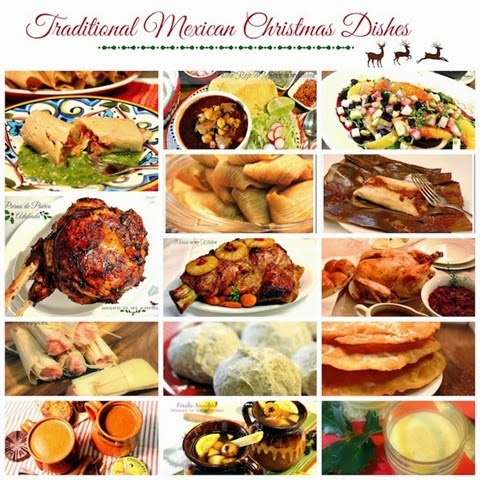
Now, is your time to know what are the best dishes that you can eat when you are traveling into those countries. Through this unit, you will learn the names of the plates and some of the ingredients in Spanish.

Source: http://www.marmorinforma.mx/Michoacan/Estado/Orgullo-reconocimiento-de-…
Task
Your task is to become an expert on traditional dishes from different spanish-spearkers countries! You will learn this by first learning the vocabulary associate with each dish. You will then use the language to compleate several task involving describing the dishes. You will also see the dish from a cultural peerspective focosing on how those dishes are diffrents in American culture. You work in this until you can make a video that describes different traditional dishes from different Spanish-speakers countries.
Source: http://www.bbcgoodfood.com/howto/guide/top-10-foods-try-mexico
Process
Process
1. Choose one dish from two different Spanish-speaker countries (Mexico, Cuba, Colombia, etc) and list the name of the dishes as its ingredients that are use in such dish. Use https://translate.google.com to translate the ingredientes from English to Spanish and do your list in word. You will use this same list in Task 2.
http://www.delish.com/cooking/g1393/traditional-mexican-food-0710/
http://thelatinkitchen.com/recipes/s/classic-cuban-dishes
http://gocentralamerica.about.com/od/elsalvadorguide/p/ElSalvador_Food…
2. Classified the vocabulary into the following categories: Name of the dish, ingredients, words use to order in a restaurant, and words to describe the plate.
3. Find the pictures of the dishes that you chose. Use google to find the images.
4. Using the vocabulary you have already outlined pertaining to your dish and knowledge of typical Spanish-language description in Spanish-speaking countries, create a minute-long video of you providing grammatically and culturally accurate description for a clip from a dish.
Evaluation
Evaluation
This is how your work will be evaluated.
|
None 0 |
Beginning 1 |
Developing 2 |
Qualified 3 |
Score |
|
|---|---|---|---|---|---|
| Task 1 | No applicable vocabulary is identified. | Some applicable vocabulary is identified. | Most applicable vocabulary is identified. | All applicable vocabulary is identified. | |
| Task 2 | No vocabulary from Task 1 is use in the appropriate categories. | Some of the vocabulary from Task 1 is use in the appropriate categories. | Most of the vocabulary from Task 1 is use in the appropriate categories. | All vocabulary from Task 1 iuse in the appropriate categories. | |
| Task 3 | No pictures and captions are included. | Some of the pictures are included, with captions. | Most of the pictures are included, with captions. | All pictures are included, with captions. | |
| Task 4 | No video is included. | The video includes some descriptions of the dish and some evidence of cultural understanding. | The video includes mostly grammatically correct descriptions and evidence of cultural understanding. | The video includes grammatically correct descriptions and evidence of cultural understanding. | |
Conclusion
CONCLUSION
¡Muchas felicidades! You are now an expert on your dish! Now, let's fly to a Spanish- speaker country an order the traditional dish!!! ......Just kidding! But if we could, you would now be able to describe and order a traditional dish AND you could explain to your friends what to expect!

http://gocentralamerica.about.com/od/guatemalaguide/p/Guatemala_Food.htm
Credits
Credits
See links underneath images for image sources.
Author Biography
Maria Garcia
I am a Spanish teacher in Colorado. I teach grades K-12. My classes include Spanish Cultures, World Cultures, and Intro to Foreign.
Permissions
We all benefit by being generous with our work. Permission is granted for others to use and modify this WebQuest for educational, non-commercial purposes as long as the original authorship is credited. The modified WebQuest may be shared only under the same conditions.