
Introduction
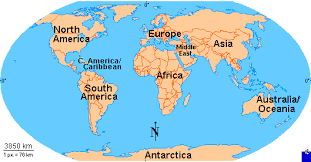
Introduction:
You are a wealthy merchant living in a time that has not yet discovered or mapped much of the world. You have decided that it is your obligation to develop new trade routes so that you and other merchants can trade easier and have a wealth of other goods to trade for money. In order to do this you must travel around the world and map each ocean, continent, and other major land marks that can make this possible. It is important to note that it is very possible you will also run into other groups of people called natives that you may need to get to know as well.
Important Questions to Ask:
- How Many Continents are there around the World and What are there names?
- How Many Oceans are there around the World and What are there names?
- What are some major land marks that were found on some of these Continents?
- Did you find natives?
Task
What is Next?
Each Student will recieve a blank map of the world and will be able to name each continent, ocean, and other important facts about each continent. They will become explorers themselves and discover what makes each part of the world unique. While doing so, they will also learn how to read a map, label North, South, East, and West and have a clear understanding of what it may have been like to be an explorer before maps were created and the importance of trade routes.

What is needed?
- Blank Maps (which will be provided)
- Vocabulary Words (Ocean, Continent, equator, currents, hemisphere, cardinal directions, latitude, longitude, legend,scale, region, prime meridian)
- Coloring tools (crayons, markers, or colored pencils)
- Computer Lab
- Poster Board
- Pen or Pencil
Process
Day 1: Choosing Your Continent
Before your adventure can begin you must know where you are first and labeling what you already know on your map. Each student will choose a continent that they will be coming from originally. Then each student will then start to research this continent for information about surrounding oceans and what they are called. They will also begin to create a plan for what their map will like and what will be on the legend. While doing this a list of vocabulary word will be given for them to involve and define during thier adventure.
Day 2: Traveling the World
Each student will now begin to imagine where their adventures have taken them and continuing to label their maps accordingly. They will record on their maps with red lines where they have gone and where their travels have taken them. They will also begin to consider and research important details about continents that they have visited and how they were effected by different aspects of the world. For example:
- How did traveling along the North or South poles effect your travels?
- Did you run into any unexpected land features like mountain ranges or large canyons?
- What sort of people if any did you run into?
Day 3: Recording Your Adventure
Each student will now review and complete thier maps by labeling each part accordingly and ensuring that everything was filled in appropriately. From this point, major land marks can be added and the key to the map should be completed. Once this has been completed, each student will write one journal entry for each one of the continents they encountered and what they felt was important to know for the next explorer that my go there. The class will all be going to the computer lab for the day to research and determine important details of their adventures and what they would like to add to thier journal entries.
Day 4: Putting it All Together
So what do we know? The class should now have a clear understanding of where all the continents and oceans are located on a map, as well as how to read a map if given to them. The class will participate in a learning game to see how much they all know and understand about the world map. The class will be broken into two teams and will be asked one question at a time to earn points. They will be asked questions about the names of continents, oceans, major land features, and vocabulary words given in the beginning of the week.
Once research has been completed and the journal entries, along with the maps are finished. The class will be given the end of the day to complete their posters for presentation and their final evaluation the following day. Whatever is not completed in class will be assigned to them that evening for completion.
Day 5: Presentation Day!
On the final day of the week, each student will present their posters completed with a map, three journal entries, and a legend. They will be expected to explain their adventures and what they encountered to include important land features, natives, weather, or even common animals in different parts of the world. They will be evaluated and graded after each presentation.
Evaluation
How Will I Be Graded?
5 Points- Colorful and Creative Presentation, all parts completed with no errors
4 Points- Colorful and Creative Presentation, all parts completed with some errors
3 Points- Colorful and Creative Presentation, all parts completed with many errors
2 Points- Creative Presentation, not all parts completed, some errors
1 Points- Presentation given, not all parts completed, many errors
0 Points-No Presentation
Conclusion
Conclusion
In Conclusin, by the end of the week and after each presentation each student will have a clear understanding of what the world map looks like, the names of each continent, ocean, and key terms involved in world geography and important details of different parts of the world.
Credits
Arizona Department of Education Standards:
Concept 1: The World in Spatial Terms
PO 1. Construct maps, charts, and graphs to display geographic information.
PO 2. Identify purposes of, and differences among, maps, globes, aerial photographs, charts, and satellite images.
PO 3. Interpret maps, charts, and geographic databases using geographic information.
PO 4. Locate physical and human features (e.g., significant waterways, mountain ranges, cities, countries) in the United States and in regions of the world on a map.
Connect with:
Strand 2 Concept 2
PO 5. Interpret thematic maps, graphs, charts, and databases depicting various aspects of world regions. (Apply to regions studied).
_________________
Concept 2: Places and Regions
PO 1. Identify regions studied in Strand 2 using a variety of criteria (e.g., climate, landforms, culture, vegetation).
Connect with:
Strand 2 Concept 2
PO 2. Describe the factors that cause regions and places to change.
Connect with:
Strand 2 Concept 2
PO 3. Describe the interactions of people in different places and regions.
Connect with:
Strand 2 Concept 3, 4, 5
PO 4. Explain why places and regions serve as cultural symbols such as Jerusalem being a sacred place for Jews, Christians, and Muslims.
Connect with:
Strand 2 Concept 2
PO 5. Describe the physical and human characteristics of places and regions of a Middle Eastern country studied.
Connect with:
Strand 2 Concept 2
Teacher Page
References:
Arizona Department of Education; 6th grade geography standards from http://www.azed.gov/standards-practices/academic-standards/social-studies-standard/
http://wikitravel.org/en/Main_Page, imaged used
https://flagspot.net/flags/index.html, imaged used