
Introduction
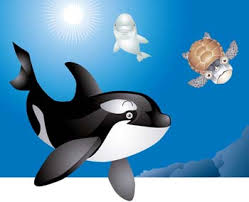
Wally's Whale-Being
Hi Kids! I'm a Whale Trainer here at AquaLand Sea Park. Let me introduce you to my friend here. His name is Wally! Wally is a Killer Whale here at AquaLand today is his birthday! Yes, Wally is eleven years old! While Wally should be feeling well on his birthday, he's actually been feeling sort of gloomy and sick. I'm not sure what to do and I was hoping you could help me! First let's take a look at Wally's Health Record.
| WALLY'S WELLNESS CHART | |
| NAME: | WALLY |
| ANIMAL: | KILLER WHALE |
| AGE: | 11 YEARS OLD |
| SIZE: | 15 FT |
| WEIGHT: | 43 LBS |
| DOB: | 10-27-2005 |
| DATE OF ARRIVAL TO AQUALAND: |
11-19-2014 |
|
HOME: POD HISTORY: |
NORTH PACIFIC OCEAN ALASKAN COAST HE IS THE ONLY ONE FROM HIS FAMILY HERE. |
| HEALTH: |
HE HAS A STOMACH ULCER |
Well it appears that Wally is at top health for his age except for one problem, he has a stomach ulcer which is severe pain in his tummy. It's also not common for whales to have this sickness. No wonder he isn't feeling well. However, ulcers are caused by stress. Is Wally stressed? I mentioned earlier that he was gloomy and since he is the only one from his pod/family here, maybe that's why?
Hmm...
Whales need to have a good diet, room to swim and play and their family/pod. Does Wally have all of his needs met?
| Wally's Day: | |
| Pool Size: |
Length: 130 ft. Width: 20 ft. Depth: 15 ft. |
| Diet: | 100 lbs. of fish per day |
| Activty: |
Swimming Playing with water balls |
What do you think is wrong with Wally? Do you think his sadness and sickness is something normal or could it be he is missing his family? His family lives in the ocean waters near Alaska but Wally was taken away from them and brought to AquaLand when he was nine years old. Did we do the right thing by capturing him and bringing him to a sea park or should we have left him in the wild with his family?
What do you think I should do kids? We need a plan to help Wally have a better birthday and better life!
Task
You can help Wally!
How: I need you to research the three elements that Killer Whales need and those being:
- Room to Swim
- A good Diet
- Fun activity
Wally has room to swim, food to eat and activities but are they good enough?
What To Do:
Compare Wally to whales in the wild. What do they need? This information will guide us to help Wally!
1. Research what an Average Killer Whale needs in the wild. (Search for how much room they need to swim, how much food they need to eat and what activities they need. Also look for anything else they need that Wally doesn't have.)
2. Create a Table Chart that compares an Average Killer Whale in the wild to Wally.
3. Make a Claim that tells what you think is wrong with Wally and why. (Use information you learned from your research and the charts.)
4. Invent a solution to Wally's problem and design a plan to make it work.
RESEARCH: The websites listed below have information on killer whales that may help you figure out Wally's problem.

Process
Process
Students will apply critcal and creative thinking skills as they work individually to save Wally's life. They also get to make their own decsion on what is best for Wally after researching his daily routine compared to other whales in the wild. After they decide what is wrong with Wally based on their research, they must come up with a plan to fix his problem.
Evaluation
Evaluation
|
Points Possible: |
Grading Criteria: |
| /25 |
Table Chart is compares and contrasts Wally to a wild whale in specific areas of: Water, Diet & Activity (More areas are encouraged.) |
| /25 |
Claim is stated and explained. |
| /25 |
Solution to problem is stated and explained. Solution is given in a designed proposal. |
| /25 |
Creativity input. |
| Total Points: /100 |
Conclusion
Conclusion
While this story of Wally is completely made up, it does introduce students to a real life situation, allowing them to explore and decide for themselves what should be done. The students learn of marine life and hazards to raising that marine life in a new place that isn't there orginal habitat. Students also learn to implement technology into their learning and research while building their creative and critical thinking skills. This project, though somewhat elementary, allows students to excercise various skills while learning about new things in a fun, interactive way.
Teacher Page
[img_assist|nid=43643|title=Killer whale|desc=|link=none|align=center|width=85|height=100]
A Teacher's INTRODUCTION
This lesson was developed as an assignment for the Intoduction to Education Technology course at Lindsey Wilson College. In junction, it is a lesson used to educate elementary aged children on the well-being of captive whales.
This lesson on Wally's Whalebeing explores the physical and psychological health of whales in captivity. It also addresses the question of whether captivity is harmful or helpful to the whales which the student will decide for themselves based on the information given.The student must also come up with a solution to go along with their decision about what is best for the killer whale. In concluding this webquest, the student should have a basic knowledge of a captive whale's health and also an opinion/solution on if whale captivity is ethical or not.
LEARNERS
This course is designed for Elementary Grades 2nd-5th although with the younger grades, some additional assistance may be needed.
CURRICULUM STANDARDS
On completeing this assignment, students will be able to:
- Incorporate their own opinion and reasoning into the assignment.
- Learn about Marine Biology, specifically the lifestyle of Orca whales.
- Gain creative/problem solving skills.
- Practice comparison skills.