
Introduction
Greetings, Students!
We have been learning how to classify animals into five groups (mammals, fish, birds, reptiles, amphibians) by identifying their coverings and attritubes. Fish are covered in scales and are cold-blooded, just like reptiles. Amphibians are cold-blooded, but are covered in skin. Mammals and birds are warm-blooded, but mammals are covered in skin and give birth to their young, while birds are covered in feathers and lay eggs. During this WebQuest, you are going to get to classify animals and see the difference and similarities between the 5 different groups. Let's get started!
1.LS3.A.1 Make observations to construct an evidence based account that young plants and animals are like, but not exactly like, their parents. [Clarification Statement: Examples of patterns could include features plants or animals share. Examples of observations could include leaves from the same kind of plant are the same shape but can differ in size; and, a particular breed of dog looks like its parents but is not exactly the same.]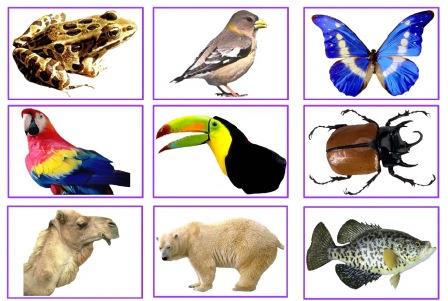
Task
Your task is to use the provided resources to classify your chosen animal as a mammal, fish, bird, reptile, or an amphibian.
Watch the "Classifying Animals" video from Brainpop Jr. to help get you thinking. [video:www.youtube.com/watch?v=NftlOCT1t1k align:left]
Click the following Tumble Books link and listen to the non-fiction text Dolphins by James De Medeiros. You may think that dolphins are fish because they live in the ocean, but they are not!
Click on the following Tumble Books link to listen to Meet the Meerkat by Darrin Lunde to see what kind of habitat you can find a meerkat living in.
Read science ebook Let's Classify Animals!

Check out Sheppard Software to read about information about the different classifications of animals:
Process
1. Pick an animal to classify into an animal group (mammal, fish, bird, reptile, amphibian).
2. Use the resources provided to help you to classify the animal into the appropriate group.
3. Open up your email and create a new Google slide show. You will need a title page with the name of your animal, a picture of your animal, and your name.
4. The next slides will need to answer the following questions:
- What group is the animal in?
- What kind of habitat does the animal live in?
- What is the animal's covering? (fur, scales, etc)
- What are its attributes? (Is it warm blooded? Does it lay eggs? etc.)
- What is a "fun fact" about your chosen animal?
5. After you've typed all of the information into the slides, you may add pictures to enhance your slide show. Remember that they must be informational in nature and they should make sense with the text on the slide show.
6. Once you've added everything to the slide, go back and edit/revise to make sure that there are no mistakes in your presentation and everything looks right.
7. Publish your slide show.
8. "Share" the slide show with the class emails.
Evaluation
Present your Google slide show to the class and reflect on your work. Please, write your self-reflections in your science journals.
When you are self-reflecting, think about these things:
*What went well during this WebQuest?
*What did I learn from this activity?
*Did I give this activity my best effort/stay on task?
*What is something I can do better next time?
*What is something my teacher can do to better help me next time?
Conclusion
You made it to the end! You were able to classify your animal as a/an: mammal, fish, bird, reptile, or amphibian. I hope that you learned something new during this WebQuest and fun doing it too!