
Introduction
|
Attention all space travelers, welcome aboard Spaceship Earth. We are currently traveling at our cruising speed of 108,000 km/h. Although our spaceship is relatively small, only 12,756 kilometers in diameter, it will be our only resource on this leg of our journey. In a few minutes you will travel thousands of virtual kilometers through our planetary neighborhood. Although the ride is long, you should experience no mo |
Task
Task: 
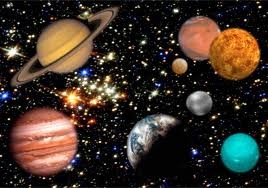
On this space mission, you will gather information and document your findings.
You will record each planet's distance from the sun, size, temperature, rotation, revolution, and even your age and weight on each of the planets! (some info will be about the sun, but you'll have to record your data from afar, as it wouldn't be a good idea to actually "land" on the sun!)
You will also need to find out three interesting facts about each planet.
You will be researching the names of the planets and where they came from.
At the end of this WebQuest, you will be writing about your findings in an informational essay.
Finally, there will be a few "fun" websites to play with that deal with the solar system. Enjoy the rest of your mission. Hold on tight, we are now exiting the earth's atmosphere...proceed to the next part of your trip...the "Process" part of your mission!
Process
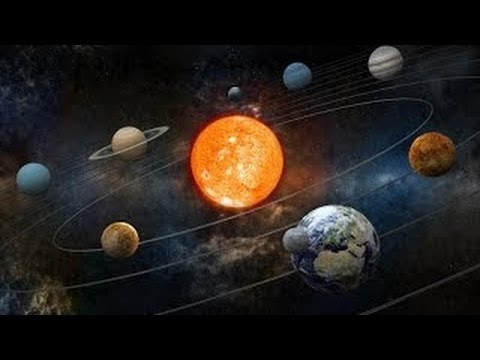
In this part of your mission, you will be landing on your planets, investigating them, and recording your data. Have fun and enjoy your exciting adventure into the solar system!
Step 1:
Using some of the following websites, record all needed information about the planets on your planet chart. On a separate piece of paper, record three fun facts about each planet that are not on the chart already.
http://www.kidzone.ws/planets/index.htm
http://www.factmonster.com/ipka/A0769141.html
http://www.lessonplanspage.com/more/205mer.html
http://starchild.gsfc.nasa.gov/docs/StarChild/solar_system_level1/planets.html
http://www.nineplanets.org/sol.html ((the sun)
http://starchild.gsfc.nasa.gov/docs/StarChild/solar_system_level1/sun_facts.html (the sun)
http://www.bbc.co.uk/science/space/solarsystem
Step 2:
The earth revolves once around the sun approximately every 365 days. This is our "one year." But other planets revolve slower or faster than the earth, making their "one year" come much slower or faster than ours. Find out how old (in earth years) you would be on other planets. This also goes on your planet chart. Make sure to also look at when your next birthday would be on some of the planets. It's funny to see how long you would have to wait for a birthday party there:
http://www.exploratorium.edu/ronh/age/index.html
http:www.jpl.nasa.gov/solar-system
Because of the different sizes and masses of the planets and their different gravitational pull they would have on you, your weight would be different on all of the planets.
http://www.exploratorium.edu/ronh/weight/index.html
Step 3:
Research how the planets got their names and record your data.
Names of the planets:
http://www.factmonster.com/ipka/A0875452.html
http://www.lessonplanspage.com/more/205mer.html
http://starchild.gsfc.nasa.gov/docs/StarChild/questions/question48.html
Fun Stuff (try at least some of these):
The size of our world: (This is great!)
http://www.rense.com/general72/size.htm
http://www.exploratorium.edu/ronh/weight
Math connection:
This is a fun calculator for making a model of the solar system to scale (we could not really do this in a classroom!) On the calculator, put the sun in as 1 inch in diameter, then see how far each model planet would have to be from each other:
http://www.exploratorium.edu/ronh/solar_system/index.html
Some great space photographs from NASA:
http://sse.jpl.nasa.gov/multimedia/gallery.cfm?&Page=23
Solar System Games from NASA:
Planet Order: http://www.nasa.gov/audience/forkids/games/G_Solar_System_Game.html
http://stardate.org/resources/ssguide/planet_form.html
Now you may launch back to Earth and continue with your "Evaluations"...
Evaluation
Evaluation 
Great job on your research, crew members!
Using your research, write an informational essay to this prompt:
If you traveled throught the planetary neighborhood, what could you document along the way?
You will then enter it into Utah Compose so you can evaluate your writings!
Don't forget to use your writing scaffold.
Scoffold:
Introductory Paragraph:
Hook, a taste of what your essay will cover, and a thesis statement that will answer the prompt.
Body Paragraph:
Restate topic(s) and use three details for each topic you mention.
Your conclusion should tie everything up in a nice little bow!
Sit back and enjoy creating a journey for your readers!
Conclusion
Record a journal entry in your science notebook about the knowledge you have gained from this webquest.

 How did this help create neuropathways? What brain files were being connected to access previous learning?
Credits
Thank you to all of the sites that were used in this presentation and to Awesome Science 2013.
Teacher Page
Thank you for doing your very best work and enjoying this webquest made for you!
I love your guts!
Mrs. Arnold