
Introduction
Introduction
It's hard to think of many things powerful enough to disrupt life across our entire planet. Huge natural disasters — like earthquakes, erupting volcanoes, or tsunamis — can affect many thousands of people, but their impacts are usually confined to just one region of the world. They do not affect the whole Earth.
Global warming, which is a gradual rising of Earth's temperature, is different from all these, representing a threat greater than anything humans have faced in recent history. Unless we tackle the problem soon, it could transform the planet we live on, making the climate much more erratic, forcing many species into extinction, and making life much harder — especially for people in developing countries.
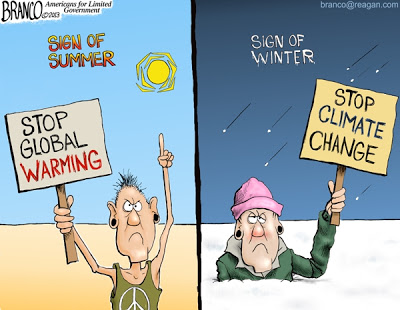
Scientists work hard to understand changes and effects of climate change on oceans, atmospheres, and polar ice caps. We invite you to explore the web to answer questions like these:
- What is global warming?
- What causes global warming?
- What is climate change?
- How do humans affect climate change?
- What is the greenhouse effect and how does it affect us?
- What can we do to reduce global warming?
Task
Task
First, you will learn about climate change and global warming through web explorations. You will then explore sites with data to see how climate change and global warming are monitored. Next, you will then learn how humans affect global warming and what you can do to stop it. Lastly, you will apply your knowledge by creating new ideas with which you can help the environment. These tasks will require a computer, access to the web, and paper and pencil.

Process
Process
Working individually, you will research climate change and global warming, and then answer the questions pertaining to each online source. Click on the links and read thoroughly!
Answer in your own words using complete sentences on a separate sheet of paper. Provide clear and detailed explanations for each question.
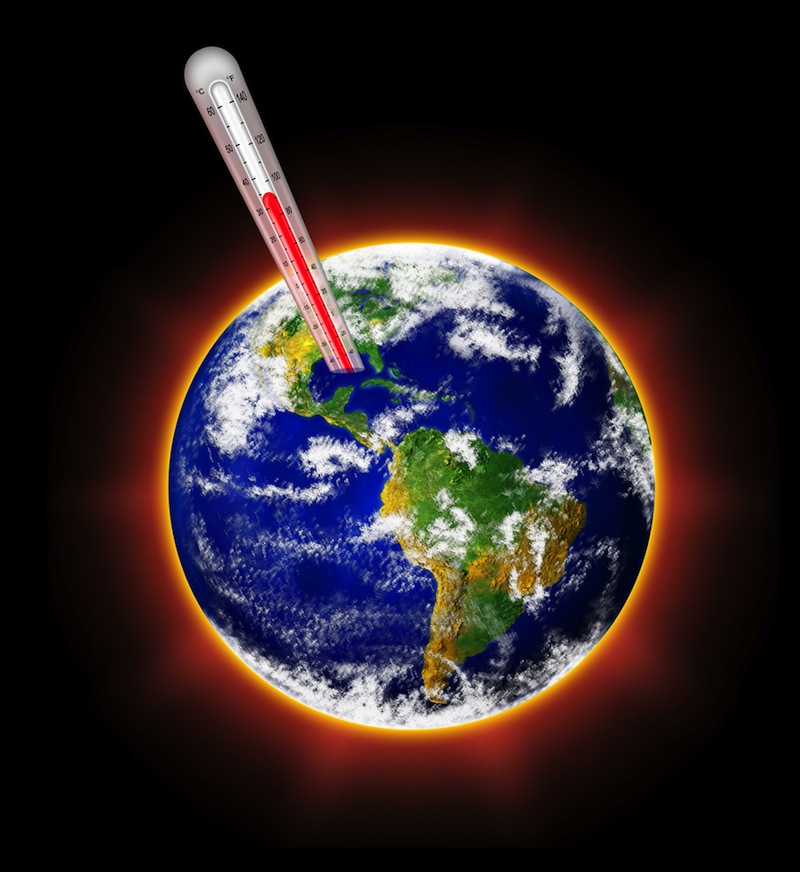
http://www.explainthatstuff.com/globalwarmingforkids.html
- What is global warming?
- What causes global warming?
- What is climate change?
- What are the five things that have increased dramatically around the globe in the last couple of decades?
- How does global warming affect different ecosystems?
http://www.pik-potsdam.de/~stefan/warmingfacts.pdf
- What are four impacts and risks of climate change? Provide a brief description of each one.
http://www.weather.gov.hk/prtver/pdf/docs/cis/climchange/grnhse_e.pdf
- What is the greenhouse effect?
- What are the major types of greenhouse gasses?
- What are the potential impacts of these gasses on human life?
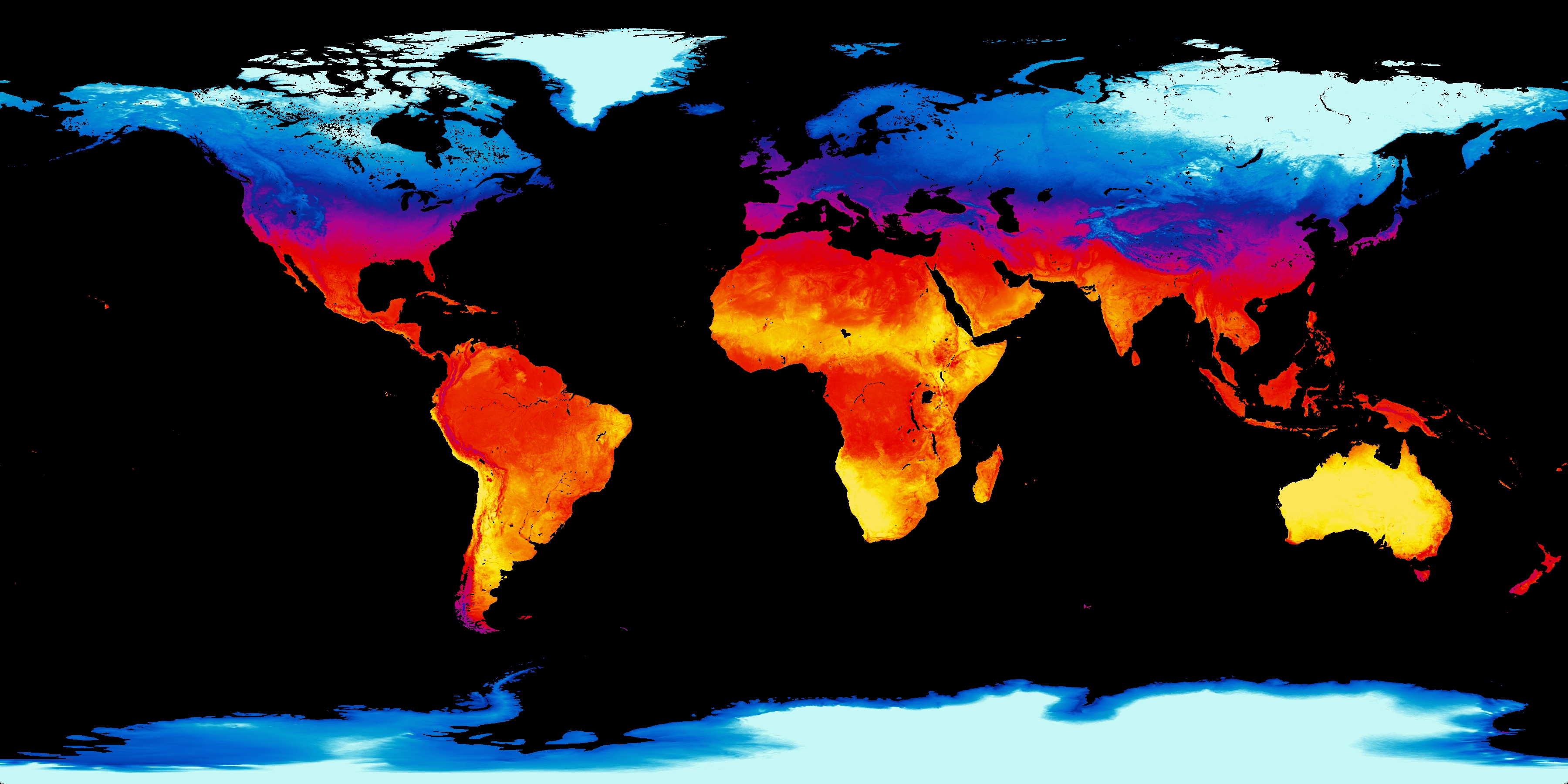
- Give one example of how climate change affects different countries for each of the following:
- People
- Freshwater
- Oceans
- Ecosystems
- Temperature
http://www.pulseplanet.com/dailyprogram/dailies.php?POP=3226
- How will global climate change affect the survival of many plant and animal species?
PROTECT OUR PLANET!
 https://sewelldirect.com/learning-center/recycling-electronics
- Why is it dangerous to keep and store old unused electronics? Provide an example.
- How can these old electronics be recycled?
http://wateruseitwisely.com/100-ways-to-conserve/
- List seven ways you can conserve water every day.
https://www.nrdc.org/stories/how-you-can-stop-global-warming
- Choose one of the methods listed and explain how you could apply it in your own home.
Evaluation
Rubric
| 0 points | 6 points | 12 points | 20 points | |
| Clarity | Significant problems in grammar, spelling or style that make it challenging to follow the author's statements. | Problems in grammar, spelling or style that interfere with the author's statements. | Occasional grammar, spelling or style problems. Tendency to use vague words or excessive jargon. | Grammar, spelling, and style make it easy for the reader to follow. Uses words correctly and avoids jargon unless it is the most precise word. |
| Acurracy | More than one inaccuracy per page. | No more than one minor inaccuracy per source. | All statements are accurate relative to the resource being examined and/or to the material in the online sources. | All statements are accurate relative to the resource being examined and/or to the material in the online sources. |
| Precision/Logic | Fails to provide a level of information that answers the question, either too vague or filled with trivial details. Statements are internally contradictory without explanation. | Statements are sometimes on target and sometimes off center. Segments of the paper hang together but other parts are unclear or contradictory with no good resolution. | Most statements are at the best level of information that answers the question, not too vague but not too overwhelming. Statements are usually supporting one another. Any contradictions are explained. | Statements are at the best level of information that answers the question, not too vague but not "lost in the details" and missing the big picture. Statements are mutually supporting and follow from one another. Any contradictions are explained. |
| Relevance/Significance | Fails to achieve the learning objectives of the task. The topic is trivial or irrelevant to assignment. | Achieves learning objectives minimally. Topic choice is only vaguely related to the assignment. | Achieves the learning objectives of the task. Topic is obviously central to the course. | Achieves the learning objectives of the task. Topic is significant to both the course and in larger senses. Makes a case for that significance. |
| Written in Own Words |
Plagiarized. Copied answers straight from the online sources and did not demonstrate understanding and comprehension in his/her own words. | Plagiarized most of the answers from online sources and copied a few within quotation marks. Shows little comprehension of the topic. |
Rephrases in most cases. Uses few quotation marks to identify answers from the online sources. Expresses his/herself well in short answers. | Rephrases in most cases. Uses only occasional quotation that is in quotation marks and presents logical and clear explanations in his/her own words. |
Conclusion
Conclusion

You learned about the issues of climate change and global warming through online explorations. You also learned the causes of climate change and global warming. Most importantly, you learned how humans affect global warming and things you can do to stop it.
In order to reflect on what you've learned, complete the following:
- List five things you could be doing to help stop global warming.
- List five things that could be done at your school to help stop global warming.
Credits
Permissions
We all benefit by being generous with our work. Permission is granted for others to use and modify this WebQuest for educational, non-commercial purposes as long as the original authorship is credited. The modified WebQuest may be shared only under the same conditions.

Teacher Page
Created by Yarinet Rivera
Overall Standards
LAFS.1112.L.3.6: Acquire and use accurately general academic and domain-specific words and phrases, sufficient for reading, writing, speaking, and listening at the college and career readiness level; demonstrate independence in gathering vocabulary knowledge when considering a word or phrase important to comprehension or expression.
LAFS.1112.RH.1.2: Determine the central ideas or information of a primary or secondary source; provide an accurate summary that makes clear the relationships among the key details and ideas.
SC.912.L.17.8: Recognize the consequences of the losses of biodiversity due to catastrophic events, climate changes, human activity, and the introduction of invasive, non-native species.
SC.912.L.17.16: Discuss the large-scale environmental impacts resulting from human activity, including waste spills, oil spills, runoff, greenhouse gases, ozone depletion, and surface and groundwater pollution.
LAFS.1112.L.1.1: Demonstrate command of the conventions of standard English grammar and usage when writing or speaking.
- Apply the understanding that usage is a matter of convention, can change over time, and is sometimes contested.
- Resolve issues of complex or contested usage, consulting references (e.g., Merriam-Webster’s Dictionary of English Usage, Garner’s Modern American Usage) as needed.
LAFS.1112.L.1.AP.1a: Apply conventions of usage in speaking and writing (e.g., who vs. that vs. which; ending a sentence with a preposition; who vs. whom), consulting reference material as needed.
LAFS.1112.L.3.AP.6a: Use grade-appropriate general academic and domain-specific words and phrases accurately within writing.
LAFS.1112.L.3.AP.6b: Use newly acquired domain-specific words and phrases accurately.
SC.912.L.17.Pa.4: Recognize actions that are harmful to living things.