
Introduction
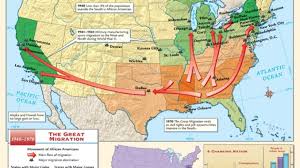
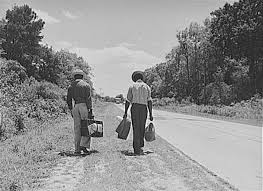
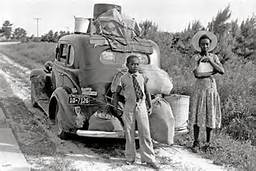
The Great Migration was a vital factor in the development of African American music in many ways that led to an overall improved life for the migrants. From 1910 to 1970, approximately 6 million African Americans migrated from the Southern United States to Northeast, Mid-West, and Western states in search of a better life.
Has your school ever talked about the great migration?
Task
Students will understand how oral interviews can be a significant source of historicalmaterial
Students will understand during how immigration has played a major role in the United States
Studnets will understand the pattern of travel that many african americans took during this migration period.
Process
Dramatization: Going North
Have students play the roles of members of a family trying to decide whether to move from Mississippi to Chicago in the 1920s or the 1940s. Make sure the students do not all hold the same opinion about moving north. Suggest that students consider the following in determining whether to stay in Mississippi or to move to Chicago:
- Geography (including climate)
- Economic opportunities
- Schools
- Social and political opportunities
Evaluation
Three points: more than three sources used for research about where interviewee comes from; first draft of interview questions in very good shape; very smooth and respectful interview; complete and well-written report on the interview
Two points: three or fewer sources used for research; first draft of interview questions needing substantive revision; mostly smooth and respectful interview; adequate report on the interview
One point: inadequate sources for research; first draft interview questions unsuited for the interview; respectful interview.
Conclusion
"[The Great Migration] had such an effect on almost every aspect of our lives — from the music that we listen to to the politics of our country to the ways the cities even look and feel, even today," says Isabel Wilkerson. "The suburbanization and the ghettos that were created as a result of the limits of where [African-Americans] could live in the North [still exist today.] And ... the South was forced to change, in part because they were losing such a large part of their workforce through the Great Migration
[video:https://www.youtube.com/watch?v=i4_u_6ucqnw align:center autoplay:1]
Credits
Lewis, Leon H. "Chicago's South Side Jazz Clubs, Ca. 1915-40's." South Side Jazz Club Project. N.p., n.d. Web. 14 Dec. 2012. http://www.lib.uchicago.edu/e/su/cja/jazzmaps/ctlframe.htm
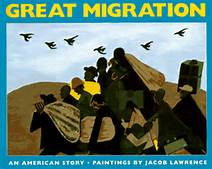
Lawrence, Jacob, Walter Dean Myers, Tom Starace, Tom Starace, Osa Brown, Elizabeth Hutton. Turner, Jessica Altholz, David Gale, Marc Sapir, John Vitale, Lucille Schneider, Darla Decker, Elisabeth Foxley. Leach, George Nicholson, Gwendolyn Knight, Harriet Bee, Michael Hentges, Tim McDonough, Helen Santini, and John B. Murphy. The Great Migration: An American Story. New York: Museum of Modern Art, 1993. Print.
"The African-American Mosaic." Chicago: Destination for the Great Migration: (Library of Congress Exhibition). N.p., n.d. Web. 14 Dec. 2012.
Teacher Page

Education Management
| Current | Social Studies Student at Wayne State University (i.g.c.s.e ) |
|---|---|
| Past | Socail Studies Teacher at ACCESS Schools |
| Education | Wayne State University, Detroit MI |
| Summary | I'm enthusiastic, have potential, adapt new techniques easily, hard worker, can work under pressure and above all I love teaching as I... |