
Introduction
The biosphere is the part of Earth that we interact with every single day. It is important to understand how components of the biosphere work together. In this activity, you will explore different aspects of the biosphere.
Task
You task is to gain knowledge of the biosphere using information provided on the process page. Write your answers on a separate sheet of paper, you do not have to write the question. This is going to take awhile and there is a lot of questions, so this will be for a project grade.
Process
PART 1: WHAT IS BIOSPHERE AND BIODIVERSITY?
Website: http://nationalgeographic.org/encyclopedia/biosphere/
Questions
1) What is the biosphere made up of?
2) Where does the biosphere extend from? Where does it extend to?
3) How long has the biosphere existed and what are the earliest life forms?
4) What changed the biosphere?
Use the following video to answer these questions:
Video: The Importance of Biodiversity
Questions
5) What does Russell Mittermeier define biodiversity as?
6) What important part of life depends on biodiversity? (HINT: Tony Juniper talks about it)
7) How many species per year are we losing?
8) Species used to become extinct over a series of thousands of years, how quickly can the become extinct now?
PART 2: LEVELS OF ORGANIZATION
9) When is an individual not considered member of a species?
10) Define population. How is a population different from a community?
11) What is the second to largest level of organization? Define it.
12) What is the species name in Homo sapiens?
13) What is an ecosytem?
PART 3: ABIOTIC AND BIOTIC FACTORS
Website: http://www2.ccsd.ws/sbfaculty/team8e/jecole/Science/abiotic_vs_.htm
14) What does biotic mean?
15) What does abiotic mean?
16) Organize the following factors as biotic or abiotic. Make sure you draw a table on your paper like this.
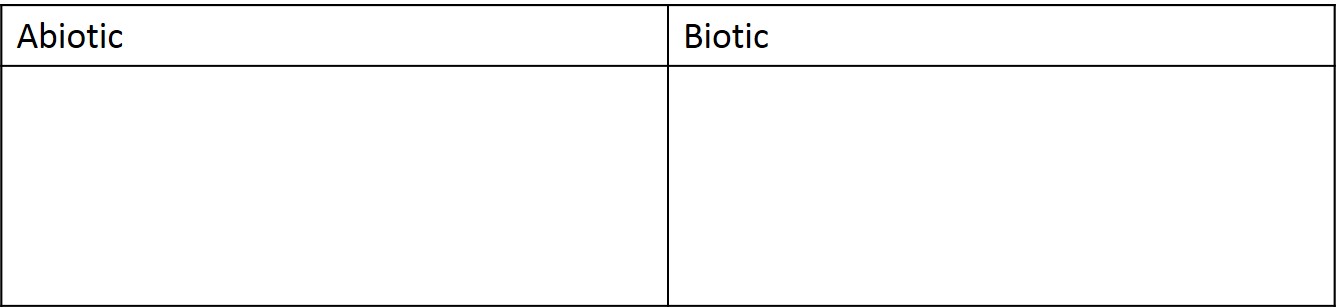
- rock -E. Coli
- mushroom -rose
- temperature -sunlight
- oxygen -humidity
- whale -hummingbird
- water -soil type
PART 4: A CLOSER LOOK ECOSYSTEM
Interactive Ecosystem: http://unctv.pbslearningmedia.org/resource/lsps07.sci.life.oate.ecosystem/analyzing-an-ecosystem/ (Click launch and don't forget to click hint if you need it)
17) From the interactive ecosystem, what is mimicry and what was the example?
18) From the interactive ecosystem what is an example of a producer? (There is more than one right answer)
19) From the interactive ecosytem, what is an example of a consumer? (There is more than one right answer)
20) From the interactive exosytem what was on the rocks?
PART 5: A CLOSER LOOK AT BIOMES
Website: http://www.ucmp.berkeley.edu/glossary/gloss5/biome/
21) What are biomes defined as?
22) What are the classified according to?
23) Do biomes stay the same?
Website: http://unctv.pbslearningmedia.org/resource/ess05.sci.ess.watcyc.biomemap/biomes/ (Click launch)
24) What are the seven types of biomes?
25) What type of vegetation is found in the Coniferous Forest biome?
26) How do perennials survive in the Desert biome?
27) What is the yearly temperature range in the Grassland biome?
28) How much precipitation per year occurs in the Tropical Rainforest biome?
29) What kind of winter exists in the Shrubland biome?
30) What part of the US has the Temperate Deciduous Forest Biome?
31) What is the temperature for the Tundra biome?
32) Which biome is the coldest?
PART 6: WHAT EATS WHAT: FOOD CHAINS AND FOOD WEBS
Website: http://www.enchantedlearning.com/subjects/foodchain/
33) What is a producer?
34) What is a primary consumer?
35) What is a top predator?
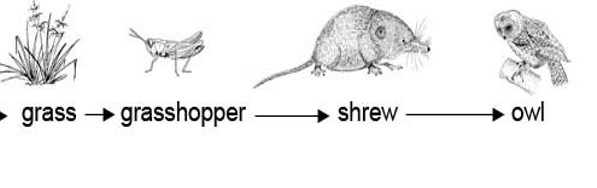
36) Which of the following would be the a a top predator (quarternary producer)?

37) Which of the following would be the producer?
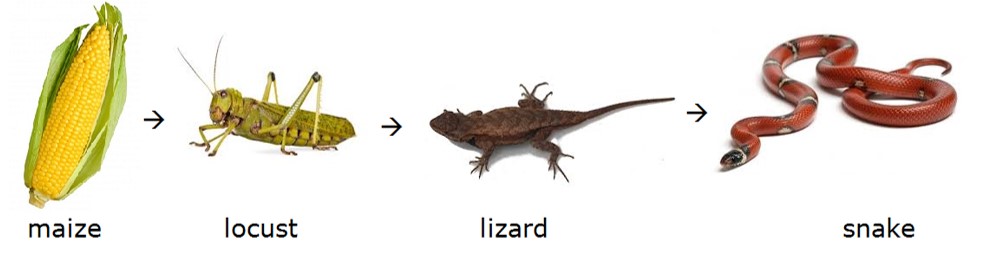
38) Which of the following would be the a secondary consumer?
PART 7: LOSS OF BIODIVERSITY
Website: http://www.oum.ox.ac.uk/thezone/animals/extinct/define.htm
39) What is extinction? Give an example of an extinct species.
40) What is endangered? Give an example of an endangered species.
Evaluation
Take this quiz on quizlet and write down your score for a quiz grade.
Conclusion
Congratulations! You have completed this assignment!
Credits
Websites used:
http://study.com/academy/lesson/what-is-a-food-chain-examples-lesson-qu…
http://www.theschoolrun.com/homework-help/food-chains
http://igbiologyy.blogspot.com/2014/03/107-food-chains-food-web.html
http://www.oum.ox.ac.uk/thezone/animals/extinct/define.htm
Quizlet
http://nationalgeographic.org/encyclopedia/biosphere/
http://www.pbs.org/wnet/nature/the-loneliest-animals-web-exclusive-vide…
http://www2.ccsd.ws/sbfaculty/team8e/jecole/Science/abiotic_vs_.htm
http://unctv.pbslearningmedia.org/resource/lsps07.sci.life.oate.ecosystem/analyzing-an-ecosystem/
http://www.ucmp.berkeley.edu/glossary/gloss5/biome/
http://unctv.pbslearningmedia.org/resource/ess05.sci.ess.watcyc.biomemap/biomes/