
Introduction
In the previous lessons, we have learned about living, nonliving, and once living things. In this lesson, we are going to be learning about environments and what is found within them! After we learn about environments each one of you is going to go on an adventure of your own!
But before that.... choose one of the options below to test your knowledge.
Option 1: Answer the question "What is an environment?" on Answer Garden
https://answergarden.ch/398541
Option 2: Disucuss with your classmates what environments are
https://todaysmeet.com/Environments
Option 3: Take a survey on Kahoot!
https://play.kahoot.it/#/k/98c72eb1-d225-4297-bd76-40bbc2241c52
Task
Before we go on our adventure we are going to learn about environments!
Click the link below to look at some pictures of environments you might be familiar with!
http://www.victoria.ac.nz/sgees/images/qe-lake-matheson.jpg
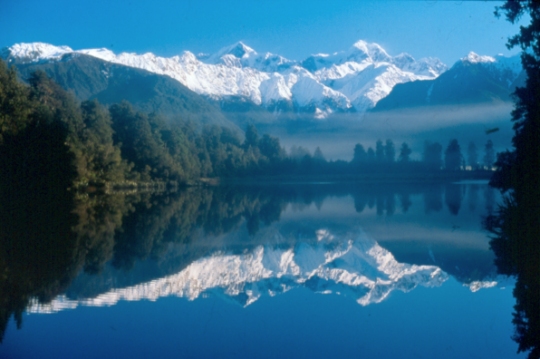
https://arjun80.files.wordpress.com/2012/04/environmentw37jx2.jpg

https://static.pexels.com/photos/3853/sunny-sand-desert-hiking.jpeg

From looking at these pictures, what do you think an enviornment might be?
Now that you have an idea, follow the link to watch the video to learn more about environments!
[video:https://www.youtube.com/watch?v=vLNNHAq9pOg]
*Remeber you can put captions on this video
Last, I want you to read through this article to learn about the different types of environments.
https://www.reference.com/science/types-environments-327160a5c260ec1e#
Process
Now that we know what an environment is, we are going to use all our knowledge about living, nonliving, and once living things to complete our task, which is to go on an adventure and find examples of all three in their environments!
BUT WAIT!
Before you can go carefully read through all the directions.
1. You will choose a location, this could be under a tree, on the playground, in your backyard, anywhere! Wherever you choose, make sure you have your parents permission.
2. Once you have a location, you are going to gather a sample of dirt. You could use a shovel or cup to get yours.
3. When you get the sample, you are going to dump it on a white piece of paper.
4. Next you are going to sort through and classify what was in your sample. You should have 3 categories, living, once living, or nonliving. Make sure you keep track of this because you will be using it for your write-up!
5. As you go through this process, keep in mind these questions.
-
What type of environment did you get your sample from? Describe the area.
-
Classify the living, nonliving and once living things. Tell how many were in each category and show examples.
-
Were there any items that you weren’t sure where they belonged?
-
What did you learn from this experience?
-
What is something you have a question about?
6. You are going to be completing a project and these questions are essential to succeding so make sure you keep these in mind as you go and find your sample.
Evaluation
Now that you are done with your adventure, you are going to document it for all of us to see! You will have the until Tuesday December 6th to complete your project.
You have 4 options. Each link leads to an example. You can...
1. Create a video using WeVideo to document what you saw and answer the questions
https://www.wevideo.com/hub/#view/801432489
2. You can write a RAFT
https://docs.google.com/document/d/1I1Yt9U1JlSRuzAplTumQ6ZNNTjLyFugIDLr2kbwXsYk/edit
3. You can create a Storybird
https://storybird.com/books/storybird-introduction/?token=hp8y683he7
OR
4. You can create a poster
For the poster you can write, draw, print out pictures, whatever you want.
*Remember, no matter what option you choose, you must answer all the questions below.
-
What type of environment did you get your sample from? Describe the area.
-
Classify the living, nonliving and once living things. Tell how many were in each category and show examples.
-
Were there any items that you weren’t sure where they belonged?
-
What did you learn from this experience?
-
What is something you have a question about?
Conclusion
Below is the grading rubric
| Grade | 1 | 2 | 3 |
| Answered all the questions | Only answered a few of the questions | Answered most of the questions | Answered all of the questions |
| Gave clear answers that showed your understanding | Answers were not clear and student did not appear to understand | Most answers were clear and student mostly understood | All answeres were clear and student understood |
| Submitted the project on time | Project was more than a week late | Project was a few days late | Project was on time |
Can't wait to see your projects, I know you will all do great! Also, if you need to review nonliving, once living, and living things, look over the Google Slides.
If you have any questions, contact me :)
Credits
Science
Standard 2:
Students will understand that organisms depend on living and nonliving things within their environment.
Objective 1:
Classify living and nonliving things in an environment.
UDL
Standard 1: Provide multiple means of representation
Objective 1: Provide options of perception
Standard 3: Provide multiple means of engagement
Objective 1: Provide options for recruiting interest
Objective 2: Provide options for sustaining effort and persistence