
Introduction
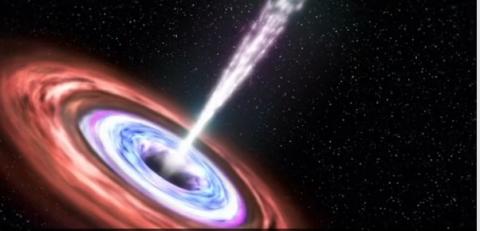
You have been chosen to get to go into space to study black holes. Before you go into space you are going to need to be tested on your knowledge on black holes. If you pass the test then you will be able to go into space but if you don't you will not be able to go on the trip. Good luck!
Process
Activity 1 Reading
http://easyscienceforkids.com/fun-black-holes-quiz-free-general-knowled…
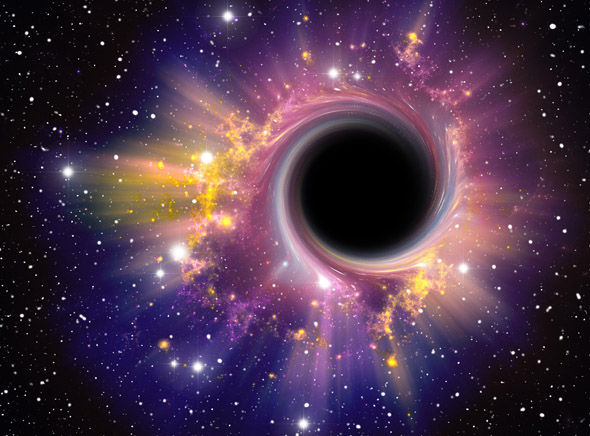
Copy the link above and paste it in the address bar. Scroll down to Take this fun free online interactive science quiz and click on the link to read the article. After you read the article take the quiz.
Activity 2 Math
https://www.nasa.gov/pdf/377674main_Black_Hole_Math.pdf
Copy the link above and paste it in the address bar. Go to page 5 and complete the activity that will be shown.
Activity 3 Science
http://www.proprofs.com/quiz-school/topic/black-hole
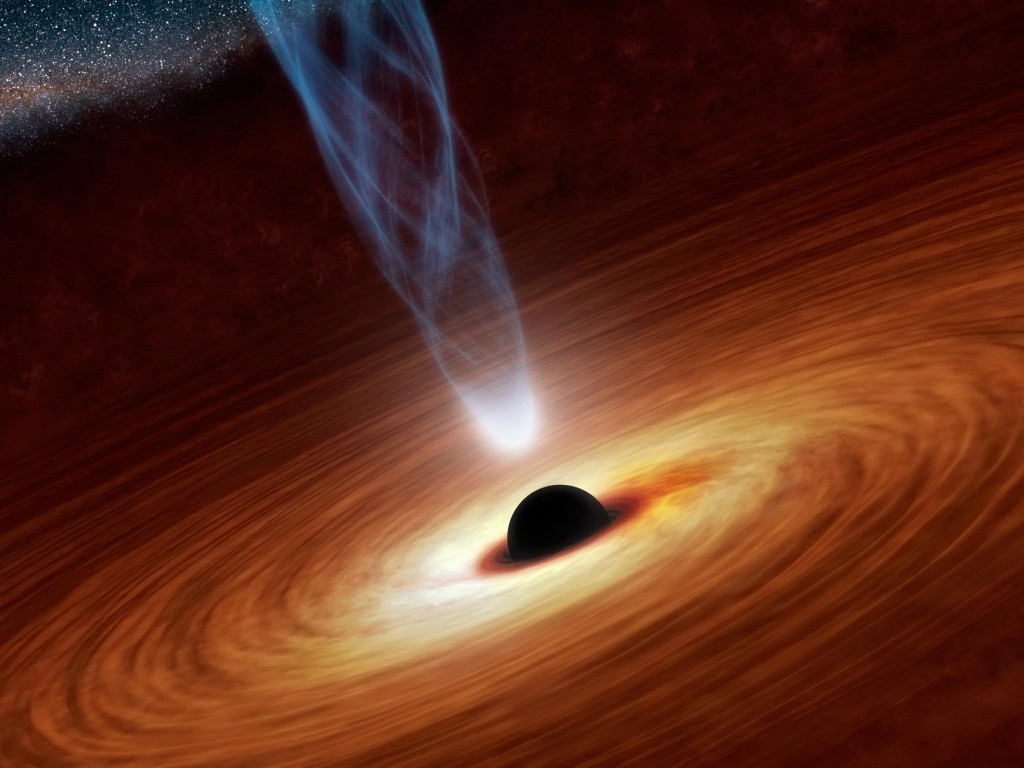 Copy the link above and paste it in the address bar. Read and take the quiz on black holes.
Good Luck!
Activity 4 Social Studies
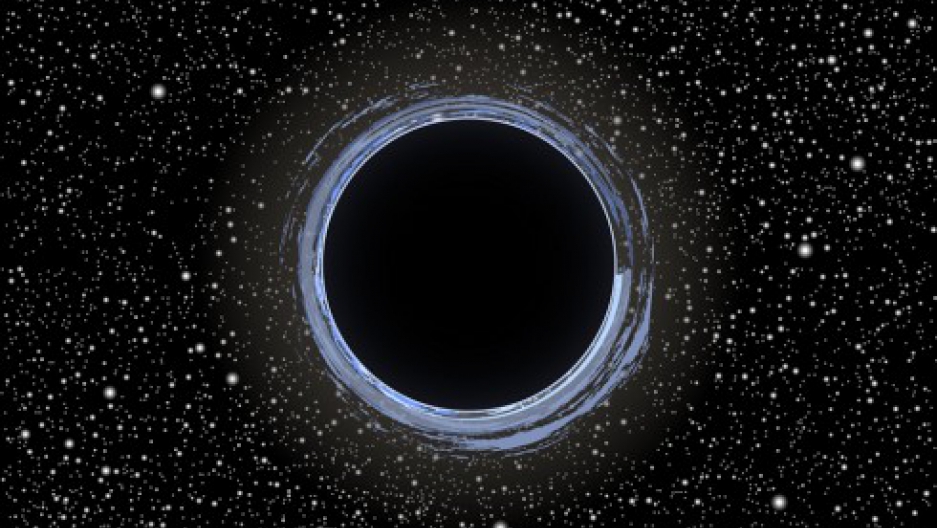
- 1971 — Identification of Cygnus X-1/HDE 226868 as a binary black hole candidate system
- 1972 — Stephen Hawking proves that the area of a classical black hole's event horizon cannot decrease
- 1972 — James Bardeen, Brandon Carter, and Stephen Hawking propose four laws of black hole mechanics in analogy with the laws of thermodynamics
- 1972 — Jacob Bekenstein suggests that black holes have an entropy proportional to their surface area due to information loss effects
- 1974 — Stephen Hawking applies quantum field theory to black hole spacetimes and shows that black holes will radiate particles with a black-body spectrum which can cause black hole evaporation
- 1989 — Identification of GS2023+338/V404 Cygni as a binary black hole candidate system
- 2002 — Astronomers at the Max Planck Institute for Extraterrestrial Physics present evidence for the hypothesis that Sagittarius A* is a supermassive black hole at the center of the Milky Way galaxy
- 2002 — NASA's Chandra X-ray Observatory identifies double galactic black holes system in merging galaxies NGC 6240
- 2004 — Further observations by a team from UCLA present even stronger evidence supporting Sagittarius A* as a black hole.
- 2012 — First visual proof of existence of black-holes. Suvi Gezari's team in Johns HopkinsUniversity, using the Hawaiian telescopmassive black hole 2.7 million light-years away swallowing a red giant.[1]
- 2016 — LIGO Scientific Collaboration announces the direct detection of gravitational waves from a binary black hole merger
Activity 5 Art
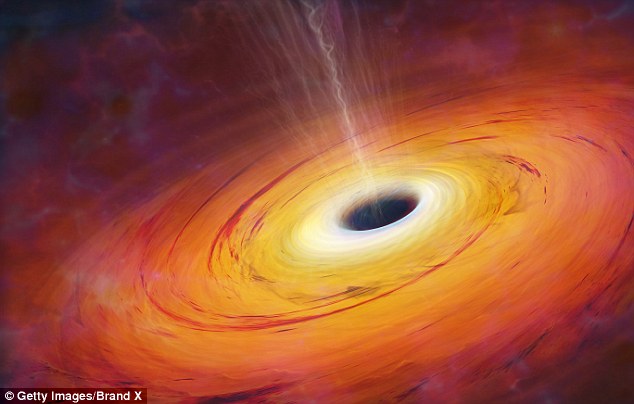
For this activity you will need a piece of paper. On the paper you will need to draw a picture of a black hole. You are doing this because while you are studying black holes you are going to need to be able to sketch them.