
Introduction
There are many relations as a result of the semantic associations between the forms and the meanings of the words.
Do you know how to identify and distinguish them?

Task
The aim of the lesson is to learn the sense relation, that is, the mismatch relationships (antonymy), the relations between signifier and signified (synonymy, homonymy and polysemy) and the relations of inclusion (homonymy). All this through of different explications and activities that we are going to see now.

Process
Sense relations:
-
It is focused on the semantic relations.
-
In other words, It is the relation between words.
- There are many relations as a result of the semantic connection between the form and the meaning and between two meanings.
PREVIOUS ACTIVITY:
FIND THE INTRUDER.
| WORDS | RESULT |
| Wood
Lamb Fig Bank Key Computer |
COMPUTER IS THE INTRUDER. |
Now, look at the words, what do you think polysemy is?
1. POLYSEMY
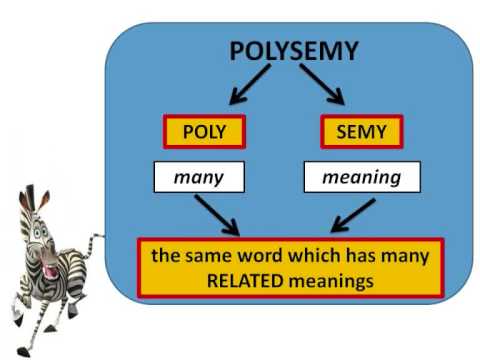
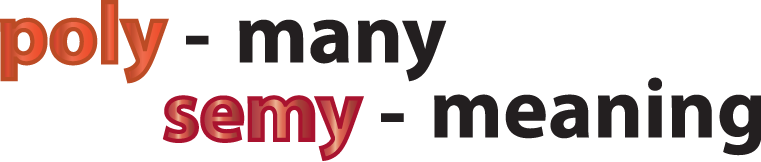
Polysemy is the state or phenomenon in which words have more than one meaning. In other words ,it can be described as multiple meanings of words.
-Examples-
*Plain (Adjective): English is a plain subject (simple)
This skirt is too plain (not-decorated)
*Wood (Noun): A piece of wood (The hard material that trees are made of)
We went for a walk in the woods ( a large area of trees growing near each other)
*Foot (Noun): One of his shoes felt too tight for his foot (the part of the body)
We waited for the others at the foot of the hill (the lower part of anything)
WORD: -PRIMARY MEANING (The key broke in the lock.)
- SECONDARY MEANING (The key problem was not one of quality but of quantity)
PREVIOUS ACTIVITY:
MATCH THE WORDS AND FIND THE INTRUDER.
| WORDS | RESULT |
|
Ant Pain Roll Aunt Eye And Pane Role |
Ant- And
Pane-Pain
Roll-Role
AUNT IS THE INTRUDER |
Now, look at the couples, what do you think homonymy is?
2. HOMONYMY
Homonyms are words that are identical in their form (graphic or sound) but different in meaning and distribution.
-
Homonyms proper: Similar sound and graphic. (Different meaning: A Ball / a Ball* *meeting for dances )
-
Homophones: Similar sound. Different graphic form and meaning: Peace / Piece Site/Sight
-
Homographs: Similar graphs. (Different pronunciation and meaning: A row” /rau/ (a fight) ; “a row” /reu*/ .*A number of persons or thing in a more or less straight line.)
Homonyms proper can be classified according to the type of meaning in which homonyms differ (Smirnitsky):
-
Lexical homonyms: Different in lexical meaning.
-
Lexical-grammatical: Homonyms which differ in both meanings.
All cases of homonymy may be subdivided into full and partial homonymy.
-
Full homonyms: if words are identical in all their forms.
* Example: Ball =Ball


-
Partial homonyms: But a seal(n) and to seal(v) or a bear(n) and to bear(v) have only two homonymous form.


PREVIOUS ACTIVITY:
MATCH THE WORDS AND FIND THE INTRUDER.
| WORDS | RESULT |
|
Big Beautiful Happy Worst Optimistic Rich Cool Small Pesimistic Ugly Poor Best Sad |
Big - Small
Beautiful - Ugly
Happy - Sad
Worst - Best
Optimistic - Pesimistic
Rich - Poor
COOL IS THE INTRUDER |
Now, look at the couples, what do you think antonymy is?
3. ANTONYMY
Antonym is oppositeness of meaning between a word and the other word or among words in the same part of speech, such as good-bad (adjective-adjective) and fast-slowly (adverb-adverb).
-
Structurally:
• Absolute (different roots): Right-Wrong, To arrive-To leave.
•Derivational (same root): To fit - To unfit
-
Semantically:
• Contradictories: deny each other, their relation can be described by the formula A vs. NOT A. Alive vs. dead (not alive) Patient vs. impatient
• Contraries: mutually opposed but with some possibility between themselves. Cold vs. hot (intermediate terms such as warm or cool) - Gradable antonymy: This type describes something which can be measured and compared with something else. Wet-Dry, Big-Small, Long-Short, Easy-Difficult, Young-Old Fast-Slow.
• Incompatibles: exclude possibilities of others words from the same semantic set. It’s January (implies that isn’t February, July, December, etc)
• Complementarity: As the name says, the two words are complementary between them. On-Off, Alive-Dead, Yes-No, Input-Output, Male-Female, Up-Down

PREVIOUS ACTIVITY:
MATCH THE WORDS AND FIND THE INTRUDER.
| WORDS | RESULT |
|
Cheerful Plan Good Serious Nice Singular Scheme Happy Unique |
Cheerful - Happy
Plan - Scheme
Good - Nice
Singular - Unique
SERIOUS IS THE INTRUDER |
Now, look at the couples, what do you think sinonymy is?
4. SINONYMY
It is the relation between words that share the same meaning. The synonymy consists on the equality of meaning. However, some linguists say that there are not words that have an identical meaning. Also they believe that it is unlikely to find words with the same meaning taking into account all their meanings and contexts in which they could appear.
It is really difficult that we find words with full synonymy. However we have to say that the best degree of similarity is found in words that have the same denotational component and they differ in their connotational component; for example: father and dad.
- Types depending on the grade of similarity:
1. Partial synonymy: You can use it in certain contexts; however in others you can not use it. For example: dark and sad/ decide and resolve/ begin and open.
2. Absolute synonymy: You can use it in any situation. For example: to begin, to start. It is very rare. Two expressions are absolute synonymy if:
- All their meanings are the same
- Words are applicable in all contexts
- Words mean the same in the descriptive and non descriptive meaning
*For example: holiday/vacation.
Related to the ‘’Loose synonymy’’, we have to say that it is when we have some words without the same meaning but there is a connection between them or they belong to the same semantic field. For example:
Chair, stool, seat, and bench: these words have not got identical meaning; however they belong to the same semantic field which is the action of sittin


So if we take into account this concept of loose synonymy we may be think if the total synonymy exits.
PREVIOUS ACTIVITY:
MATCH THE WORDS AND FIND THE INTRUDER.
| WORDS | RESULT |
|
Rose Furniture Pea Apple Table Fruit Flower |
Rose-Flower
Table-Furniture
Apple-Fruit
PEA IS THE INTRUDER |
Now, look at the couples, what do you think hiponymy is?
5. HYPONYMY:
It refers to the semantic relation of inclusion. Hyponym is the word that by its meaning is included within another, but in its definition adds other characteristics that differentiate it.
*Tomato is included in vegetable.
*Red is included in colour.
*Dog is included in animal.
That is, the hyponyms are words that don’t meaning the same (they aren’t synonyms) but they share some characteristics.
*Tomato is a hyponym of vegetable.
*Red is a hyponym of colour.
*Dog is a hyponym of animal.
So, the more specific term is called hyponym, and he more general is called hyperonym.
Tomato is included in vegetable:
*Tomato is a hyponym of vegetable *Vegetable is the hyperonym of tomato
*Colour is the hyperonym of red.
*Animal is the hyperonym of dog.
These words are related by classes or categories depending on the characteristics they share. The members of the same class are called co-hyponyms.
Tomato is a hyponym of vegetable and carrot is a hyponym of vegetable too:
*Tomato and carrot are co-hyponyms.
As we have already mentioned, hyponym is the word that by its meaning is included within another (hyperonym). Therefore, hyponym may be replaced by hyperonym, but not vice versa.
*I have a dog = I have a pet
*I have a pet ≠ I have a dog (In this sentence, my pet can be a cat, a bird, etc.)
Hyponymic relations are always hierarchic.

6. ACTIVITIES:
- With these words, students have to identify the synonymous, hyponymous, homonymous, antonymous and polysemy:
| 1. Cat/animal | 2. By/buy | 3. Child/adult | 4. Container/lid |
| - Antonymy | - Antonymy | - Antonymy | - Antonymy |
| -Homonymy | - Homonymy | - Homonymy | - Homonymy |
| -Hyponymy | - Hyponymy | - Hyponymy | - Hyponymy |
| -Synonymy | - Synonymy | - Synonymy | - Synonymy |
| -Polysemy | - Polysemy | - Polysemy | - Polysemy |
5.Do you see the______ of clouds over there? / I need to go to the_______, I need money. (bank)
- Antonymy
- Homonymy
- Hyponymy
- Synonymy
- Polysemy
Evaluation
The evaluation is carried out by observation of the following aspects:

| ASSESSMENT CRITERIA | % |
| The students pay attention to explanations | 10% |
| The students take part in the class activities | 10% |
| The students work in group adequately | 10% |
| The students understand what the sense relations are and know how to recognize and differenciate the different ways in which words are related | 70% |
Conclusion
SUMMARY:
SENSE RELATIONS |
DEFINITIONS |
|
|
•POLYSEMY |
The state or phenomenon in which words have more than one meaning. |
|
|
•HOMONYMY |
Words that are identical in their form (graphic or sound) but different in meaning and distribution. |  |
| •ANTONYMY | The oppositeness of meaning between a word and the other word or among words in the same part of speech. |
|
| •SYNONYMY | The relation between words that mean exactly or nearly the same. |
|
| •HYPONYMY | The inclusion of a word within another by its meaning. | 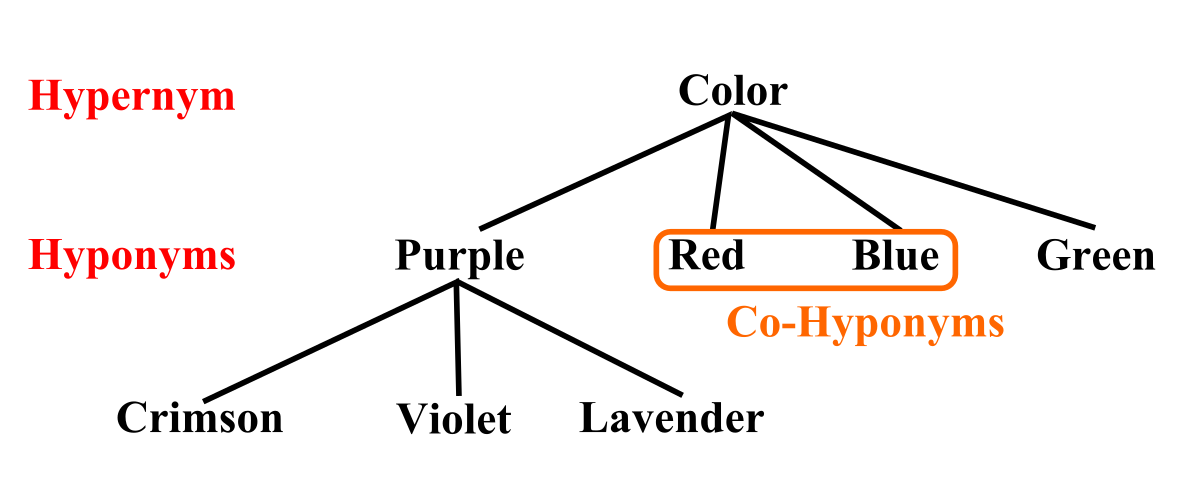 |


Finally, to recognize and identify the sense relations we should take into account not only the meaning or form of the words but also the context in which they are used.
Credits
- MUSTAPHA MOUBARIK, 2014. English, Phonetics/Phonology and Morphosintax/Semantics.
- JOHN LYONS, 1995. Linguistic Semantics: An Introduction. Cambridge: CUP.