Introduction

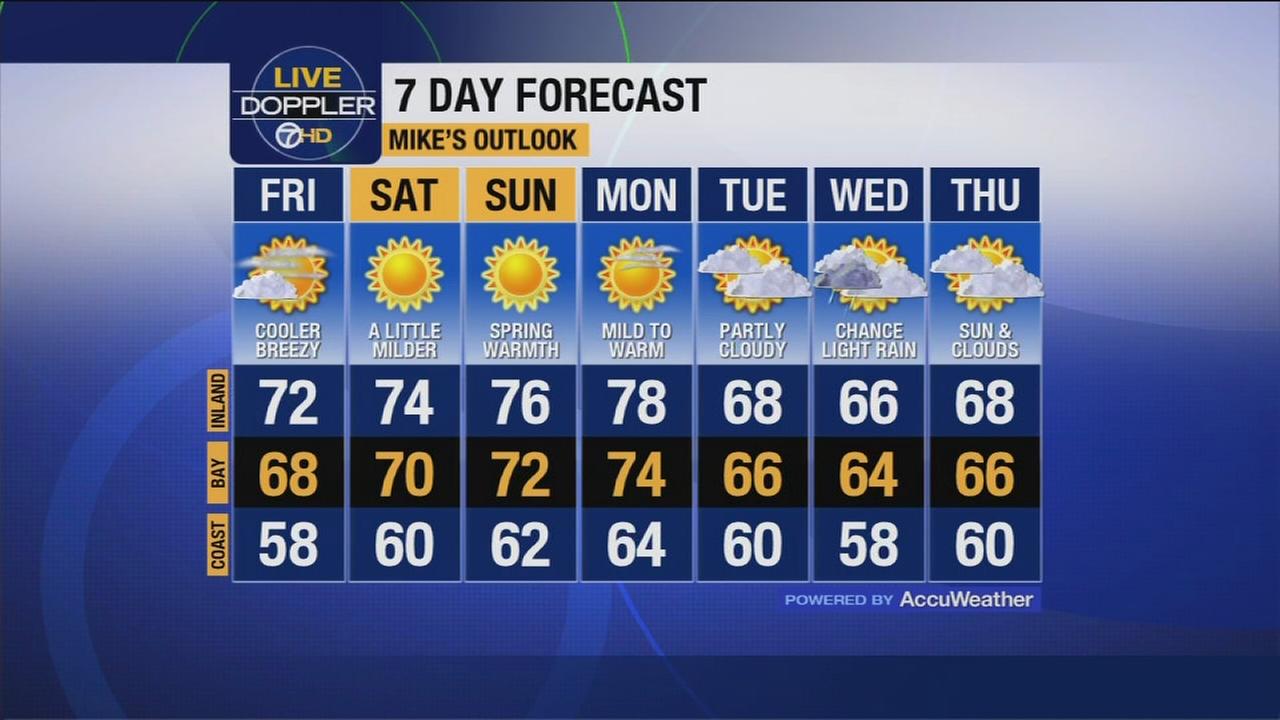
In this investigation, you will have to put your weatherman and weatherwoman skills to the test to collect and analyze data about the weather today in 12 cities around the world. Then you will prepare a 5-day forecast for one of the cities. Are you ready?
Task
By the end of this investigation, you will be able to recognize and describe the differences in weather on the same day in different cities around the world. You will be using weather language as you collect data and describe the weather in different cities around the world. You will also have collected temperature data to create a 5-day weather forecast for a specific city that you will be assigned to with your partner. Ready to jump right in?

Process
Today, you, as a weatherman or weatherwoman, will be collecting and analyzing data on today's weather in 12 different countries around the world. The specific aspects of weather that you will be collecting and analyzing include:
1) Wind direction (°)
2) Cloud percentage (%)
3) Temperature (C° -- Celsius)
4) Precipitation: Rain + Snow (measured in mm -- millimeters)
In order to collect and analyze weather data, you will be using the livemap from the website:
https://www.windytv.com/34.134/-117.906?2017-04-15-18,33.614,-117.906,8,m:eB2acSE
Front Side of the "What is the weather around the world today?" Worksheet
- Once on the website, type in the name of each city into the search bar in the upper left hand side of the screen.
- Then, on the right side of the screen, access the tool bar to collect the following data (tool bar appears in this order)
- 1) Wind direction
- 2) Cloud percentage
- 3) Temperature
- 4) Precipitation
As you collect data about these aspects of weather, record your data in your "What is weather around the world today?"worksheet. Record each aspect of weather using the following measurements:
1) Wind direction
- Wind direction is measured in ° (degrees). Record this number on your worksheet in the first column.
- Next, access the "Wind Direction Compass" link below.
http://www.shastadefense.com/C-RefMaterialWindDirection820.pdf
- Use this compass like a decoder. Find the number degrees (°) for the wind direction in each city on the "Wind Direction Compass." Once you have found the wind degrees on the compass, find the direction that the degrees number is closest to.
- Remember that the four directions are North (N), South (S), East (E), and West (W).
- On this compass, there are more specific directions such as "Southwest."
- Record this direction in the second column on your worksheet. This is the direction the wind is blowing.
2) Cloud percentage
- Cloud percentage is measured in percents (%). This number demonstrates the percentage of clouds in the sky, otherwise known as cloud coverage.
- Record this number on your worksheet in the third column.
3) Temperature
- Temperature can either be measured in degrees Fahrenheit (F°) or degrees Celsius (C°). In America, we measure temperature in F° (Farenheit).
- For this investigation, you will be measuring temperature in C° (Celsius). Celsius uses much smaller numbers than Fahrenheit.
- Record this number in C° in the fourth column.
4) Precipitation (Rain + Snow)
- Rain and snow are measured from the ground up, using a ruler-like tool called a rain or snow gauge.
- In this investigation, precipitation will be measured using millimeters.
- Record this number in millimeters in the fifth column.
Back Side of the "What is the weather around the world today?" Worksheet
- Each pair of students will be assigned a specific city and will be required to complete a weather forecast for that city.
- Once assigned your city, look it up in the search bar.
- Look at the bottom of the livemap. The livemap lists the temperatures for every hour every day. Since you are creating a 5-day forecast with your partner, use the daily temperature at the same time that it currently is.
- For example, if you are completing this WebQuest at 2pm, then use the temperature at 2pm in your city every day to create your 5-day forecast.
You can use this map as an additional resource to view the locations of each city in the world.
http://mapmaker.nationalgeographic.org/eVBecOSKmfJyQFLAHOMP5X/?edit=fQL5EuFhNkTnZomtfvE80B
Evaluation
At the end of your investigation, you will create a 5-day weather forecast for your assigned city. Following your investigation, we will discuss our weather data as a class, and then you and your partner will have a chance to report your forecast for your assigned city to the class.
Conclusion
- What did you learn about collecting weather data?
- What are some types of weather that are important to collect?
- How do you measure weather?
- How do you create a weather forecast?
- Why is it important to collect weather data?
- Is weather the same all over the world on the same day?