
Introduction
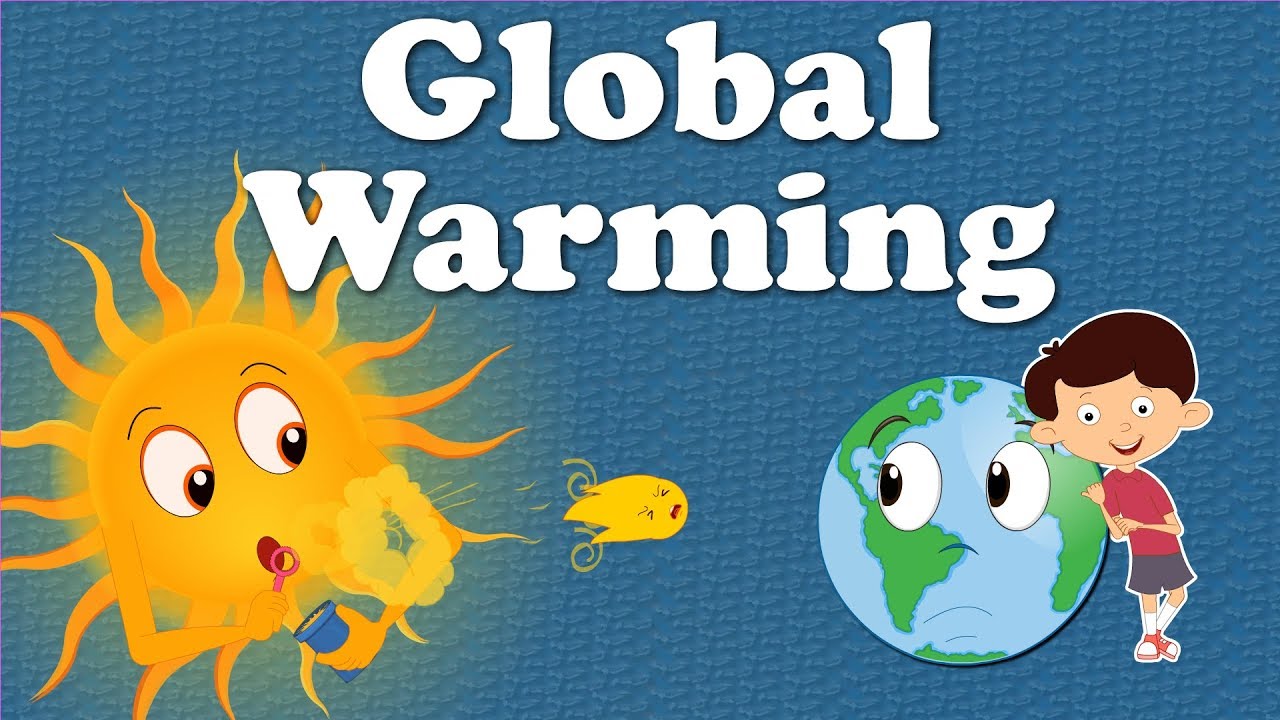
Global warming has always been a hot issue to concern about. Easily to see effects of global warming is that it has an impact on well-being’s lives such as flood, drought or wildfire. In addition, animal habitats gradually have been lost. It is proved that global warming has influenced on social, economic and either physical health or mental are very distress. In this project, students will give causes and effects of global warming to find out the solutions.
Task
Students will move to the next page to do the process after reading and finishing this task below.
To know of this topic, the students have to search on the Internet to get the global warming information. To have the responses, they have to answer these questions, for instance, what the definition of global warming is, causes and effects of its, in what ways or solutions to prevent it. They have to write an essay related to these things as mentioned above.
Introduction (50 words):
what global warming is, how serious it is, where it happens, what might be the causes, interrogative question of whether anything can be done about it
Body (150 words):
Paragraph 1: Causes of global warming
Paragraph 2: Effects of global warming
Paragraph 3: Possible solutions of global warming
Conclusion (40 words):
Summarise key points; Personal message to conclude
Process
Students use these reference links or web pages below to have more information to write an essay. It is about Effects, Causes and Solutions of Global Warming.
Effects of Global warming
- http://science.sciencemag.org/content/304/5677/1623
- http://www.nature.com/nature/journal/v421/n6918/abs/nature01333.html
- http://onlinelibrary.wiley.com/doi/10.1890/15409295(2003)001%5B0130:ATI…
Causes of Global warming
- http://globalwarming-facts.info/causes-global-warming-human/
- http://timeforchange.org/main-cause-of-global-warming-solutions
- http://www.wwf.org.au/what-we-do/climate
Solutions of Global warming
Evaluation
Instrutions: Your essay will be graded based on this rubric. Consequently, use this rubric as a guide when writing your essay and check it again before you submit your essay.
|
Traits |
4 |
3 |
2 |
1 |
|
Focus & Details |
There is one clear, well- focused topic. Main ideas are clear and are well supported by detailed and accurate information. |
There is one clear, well- focused topic. Main ideas are clear but are not well supported by detailed information. |
There is one topic. Main ideas are somewhat clear. |
The topic and main ideas are not clear. |
|
Organization |
The introduction is inviting, states the main topic, and provides an overview of the paper. Information is relevant and presented in a logical order. The conclusion is strong. |
The introduction states the main topic and provides an overview of the paper. A conclusion is included. |
The introduction states the main topic. A conclusion is included. |
There is no clear introduction, structure, or conclusion. |
|
Voice |
The author’s purpose of writing is very clear, and there is strong evidence of attention to audience. The author’s extensive knowledge and/or experience with the topic is/are evident. |
The author’s purpose of writing is somewhat clear, and there is some evidence of attention to audience. The author’s knowledge and/or experience with the topic is/are evident. |
The author’s purpose of writing is somewhat clear, and there is evidence of attention to audience. The author’s knowledge and/or experience with the topic is/are limited. |
The author’s purpose of writing is unclear. |
|
Word Choice |
The author uses vivid words and phrases. The choice and placement of words seems accurate, natural, and not forced. |
The author uses vivid words and phrases. The choice and placement of words is inaccurate at times and/or seems overdone. |
The author uses words that communicate clearly, but the writing lacks variety. |
The writer uses a limited vocabulary. Jargon or clichés may be present and detract from the meaning. |
|
Sentence Structure, Grammar, Mechanics, & Spelling |
All sentences are well constructed and have varied structure and length. The author makes no errors in grammar, mechanics, and/or spelling. |
Most sentences are well constructed and have varied structure and length. The author makes a few errors in grammar, mechanics, and/or spelling, but they do not interfere with understanding. |
Most sentences are well constructed, but they have a similar structure and/or length. The author makes several errors in grammar, mechanics, and/or spelling that interfere with understanding. |
Sentences sound awkward, are distractingly repetitive, or are difficult to understand. The author makes numerous errors in grammar, mechanics, and/or spelling that interfere with understanding. |
Conclusion
Students have understood causes of global warming and to prevent it how they can help to reduce air pollution, or chemical in daily life. Furthermore, they have come up with their new ideas to save the green environment. They have written their essay as a proposal to raise their voice and they have showed off their critical thinking in this one, which is highly appreciated. In other words, they are encouraged to use figures to prove their correct evidence and utilize academic words, expressions or collocations to increase the trust of this.
Credits
Effect of Global warming
1. Terry L. Root, Jeff T. Price, Kimberly R. Hall, Stephen H. Schneider, Cynthia Rosenzweig & J. Alan Pound. (2003). Fingerprints of global warming on wild animals and plants. Retrieved April 28, 2017 from http://www.nature.com
2. Soil Carbon Sequestration Impacts on Global Climate Change and Food Security. Retrieved April 28, 2017 from http://science.sciencemag.org
3. Terry L. Root, Jeff T. Price, Kimberly R. Hall, Stephen H. Schneider, Cynthia Rosenzweig & J. Alan Pound. (2003). Fingerprints of global warming on wild animals and plants. Retrieved April 28, 2017 from http://www.nature.com
Causes of Global warming
1. Intergovernmental Panel on Climate Change. 2001. Climate change 2001: The scientific basis. Cambridge, UK: Cambridge University Press. Retrieved from: http://globalwarming-facts.info
2. Terry L. Root, Jeff T. Price, Kimberly R. Hall, Stephen H. Schneider, Cynthia Rosenzweig & J. Alan Pound. (2003). Fingerprints of global warming on wild animals and plants. Retrieved April 28, 2017 from http://www.nature.com
3. Terry L. Root, Jeff T. Price, Kimberly R. Hall, Stephen H. Schneider, Cynthia Rosenzweig & J. Alan Pound. (2003). Fingerprints of global warming on wild animals and plants. Retrieved April 28, 2017 from http://www.nature.com
Solutions of Global Warming
1. Terry L. Root, Jeff T. Price, Kimberly R. Hall, Stephen H. Schneider, Cynthia Rosenzweig & J. Alan Pound. (2003). Fingerprints of global warming on wild animals and plants. Retrieved April 28, 2017 from http://www.nature.com
2. Terry L. Root, Jeff T. Price, Kimberly R. Hall, Stephen H. Schneider, Cynthia Rosenzweig & J. Alan Pound. (2003). Fingerprints of global warming on wild animals and plants. Retrieved April 28, 2017 from http://www.nature.com
3. Terry L. Root, Jeff T. Price, Kimberly R. Hall, Stephen H. Schneider, Cynthia Rosenzweig & J. Alan Pound. (2003). Fingerprints of global warming on wild animals and plants. Retrieved April 28, 2017 from http://www.nature.com