
Introduction
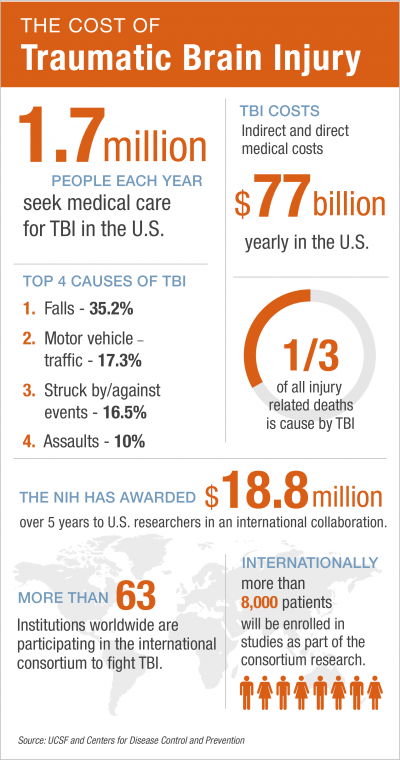
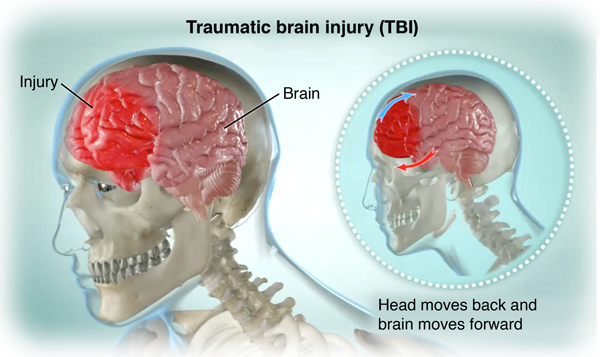
Traumatic Brain Injury is a type of brain injury that causes damage to the brain. It can cause a wide range of changes affecting thinking sensation, language or emotions. It occurs when there is a bump, blow, jolt or any type of head injury that has occurred in individuals before. Every year, millions of people in the United States suffer brain injuries, where more than half of the people are admitted to the hospital. The most severe form of Traumatic Brain Injury are those who lead to permanent brain damage or death. Traumatic Brain Injury can be associated with post-traumatic stress disorder (PTSD), which is a condition of persistent mental and emotional stress occurring as a result of injury or severe psychological shock, typically involving disturbance of sleep and constant vivid recall of the experience, with dulled responses to others and to the outside world. In other words, PTSD is a disorder that relates to the recollection of tragic events causing tremendous stress in their everyday life.
Picture Sources:
- http://www.traumaticbraininjury.net/files/2013/04/brain-injury-lawyer-traumatic-brain-injuries-causes-and-symptoms-infographic.jpg
- Causes and Symptoms of Traumatic Brain Injury
- http://www.brainline.org/images/uploads/orig/2012/TBIStats_Causes2.jpg
- Leading causes of Traumatic Brain Injury
- https://www.ucsf.edu/sites/default/files/styles/400w/public/fields/field_insert_file/news/TBI_Graphic.png?itok=oiBaccYv
- Traumatic Brain Injury Facts


Process
There are several symptoms that occurs in individuals with this type of brain injury, although the symptoms don't occur until days or weeks following the injury. When talking about the specific types of Traumatic Brain Injury, a concussion is considered to be the mildest type. Overall, the Traumatic Brain Injury can cause a headache, or neck pain, nausea, ringing in the ears, dizziness, and tiredness. For a more moderate or severe Traumatic Brain Injury, some of the symptoms include convulsions or seizures, slurred speech, dilated eye pupils, weakness or numbness in the arms and legs to name a few. Individuals with the ongoing symptoms can create an emotional and mental state within their minds where the individual does not have the ability to reinforce their real state of awareness.
Picture Sources:
- http://static1.1.sqspcdn.com/static/f/823089/26664442/1447206509450/brain-injury-symptoms.jpg?token=dOb1hEp50BObVbw0kfJqy7BLb%2B4%3D
- Types of Symptoms
- https://s-media-cache-ak0.pinimg.com/736x/f2/b2/b9/f2b2b991f5c895a3239f6ef123486ae2.jpg
- Types of Traumatic Brain Injury Symptoms based on the four lobes including brain stem and cerebellum


Evaluation
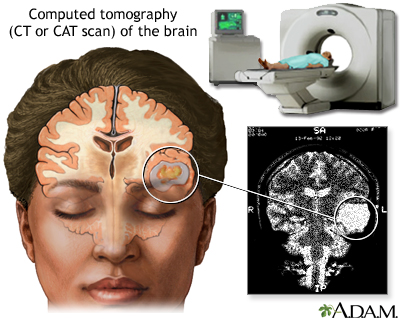
In order to diagnose Traumatic Brain Injury, most health care professionals use Computed Tomography (CT), Magnetic Resonance, Functional (fMRI) to figure out what is happening in the brain. Computed Tomography, also known as CT is an imaging procedure that uses special x-ray equipment to create detailed pictures, or scans of areas inside the body. On the other hand, Magnetic Resonance, Functional (fMRI) is a functional neuroimaging procedure using MRI technology that measures brain activity by detecting changes associated with blood flow.
In my opinion, Magnetic Resonance, Functional (fMRI) would be the most effective diagnostic test for individuals with Traumatic Brain Injury because it involves measuring the brain activity and associating with the head injuries, FMRI would be the most considerable treatment.
Picture Sources:
- https://www.clevelandclinic.org/healthinfo/ShowImage.ashx?PIC=2615&border=0&Crop=0&width=300
- Computed Tomography (CT)
- http://pennstatehershey.adam.com/graphics/images/en/19237.jpg
- Computed Tomography of the Brain
- http://news.stanford.edu/news/2013/march/images/neuroimage_news.jpg
- Magnetic Resonance, Functional (fMRI)
- https://www.vitamindwiki.com/tiki-download_wiki_attachment.php?attId=2466
- fMRI of brain image of concussion, TBI, and normal brain

Conclusion
Traumatic Brain Injury is a type of disorder that can be very dangerous to the individuals causing tremendous harm to their everyday lifestyle. The recollection of memories is necessity for individuals, but Traumatic Brain Injury is the downfall deficit causing the memories to fade away. The symptoms that lead up to this devastating disorder causes shame and downfall into the individuals life but with the right treatment and therapies being associated with this disorder, it can help to eliminate the downfall suffrage in the lifestyle creating a healthier lifestyle.
Picture Sources:
- https://api.kramesstaywell.com/Content/6066ca30-310a-4170-b001-a4ab013d61fd/medical-illustrations/Images/anerv20140215v0002.jpg
- Traumatic Brain Injury Illustration
Credits
Source References: