
Introduction
Welcome future Botanist! Did you know that each part of a plant is important just like the human body? How does each part help the plant to function and grow? You are now at the right place to find those answers and much more. Before you go any further, make sure you have your plant research form to record your findings.
botanist= plant expert
Task
Individually, you will explore the four main parts of a plant. While exploring the parts of the plant and finding new information about each, you will fill out a research form to help you to collect and organize the information. It is important that you fill out the entire form so that you will have the information to aid you with your final project.
At the end of the exploration you will work individually or with a partner to create a 3-D model of a plant using whatever materials you would like. Creativity is encouraged. You must also prepare a presentation to explain each part of the plant and its function to the class. Your presentation may be done through video, PowerPoint, or physical presentation on the assigned day. It is up to you or the both of you if you have a partner. Your teacher will provide you with a rubric to follow for the 3-D model and the presentation.
All of the information you will need to understand the parts of a plant and their functions are found in the process section below in this WebQuest.
Process
THE PLANT

A plant is a living organism. It is made up of different parts, each of which has a particular purpose, or specialized function.
If one part of a plant is not functioning properly the whole plant will suffer. But we may cut flowers off the plant or prune the roots or the branches. Such damage is only temporary and so the plant will continue to grow.
Plants have two Organ Systems: the shoot system and the root system.
The root system is below ground. This system includes roots.
The shoot system is above ground. This system includes these organs: stems, leaves, and flowers.
+Roots+Root+system.jpg)
Even though there are so many different kinds of plants, there are several things about plants that are alike. Let’s look at some of the ways plants are alike:
- Plants start from seeds (most of them, anyway)
- Plants have roots
- Plants have stems
- Plants have leaves
- Plants need soil, sun and water to live
- Plants make their own food (photosynthesis)
- All plants give us oxygen
Before you begin exploring each part of a plant, take a look at a short overview of the entire plant.
Let's start from the bottom of a plant and work our way up. The first part you will be exploring is the roots. Make sure that you record the new information on the research form in its proper location. You will need it later.
1. Roots
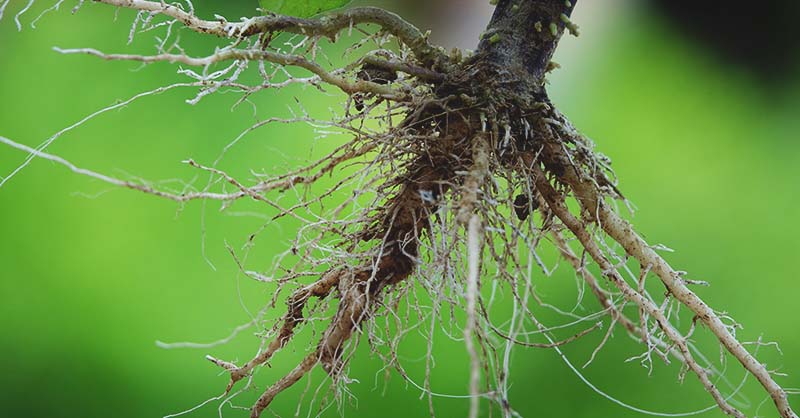
There are many parts of a plant, including the roots. The part of the plant that is seen below the soil is the root. Roots are very important for the plant because they suck the water and nutrients up out of the soil and into the plant. But the roots are not only good for the plant, they are good for soil. When it rains, the roots hold the soil in place so it is not washed away. When soil gets washed away it is called erosion. In places with a lot of rain and not a lot of trees, mudslides can be a big problem. Mudslides can hurt people and animals and also take away all the good soil, making it difficult to grow plants.
2. Stem
The next part of the plant youwill be exploring is the stem. Don't forget about your research form.

Stems have two main functions. The first one is to transport the water and minerals from the roots upwards to all other parts of the plant. The second one is to transport the food from the leaves downward to the roots. The economic importance of the stems is for food and building materials. Stems provide support to the leaves and reproductive structures. They also raise the height of the plant's flowers and leaves and brings them closer to the Sun.
Stem Summary:
The important functions of stem include:
- Support: Primary function of the stem is to hold up buds, flowers, leaves, and fruits to the plant. Along with the roots, a stem anchors the plants and helps them to stand upright.
- Transportation: It is the part which transports water and minerals from the root and prepared food from leaves to other parts of the plant.
- Storage: Stems are one of the storerooms of plants where the prepared food is stored in the form of starch.
3. Leaves
You are almost to the top. The next part of the plant you will be learning about is the leaves. There is a place on your research form for this information as well.
The leaves are the essential food producers for the entire plant. The nutrients and minerals are absorbed by the roots and then carried to the leaves by the stem. The leaves then use the chlorophyll, which is the green pigment in the leaves, and a process called photosynthesis to use the energy from sunlight to create a glucose that feeds the plant. The leaves also release oxygen into the air, which animals need.
The shape and size of the leaves differ from one species of plant to another. The leaves help to identify the type of plant species it belongs.
Leaves Summary:
Primarily, leaves have three functions:
- Photosynthesis: Green leaves prepare food for plants by using water and carbon dioxide in the presence of sunlight. This is the process called photosynthesis.
- Transpiration: Other than photosynthesis, leaves play a crucial role in the removal of excess of water from plants through tiny pores called stomata. This is the process of transpiration.
- Reproduction: Leaves of some plants helps in reproduction also.
At this point you have learned about roots, stems, and leaves. Click the video below to see what you have learned in action.
4. Flower
You made it to the top! The fourth and final part of a plant you will be learning about is the flower. This information will complete your research form.
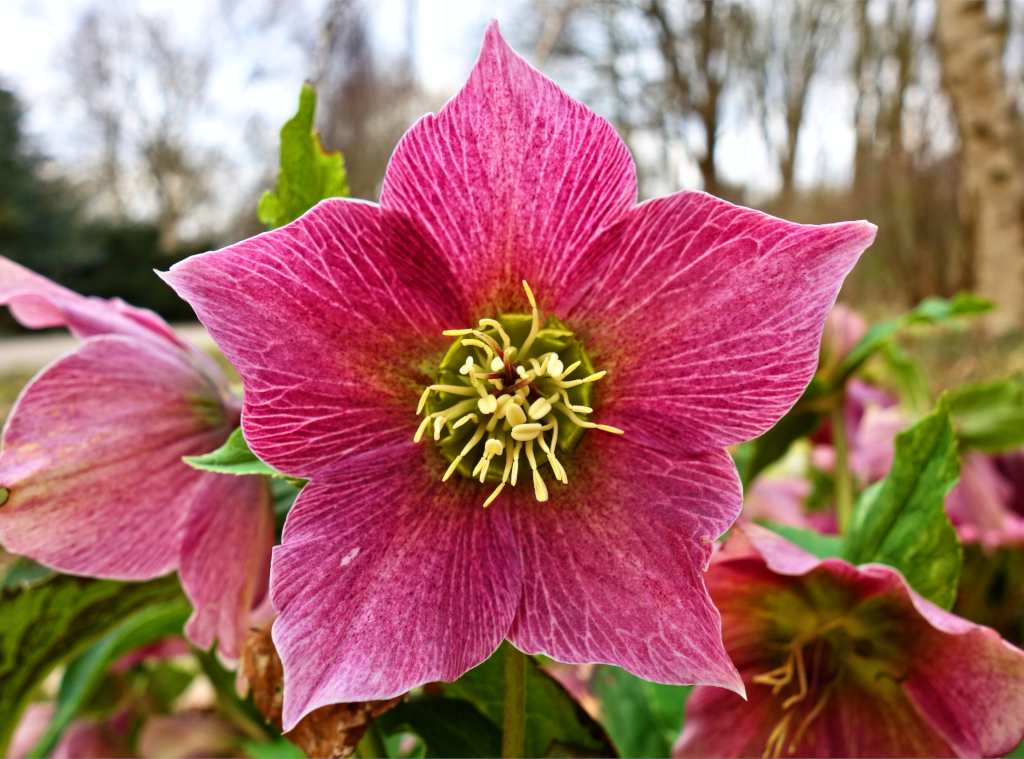
While not all plants produce flowers, most do produce seeds so that the plant can reproduce. The flower is the part of the plant that produces seeds. Flowers are bright and attractive to bring birds, bees and insects, which help with fertilization when they transfer pollen from one flower to another. While they may be pretty to look at, they hold a higher purpose in producing small eggs that when fertilized by pollen can become fruit, something that you probably enjoy every day.
Flower Summary:
Flowers are the most beautiful and colorful part of a plant. They are the reproductive part of a plant. A flower has four major parts, namely,
- Petals: It is the colorful part of a flower which attracts insects and birds.
- Sepals: Sepals are green leafy parts present under petals and protect the flower buds from damage.
- Stamens: This is the male part of the flower consisting of anther and filament.
- Pistil: This is the female part of the flower consisting of stigma, style, and ovary.
Bonus!
Which Part of the Flower Becomes a Fruit?
Flowers and fruits might seem like completely different things. Sure the fruit we buy at the grocery store and the flowers we grow in a garden both come from plants, but in appearance the two seemingly don't really overlap. However, any fruit you enjoy was at one time a flower. In the flower to fruit transformation, plants go through a cycle of pollination, fertilization, ripening and eventual fruit maturity.
Would you like to see a flower turn into a fruit?
Evaluation
Do you think you have what it takes to be a certified Botanist. Let's see! Click here to view the assessment and print.
For your final project, you will work individually or with a partner to create a 3-D model of a plant using whatever materials you would like. Creativity is encouraged. You must also prepare a presentation to explain each part of the plant and its function to the class. Your presentation may be done through video, PowerPoint, or physical presentation on the assigned day. It is up to you or the both of you if you have a partner. Use the notes taken while researching and the provided rubric for the 3-D model and the presentation.
Credits
Fun Facts for Kids on Animals, Earth, History and more! (n.d.). Retrieved from https://www.dkfindout.com/us/animals-and-nature/plants/parts-plant/.
How Do Flowers Turn Into Fruits? (2014, July 17). Retrieved from https://blog.teleflora.com/how-do-flowers-turn-into-fruits/.
Parts of the plants. (n.d.). Retrieved from http://www.rabbitsabc.com/parts-of-plants/.
Plant Structure. (n.d.). Retrieved from https://www.scienceforkidsclub.com/plant-structure.html.
Teacher Page
Teachers,
The standard, performance expectation, and disciplinary core idea of this webquest is listed below. The focus of this webquest is to help students to identify the main external structures of plants that contribute to their survival, growth, and reproduction.
4-LS1-1
Performance Expectation: Construct an argument that plants and animals have internal and external structures that function to support survival, growth, behavior, and reproduction.
Disciplinary Core Idea: STRUCTURE AND FUNCTION Plants and animals have both internal and external structures that serve various functions in growth, survival, behavior, and reproduction. (UE.LS1A.a)
Clarification Statement: Examples of structures could include thorns, stems, roots, colored petals, heart, stomach, lung, brain, shells, fur or skin.