
Introduction
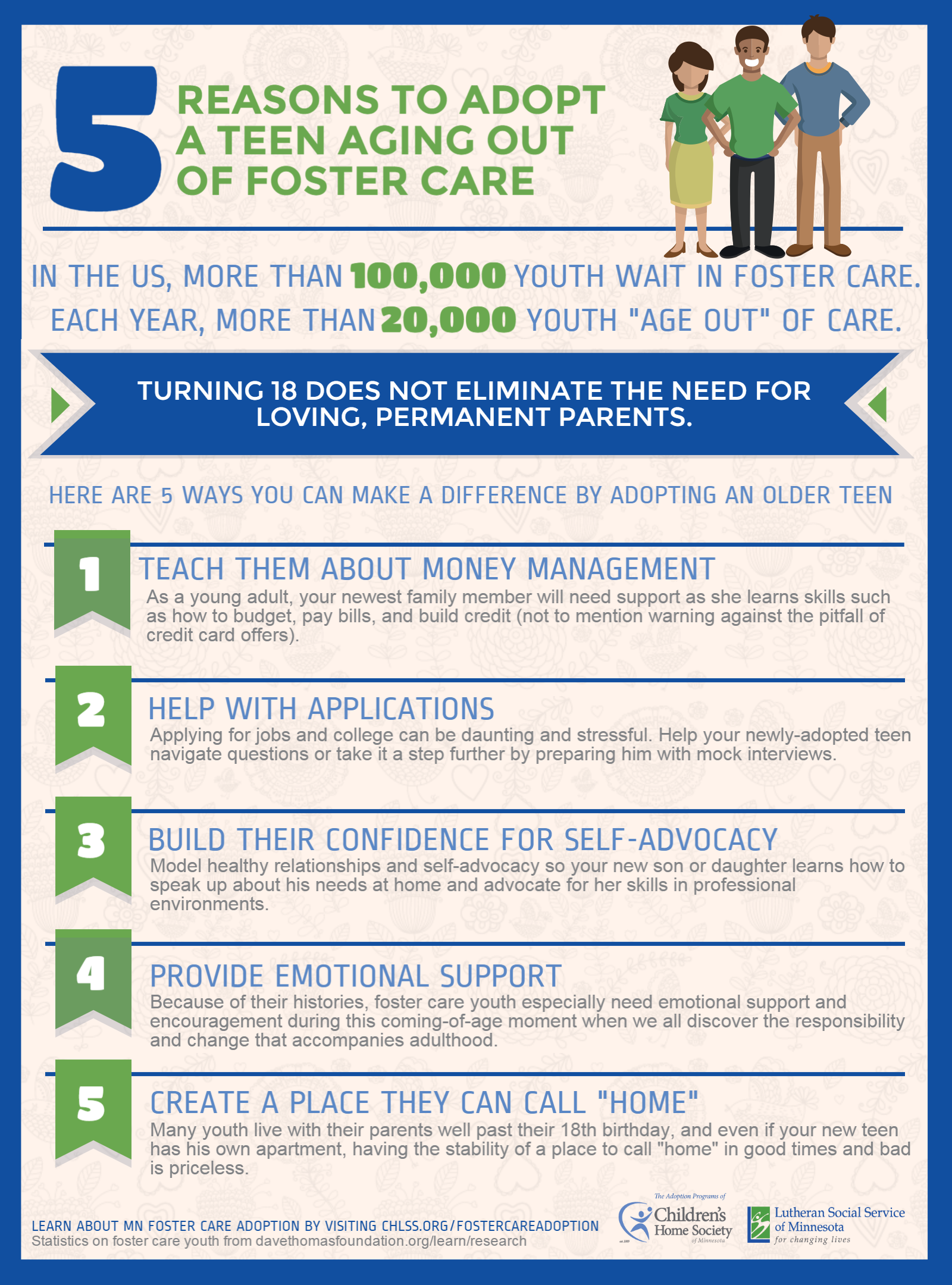
More than 23,000 children will age out of the US foster care system yearly. Adolescents between the ages of 18-21 are more likely to struggle when transitioning to their adult years due to the lack of resources and knowledge, such as education, employment, housing, mental health, and social support. There is a lack of support for those that are aging out and statistics show that most adolescents are suffering. Approximately 20,000 youth age out of foster care each year in the United States, with 31%-46% experiencing homelessness by age 26 (Dworsky et al., 2013). There is a need for programs strictly designed to help better prepare adolescents before they age out of foster care.

Task
Extended Support
There are minimal resources available to those who are aging out of foster care, therefore I plan to create a community-based facility called Extended Support designed to provide information and resources to those who are beginning to age out of foster care. Research shows that adolescents need assistance in money management, parenting, and supportive adults. I will provide services such as workplace readiness classes, workshops to prepare for interviews, finance classes, and more. I will require feedback from those involved in the program in order to provide successful outcomes.
Aging Out of Foster Care: Financial Help & Transition Programs (incharge.org)
Funding
The Extended Support will apply for grants, both state and federal. I will hold community events for fundraisers such as bake sales, car washes, raffles, and more. There will also be donations from private companies and corporate scholarships.

Process
The Extended Support is a community-based program that caters to those who are aging out of foster care and provides them with the appropriate training and knowledge to help better prepare them for their future. We are asking for funding to help provide these services to the community.
Child welfare programs are supported by federal, state, and local funds. Title IV-E is the primary federal funding source for child welfare programs in Virginia. The program is authorized under Title IV-E of the Social Security Act and is funded by federal and state matching funds. Administration is handled by the state and local public child welfare agencies.
This would be the first federally funded program designed to help those who are over the age of 18. It will be beneficial to the children who are of age, as they have a fair chance at improving their chances of a successful transition into adulthood. It will also help society as the homeless rate and unemployment rate increases as these adolescents fail in early adulthood. Overall this is a strong need for this program in my community and communities all over.

Evaluation
The California Fostering Connections to Success Act makes it possible to access federal funding for foster care services for dependents and wards beyond their 18th birthday, which will provide them with the time and support needed to gradually become fully independent adults. California is one of the few states that have adopted policies to help support young adults. A bill was signed into law in 2010 giving eligible foster youth in California the option to remain in foster care and receive services and supports until 21 under the law.

Conclusion
As a social worker, it is your job to cater to those who are in need of your services. I believe this is a prolonged issue that hasn't gotten the attention that it deserves. Many are suffering and the statistical data proves it. The lack of government involvement is disturbing to such a large issue.
Whether or not you grow up with your birth parents, adoptive parents, or foster parents no one is ready to begin adult life at the age of 18. California has recognized that this is an issue and it needs to be addressed not only at the state level but the federal level. There should be a nationwide law to protect these adolescents from the fears of adulthood. Provide adequate training and preparations for the future, so that they have the best possible chance at life. Community-based programs would be a good start to the various programs to come about for adolescents aging out of foster care.
Credits
BC Foster Basics: Aging Out Of Care. (n.d.). Www.youtube.com. Retrieved April 27, 2023, from https://www.youtube.com/watch?v=6O2ufyNmPcs
After 18 - California Fostering Connections to Success Act. (n.d.). County Welfare Directors Association of California. Retrieved April 27, 2023, from https://www.cwda.org/online-resource/after-18-california-fostering-conn…
Sorrell, C. (2017, May 26). 51 Useful Aging Out of Foster Care Statistics | Social Race Media -. Nfyi.org; National Foster Youth Institute. https://nfyi.org/51-useful-aging-out-of-foster-care-statistics-social-r…
Dworsky, A., Napolitano, L., & Courtney, M. (2013). Homelessness During the Transition From Foster Care to Adulthood. American Journal of Public Health, 103(S2), S318–S323. https://doi.org/10.2105/ajph.2013.301455
Aged out, put out, homeless and jobless. Welcome to adulthood. (n.d.). Www.youtube.com. Retrieved April 17, 2021, from https://www.youtube.com/watch?v=37-mw83-PU8
Family Unification Vouchers | HUD.gov / U.S. Department of Housing and Urban Development (HUD). (2018). Hud.gov. https://www.hud.gov/program_offices/public_indian_housing/programs/hcv/…