
Introduction
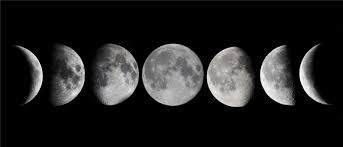
Moon Phase
A WebQuest for 6th Grade (Science)
Designed by
Bridget Pauley
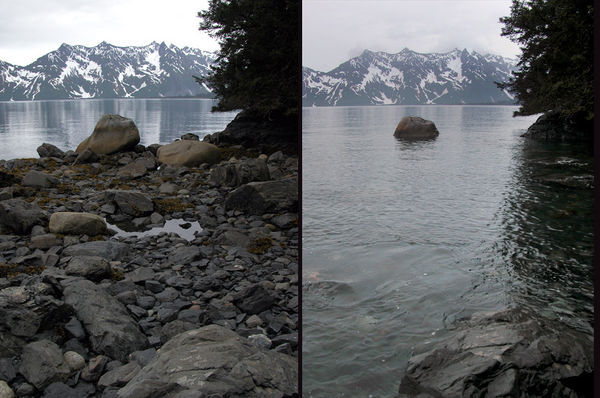
It is known that the moon has many phases. The moon's phases along with the sun and the earth have an influence on the ocean tides. The west coast of the United States experiences 2 highs and 2 lows a day. When the moon, the earth, and the sun are in a line they form a Spring Tide. During these tides you may observe higher and lower than normal tides. When the moon, the earth, and sun are at right angles to each other they form a Neap Tides. During these tides you might not be able to see a great deal of difference in the heights of the high and low tides. What are the moon phases and does it work with the earth and sun to influence the tides?
Task

The Task
A world famous scientist, Jerry Von Schlutenburg needs help. He is working on the phases on the moon and thinks he has discovered a new phase. Our school has been chosen to help him. I will put students in groups of three, assign roles, go to the computer lab, and get busy helping this scientist discover if there are any new moon phases or not.

- Using a computer/Internet students will have used the Webquest to define, draw, and label the phases of the moon.
- Student will have completed the interactive activity about tides.
- Students will take the information they have gathered from the Hyperlinks on the WebQuest and transform that information onto their activity sheet.
Process
The Process
- First you'll be assigned to a team of 3 students.
- Then by drawing a piece of paper from a cup, you will know what your roles will be (task master, recorder, time keeper). All 3 students will take turns helping answer the questions.
- Students will then access the on-line resources that I have identified as they go through the step by step Process.
Moon phases and definitions. http://www.quia.com/jg/431146list.html is a web site maintained by Quia. This site provides an excellent overview of the subject and includes photos, definitions, and 4different games to help students learn the moon phases. This Webquest is also an introductory activity to the phases of the moon and the affect of the moon on the tides.
Procedure: Follow the instructions below to complete the assignment. BE SURE TO READ ALL INSTRUCTIONS BEFORE GOING TO ANY LINK. Record your data on the activity sheet.
PART I: Definitions and Drawings
1.Use the moon phases and definitions page to find the definition for all the moon phases. Record them on your activity worksheet. Observe what each phase of the moon is in detail. Draw the phases on your activity worksheet. The "Full Moon" and "New Moon" are drawn and labeled for you.
2. Fill in the definitions Spring Tides and Neap Tides on your activity worksheet.
PART II: Moon Phases Interactivity
3. First, check the current moon phase (today date) ad to activity worksheet and draw the current moon phase.
4. Then go to the moon phase’s interactive web site and experiment with different dates. Record one of the dates you chose draw and label the moon phase that occurred.
PART III: Tides
5. Now that you have mastered the moon's phases you can explore how they affect the ocean tides. First, select a region to study from the tidal regions page. Record the region you chose on your activity worksheet. Refer to your activity worksheet for the next step of your instructions.
6. Review your definitions. Label the appropriate sections of the graph with the names of the tides. Now, draw a picture of the moon phase or phases associated with those tides. The terms we have gone over are new moon, full moon, waning cresent, waning gibbous, first quarter, last(third) quarter, waxing cresent, waxing gibbous, and our words for this lesson Neap tide and Spring tide.
Evaluation
Describe to the learners how their performance will be evaluated. There will be a common grade for group work.
|
Beginning 0-1 |
Developing 2 |
Accomplished 3 |
Exemplary 4 |
Score |
|
|
Drawing the phases of the moon
|
Attempted to draw the phases |
Resemble shapes of phase |
Well drawn phases |
Well drawn phases with detail |
|
|
Definitions
|
Attempted one or two words |
Completed half of the definitions |
Completed all definitions |
Completed full definitions in your own words |
|
|
Following step by step directions
|
Attempted, but did not complete assignment |
Did not follow directions in order, assignment incomplete |
Followed directions, but missed a step almost completed |
Followed directions and fully complete assignment |
|
|
Stated Objective or Performance
|
Description of identifiable performance characteristics reflecting a beginning level of performance. |
Description of identifiable performance characteristics reflecting development and movement toward mastery of performance. |
Description of identifiable performance characteristics reflecting mastery of performance. |
Description of identifiable performance characteristics reflecting the highest level of performance. |
|
|
Teamwork |
Group does not works together as well as it should, constantly arguing and completes one or none of their group goals. |
Group does not works together as well as it should, some arguing and completes half of their group goals. |
Group works together okay with minimal disagreements and completes most of their group goals.
|
Group works together well and completes all of their group goals.
|
Total: /20 |
Conclusion
Congratulations. You have completed your assignment.
If we should require any further assistance from you, we will contact you.
Students will have learned the phases of the moon and how it affects the tides. Students will be able to describe and tell what the phases of the moon are. Students will be able to tell how the moon affects the tide and about what time of day they occur.
If you are interested in furthering your research on your own here is another link you could check out. http://www.sciencekids.co.nz/earth.html
Credits
I want to thank everyone who provided resources and help including the internet sites and Mr. Beach-Tech teacher.
URL: http://www.quia.com/jg/431146list.html
URL: http://tycho.usno.navy.mil/vphase.html
URL: http://www.moonconnection.com/moon_phases_calendar.phtml
Teacher Page
Hello,
My name is Ms. Pauley. I created this WebQuest to allow my students to investigate the world around them in a scientific way. They will be learning the phases of the moon and how they affect the tides. This will be a two day assignment. they will have at least 30 to 35 min. of class time to work on and complete this assignment. This assignment will be accompanied by a set of activity sheets. I will have these sheets printed out a head of time. If you have any questions please follow the links.
Lesson Topic Moon, Sun, Earth__ Lesson/Title Lesson3/Webquest ‘The Phases of the Moon/First Half
INSTRUCTIONAL OBJECTIVES/ STUDENT OUTCOMES
Student will be able to describe the phases of the moon.
Student will be able to recognize the phases of the moon.
Student will be able to work cooperatively in a group.
Student will be able to conduct and investigate their research on their own.
WV CSOs
SC.O.6.1.05 cooperate and collaborate to ask questions, design and conduct investigations to
find answers and solve problems.
SC.O.6.3.02 construct a variety of useful models of an object, event, or process.
SC.O.6.3.05 research everyday applications and interactions of science and technology.
SC.O.6.2.27 recognize the phases of the moon
SC.O.6.1.07 apply skepticism, careful methods, logical reasoning and creativity in investigating
the observable universe.
NATIONAL STANDARDS
- Science assumes that objects and events in natural systems occur in consistent patterns that are understandable through measurement and observation. (MS-ESS1-1), (MS-ESS1-2)
- Many events are repeated. (1-ESS1-1)
MANAGEMENT FRAMEWORK
Overall Time - 45 minute lesson
10 min. discussion/ review
30 min. Webquest
5 min. closing discussion
STRATEGIES
Teacher/Student led discussion. Cooperative group work. Independent work.
PROCEDURES
We will have a short discussion to refresh students on what they have already learned. Students will complete the first half of the WebQuest about the phases of the moon. Students will be put into teams of three, then they will draw a piece of paper from a cup, so they will know their group roles (a task master, a recorder, and a presenter), and each team will be given an activity worksheet. Next, we will go to the computer lab, log in, go to www.createwebquest.com/node/17441, and start investigating the first part of our webquest. When time is up I will collect their activity worksheets.
Body & Transitions
- short discussion
- put students into teams of three
- draw a piece of paper from cup
- pass out activity worksheets
- go to the computer lab
- Have students log in
- go to www.createwebquest.com/node/17441
- start investigating first part of our webquest
- collect their activity worksheets
- Essential Questions
- Can anyone tell me what we have been studying the past couple of days?
- Can anyone name and describe one of our vocabulary words?
Closure
Finishes our discussion. No homework.
Diagnostic: Introduce/Assess prior knowledge/ discussion to further our understanding of the phases of the moon.
Formative: Walk around to see who is and who is not understanding by introducing questions to assess students understanding of the subject matter, and monitoring.
Summative: I will assess what students have learned from their worksheets, webquest, asking questions, their group activities, and a quiz at the end of the week.
MATERIALS
- WebQuests on the Internet go to www.createwebquest.com/node/17441
- activity worksheets
- computer lab
- a cup with group roles in it
EXTENTED ACTIVITIES
If Students Finishes Early: Have the students double check their work to make sure it is complete.
If Lesson Finishes Early: Extend our discussion.
If Technology Fails: We will go to the Library.
Lesson/Title Lesson 4/ Tides Webquest/Second Half
INSTRUCTIONAL OBJECTIVES/ STUDENT OUTCOMES
Student will be able to describe how the moon affects the tides.
Student will be able to work cooperatively in groups.
Student will be able to conduct and investigate their research on their own.
WV CSOs
SC.O.6.2.28 investigate models of the earth-moon-sun relationships (e.g., gravity, time, tide).
SC.O.6.1.11 construct and use charts, graphs and tables to organize, display, interpret, analyze
and explain data.
SC.O.6.3.05 research everyday applications and interactions of science and technology.
SC.O.6.1.05 cooperate and collaborate to ask questions, design and conduct investigations to
find answers and solve problems.
SC.O.6.2.20 Correlate the relationship of mass to gravitational forces (e.g., the larger the mass
the larger the gravitational force, or the closer the objects the stronger the force.
NATIONAL STANDARDS
- Global movements of water and its changes in form are propelled by sunlight and gravity. (MS-ESS2-4)
MANAGEMENT FRAMEWORK
Overall Time - 45 minute lesson
10 min. discussion/ review
30 min. Webquest
5 min. closing discussion
STRATEGIES
Teacher/Student led discussion. Cooperative group work. Independent work.
PROCEDURES
We will have a short discussion to refresh students on what they have already learned. Students will complete the second half of the WebQuest about the tides. Students will be put back into their teams of three. I will pass back activity worksheets. I will pass out laptops from the mobile lab for students to login, go to www.createwebquest.com/node/17441, and complete their assignment. When time is up I will collect their assignments.
Body & Transitions
- short discussion
- put students back into their teams of three
- pass out activity worksheets
- use laptops from the mobile lab
- Have students log in
- go to www.createwebquest.com/node/17441
- students will complete their assignment
- collect their completed assignments
- Essential Questions
- How does the moon affect the tides?
- Which tide occurs between ______ phase and ________ phase?
Closure
Finishes our discussion. No homework.
Diagnostic: Introduce/Assess prior knowledge/ discussion to further our understanding of the tides.
Formative: Walk around to see who is and who is not understanding by introducing questions to assess students understanding of the subject matter, and monitoring.
Summative: I will assess what students have learned from their worksheets, webquest, asking questions, their group activities, and a quiz at the end of the week.
MATERIALS
- Webquests on the Internet go to www.createwebquest.com/node/17441
- activity worksheets
- mobile lab
- URL: http://tycho.usno.navy.mil/vphase.html
EXTENTED ACTIVITIES
If Student Finishes Early: Have the students double check their work to make sure it is complete.
If Lesson Finishes Early: Extend our discussion.
If Technology Fails: We will go to the Library.
The Moon and Tides |
Name Date
PART I: Definitions and Drawings
1. Waxing Crescent -
2. Waning Gibbous -
3. Waxing Gibbous -
4. Waning Crescent –
5. New Moon –
6. Full Moon -
7. First Quarter –
8. Last Quarter -
9. Neap Tides -
10. Spring Tides –
11. Draw and label all the moon phases
FULL MOON NEW MOON
[img_assist|nid=18305|title=full moon|desc=|link=none|align=left|width=100|height=100] [img_assist|nid=18304|title=new moon|desc=|link=none|align=center|width=100|height=100]
____________________________ _____________________________
___________________________ ______________________________
___________________________ ______________________________
PART II: Moon Phases Interactive
(Current moon phase)
12. Today’s Day: Moon Phase:
(Choose any date you prefer)
13. Date: Moon Phase:
PART III: Tides
14. Region:
15. Observe the heights of the tides. The higher the number, the higher the tide. The lower the number the lower the tide. Negative numbers indicate really low tides! Are the tides measured in feet or meters?
16. Go to "Prediction Options.” Change “Standard time range /Distant Date, starts at, (select a month and date)." Change "length of time to display" to 3days. Click on "Make a New Prediction."
17. Observe the heights of the tides. Notice that now there are more days.
Record the dates and heights of the 3 highest tides.
Record the dates and heights of the 3 lowest tides.
*Take notice of the dates of any of the high and low tides that occur near one another.
18. Return to "Prediction Options." Change "display type" to Graphic Plot. Change the "pixels" to 640 X 320. Change "Hour format" to am/pm time.
Click on "Make a New Prediction." When the graph appears print out the graph (if possible).