Introduction
According to the Alzheimer's Association, "Alzheimer's is a type of dementia that causes problems with memory, thinking and behavior. Symptoms usually develop slowly and get worse over time, becoming severe enough to interfere with daily tasks." Alzheimer's is only one type of Dementia, but this is the most common type.
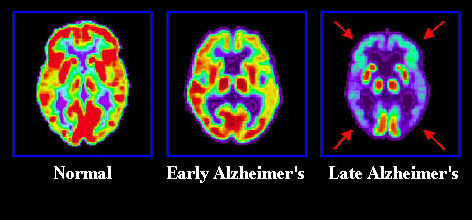
There are many different stages a person can be in from early, middle, and late Alzheimer's. Early is the first stage a person would enter. This is the stage where most people are still able to function and do some normal tasks. As the disease progresses, a person may enter the middle stage. A person may be in this stage longer than any other stage. People in this stage experience extreme frustration in their forgetfullness. When a person enters into the late stage they completely lose the ability to respond.
I have experienced this in two of my great aunts. One has already passed due to the diesease and one is currently going through the middle stage of Alzheimer's disease.
For more basic knowledge on this disease please go to their website:
Please view the following video to learn more about this disease:
https://www.youtube.com/watch?v=yJXTXN4xrI8
Task
Please watch the following videos to see the daily tasks and challenges a person with Alzheimer Disease faces.
https://www.youtube.com/watch?v=LL_Gq7Shc-Y
https://www.youtube.com/watch?v=vrj-sa25L8E
https://www.youtube.com/watch?v=ED6upzp3reo
Alzheimer's Disease is a constant struggle with yourself, not just with communicating with other people. You don't always understand what you are doing. Some individuals with Alzheimer's hear constant noise in their head making everyday tasks even harder to focus on. The first video gives an example of what it is like to live with Alzheimer's Disease.
Process
Please take the following brain tour and look at the way Alzheimer's effects the brain. This great tour made by the Alzheimer's Association gets you in the brain, exploring and understanding just how Alzheimer's Disease (AD) affects people.
Mild Alzheimer's Disease (early stage)
This is the first stage a person with Alzheimer's enters. There are basic things that these individuals will forget. If they meet a new person they may have trouble remembering the person's name. This person may have trouble remembering something they have just read. They may also have trouble coming up with the correct word to say for something.
Moderate Alzheimer's Disease (middle-stage)
This is the stage that lasts the longest for someone with Alzheimer's Disease. This person may start to become moody or frustrated more easily. They may not be able to remember their phone number, address, name of high school, or other memories from their life. This person may confuse the day of the week or where they are. They may also start to refuse to do tasks such as getting dressed or taking a shower.
Severe Alzheimer's Disease (late stage)
A person in this stage would need constant watching or attention. They would more then likely not be able to respond to their environment or hold a conversation. This is the hardest stage to watch a loved one enter, knowing the disease has almost taken them completely.
To learn more about symptoms in each stage of the Alzheimer's Disease, please look at the Stages of Alzheimer's section on the Alzheimer's Association website.
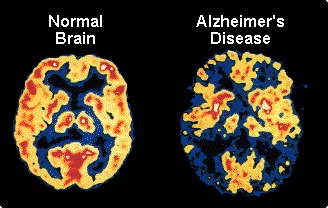
As you can see in the following picture, Alzheimer's is a slow process that just takes over your brain.
Evaluation
The task of caring for someone with Alzheimer's Disease is not easy. To watch your loved ones memory slip away is a terrible task for anyone.
If you have someone you love that deals with Alzheimer's Disease, please make sure you give them the care their need. Developing on the stage, they may need more care then others. If you are not able to dedicate the time to your loved one, please find a care suitable to the care of your loved one! There are different care types from in home nurses to putting your loved one in a nursing home facility that specializes in Dementia and Alzheimer's disease.
Conclusion
Currently their is no treatment for this terrible disease. There are drugs that Alzheimer's patients can take in order to control their disease better. Currently research is being done to figure out how to slow the disease down and alter the course in order to insure loved ones more time together.
Watching this disease first hand truly breaks your heart. You need to repeat yourself, talk louder, answer the same question more than 5 times in one visit, but you do it because you love your family. Please take the time to remember a person with Alzheimer's is just as important as any other person!