
Introduction
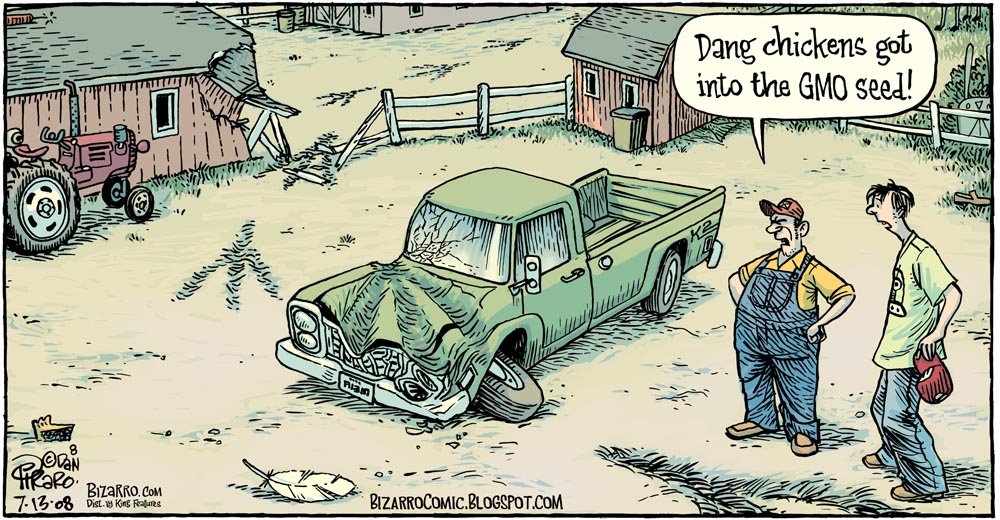 There's been a lot of talk about organic food in the last ten years. Many people are worried that gentetically modified organisms (GMOs) are not safe for humans to consume; while others see GMOs as a much needed solution to feeding the billions of people on the planet. Either way, you are almost certainly eating GMOs or livestock that ate GMOs every day! In this project, you will develop your own educated opinion and even enter into this important debate.
Task
Would you eat corn that had bits of bacterial DNA in it? Would you eat Salmon that had genes from another fish in it? Would you eat rice that grows its own vitmain A cause it's been infused with genes from dafodills and bacteria? In this project, you will learn about GMOs, develop your own opinion, and voice that opinion both to your instructor in an essay and to your peers in a series of in-class debates.
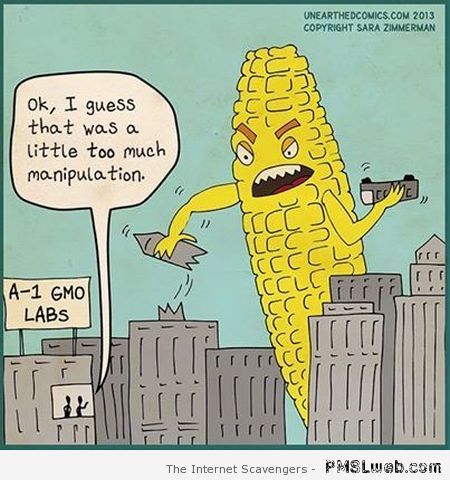
By the end of this project you will know:
1) The basic science behind genetic engineering
2) The history of the development GMOs
3) The controversies associated with GMOs
By the end of the project you will be able to:
1) Develop your own informed opinion about GMO foods.
2) Defend your own opinion on a hot topic in GMO foods.
Process
 Step 1: Background Research on Genetic Engineering
1a) Read the following articles:
1b) Using the articles above and some more internet research, make Frayer Models for 5 of the following vocabulary terms below. Your Frayer Models can be electronic or handmade.
Plant Breeding - Restriction Enzymes - Induced Mutation (Mutation Breeding) - Cultivar - Host - Transgene - Gene - DNA
Step 2: Background Research on GMOs
2a) Go over the resources that I have already gathered for you:
Watch this quick video which gives a nice overview of the pro-GMO lobby. Also it will be important for us to remember that just because something is natural, doesn't mean that it is good. This is called the Naturalistic Fallacy.
Read this article from the anti-GMO lobby.
See what WebMD has to say about GMOs.
Take a look at this Pro & Con discussion. Or listen to this podcast, in which big names in the field debate this issue.
2b) Consider your research so far. What questiosn do you have? Let your own curiosity lead you to find at least 2 more resources to your research.
Step 3: Position Essay
Using logic, rhetoric, and your research, write a 2 page position paper describing how safe you think GMOs are. In your paper please answer the following questions:
What evidence is there that GMOs are safe/unsafe?
What is the effect of GMOs on the environment?
What are the greatest benefits of GMOs?
In your opinion, do the benefits outweight the risks? or are you anti-GMOs?
Check the rubric under the evalutaion tab to the write for more information.
Step 4: Case Study Debates
The class will be broken into groups of four. Each group of 4 will hold a debate with two students pro-GMO and two students anti-GMO. The debate topics are listed below.
Golden Rice - GMO rice that could help people going blind because of vitamin A deficiencies.
GMO Atlantic Salmon - This might become the first GMO animal approved for human consumption. Click around here to see the company's website.
Scientific Inquiry Restrictions on GMOs - Some companies prohibitscientific studies done on their GMO products.
Monarch Butterflies - GMOs are being increasingly blamed for a drop in Monarch Butterfly populations.
The debate will consist of position presentations, rebutals, and concluding statements. Students must use a PowerPoint, Prezi, or Video in their position presentations. The debtate format is shown below.
Debate Format
3 minute position presentation - pro
3 minute porition presentation - con
1 minute work period
1 minute rebutal - pro
1 minute rebutal - con
1 minute work period
1 minute conclusion - pro
1 minute conclustion -con
Evaluation
Step 1: Frayer Models - Rubric and Frayer Model Templates*
Step 3: Position Paper**
|
Position Paper RUBRIC |
6 |
5 |
4 |
3 |
2 |
1 |
Total |
|
Thesis Statement |
Developed a strong thesis and included it in the appropriate place in the paper. The thesis was the focal point of the paper and was both strongly and thoroughly supported throughout the paper. |
Developed a strong thesis and included it in the appropriate place in the paper. The thesis was the focal point of the paper and supported throughout the paper. |
Developed a strong thesis and included it in the appropriate place in the paper. Most of the information supported the thesis statement. |
Developed a thesis statement and included it in the paper. Some of the information supported the thesis statement. |
Thesis Statement needs to be developed further or is not included in the paper. The thesis is not fully supported in the paper. |
A clear position is not present throughout the paper. |
|
|
Strong Reasons |
Position is supported with well developed and thought out reasons (minimum of three). Reasons show strong analysis and conclusions based on the information. |
Position is supported with well developed and thought out reasons (minimum of three). Reasons are well developed, but analysis and conclusions need to be strengthened. |
Position is supported with a minimum of three distinct reasons. Reasons are developed, but more analysis and conclusions are needed. |
Position is supported with a minimum of three distinct reasons. Reasons are developed, but are more general and need to be developed further. |
Reasons are weak and/or repetitive. They need to be developed and explained further. |
Reasons are not developed or are repetitive. Ideas can be difficult to understand. |
|
|
Depth and Variety of Evidence |
Position is supported in depth with a variety of sources. Substantial valid and accurate information in the form of expert opinion, statistics, research studies, etc. has been used throughout the paper. Information is relevant and supports the writer’s ideas. |
Position is supported with a variety of sources. Adequate valid and accurate information has been used throughout the paper. Information is relevant and supports the writer’s ideas. |
Position is supported with a variety of sources. Valid and accurate information has been used throughout the paper. Most of the information is relevant and supports the writer’s ideas. A mix of general and specific information is used. |
Position needs to be supported with more valid and accurate information. Some of the information may not be relevant and/or does not support the thesis. |
Paper lacks valid and accurate information. Some of the information is not relevant and does not support the position. |
Little to no support from researched information is present in the paper. |
|
|
Organization and Mechanics |
Ideas are well organized and free of mechanical errors. |
Most ideas are well organized and free of mechanical errors. |
Organization of the paper needs to be strengthened. Mechanical errors are present throughout the paper. |
Paper has some organization but some diversions or abrupt shifts in purpose are present. Many mechanical errors are present as well. Sentence structure needs to be strengthened. |
Paper has little organization and many diversions, often shifting in purpose. Many mechanical errors are present and transitions are not utilized. |
Paper lacks organization and there are numerous mechanical errors which make comprehension difficult. |
|
|
Transitions |
Transitional words and phrases are used to connect ideas and maintain coherence between paragraphs. |
Some transitional words and phrases are used to connect ideas and maintain coherence between paragraphs. |
Too few transitions used, or used correctly. |
Too few transitions used. |
Attempts made to use appropriate transitions. |
Lack of transitions. |
|
|
Position Paper Score: |
/30 |
Step 4: Case Study Debate Rubric
|
Case Study Debate Rubric |
1 |
2 |
4 |
6 |
|
1. Organization and Clarity: viewpoints and responses are outlined both clearly and orderly. |
Unclear in most parts |
Clear in some parts but not over all |
Most clear and orderly in all parts |
Completely clear and orderly presentation |
|
2. Use of Arguments: reasons are given to support viewpoint. |
Few or no relevant reasons given |
Some relevant reasons given |
Most reasons given: most relevant |
Most relevant reasons given in support |
|
3. Use of Examples and Facts: examples and facts are given to support reasons. |
Few or no relevant supporting examples/facts |
Some relevant examples/facts given |
Many examples/facts given: most relevant |
Many relevant supporting examples and facts given |
|
4. Use of Rebuttal: arguments made by the other teams are responded to and dealt with effectively. |
No effective counter-arguments made |
Few effective counter-arguments made |
Some effective counter-arguments made |
Many effective counter-arguments made |
|
5. Presentation Style: tone of voice, use of gestures, and level of enthusiasm are convincing to audience. |
Few style features were used; not convincingly |
Few style features were used convincingly |
All style features were used, most convincingly |
All style features were used convincingly |
*Adapted from a form used at Thurgood Marshall Middle School in Chicago, IL http://www.marshallmidschool.org
**Adapted from a rubric used at Plain Local Schools http://www.plainlocal.org/userfiles/1054/Classes/52729/position-paper-rubric1.doc.
Conclusion
GMOs are changing the way that we grow plants (and soon animals too). The debate on their use is sure to continue for the foreseeable future. But now you are ready to join that debate as an informed member of the community.
If you would like to be involved in a local Anti-GMO group: https://www.facebook.com/marchagainstmonsantonashville
Here's a vegan pro-GMO online community: http://www.vegangmo.com/?page_id=655
Whatever your opinion, please have a reason for what you believe and respect for those who disagree with you.