
Introduction
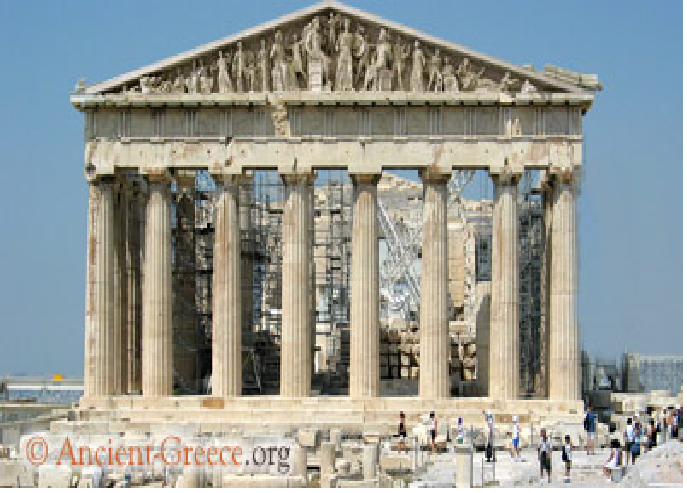
Welcome: Athen s vs. America Democracy
Description: This WebQuest is a third grade based unit. Students will identify:
- Where America’s modern democracy was founded in which ancient country.
- The components of Greek architecture and the locations in America’s buildings today.
- The country that originally expressed the idea that “a community should choose its own leaders.
- The similarities and differences of the Athens and United States democracies.
- Words that can be used to describe the democracies of the United States and Ancient Greece.
- The location of Greece on a world map?
- How they can teach a friend to locate Greece on a world map.
The students will compare and contrast Athens and United States Democracy.
Grade Level: 2-4
Curriculum: Social Studies
Keywords: Architecture, Column, Athenians, Direct Democracy, Representative Democracy, Election, Vote, Majority Vote, Tax
Author(s): Yolandria Petty
Questions
List the advantages and disadvantages of both Ancient Athens and America government. Compare/contrast the democracy of Athens and America and influences in the government decisions. What would happen if citizens were not able to make decisions? Would you rather have Athens direct democracy or America representative democracy? How would you feel if you were an Athens citizen but was unable to directly create new laws, acted as judges decide when to go to war, and who to make alliances with? Why does Athens allow slaves/prisoners to show up and vote? How Athens shaped our lives in America in terms of how our government is formed?
Task
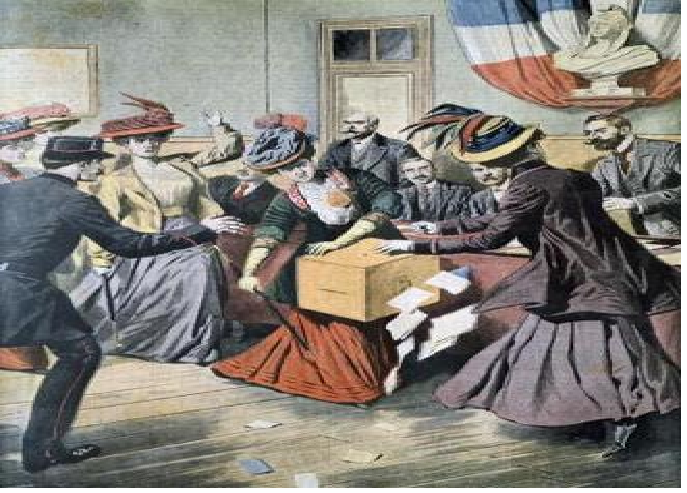
The students will use the provided internet resources to answer questions about the geography, differences between men, women, and children, religion, governments, Athens and Unites States democracy. The students should record their answers in the form of notes to be used on an open notes assessment at the beginning of the next class period. These notes will be turned in at the end of the webquest so be sure to write your name and your partner's name on your notes. After learning about direct and representative democracies, students will create an online Venn diagram, comparing and contrasting the two forms of democracy.
Process

Review the following materials to build background and understanding. Please view videos and websites prior to working on your groups assignment.
Group 1 Activities
- Using index cards to create vocabulary word cards. After reading the text students will use text-to-self experiences to write definition and illustrates the meaning of the word in their own words.
- Students will sort the card into two categories Athens democracy and America democracy.
Vocabulary Words:
Architecture
Column
Athenians
Direct Democracy
Representative Democracy
Election
Vote
Majority Vote
Tax
Group 2 Activities
- Create fact cards on Athens Democracy and American Democracy.
- Each card will include five important facts on each democracy.
- Using a large sheet of chart paper students will create a Venn diagram.
- Students will sort and paste their fact cards on the Venn diagram.
Students will have to provide a written explanation of why they placed the cards on the Venn diagram. Demonstrating understanding of comparing and contrasting.
Group 3 Activities
Students will become critical thinkers.
Critical thinking Station: Students engage in discussion with a partner using the following question
- Would you rather live in a country where there is direct democracy or representative democracy? Why?
- When, if ever, might it be more beneficial to have a direct democracy instead of a representative democracy?
- Why do you think women weren’t allowed to vote? Were they always allowed to vote in the United States?
- Why did the Greek and Americans decide on 18 as the voting age?
- Do you feel old enough to vote?
- If only 500 citizens were randomly drawn from Los Angeles to vote on important matters, what percent of the total population would that be?
- Would you feel comfortable with those random 500 making decisions on your behalf?
Group 4 Activites
- Create a digital/technology presentation example PowerPoint comparing and contrasting your learning.
- Student will need to include vocabulary words, facts on each democracy, and debate questions. Create a poster explaining the difference similarities between Athens and America with a Write a paragraph anticipating a situation in which a direct democracy might work better than a representative democracy.
NOTE: Each student will complete each group assignment. Each assignment will help students gather information for final project.
Websites/Resources
http://atheniandemocracy.weebly.com/ancient-democracy-vs-american-democracy.html
Background information on direct and representative democracy for students:http://greece.mrdonn.org/athensdemocracy.html http://www.historylearningsite.co.uk/democracy.htm http://theotheri.wordpress.com/2010/02/26/direct-vs-representative-democracy/Venn diagram generator http://classtools.net/education-games-php/venn_intro/
Evaluation

You are being graded on your ability to demontrate your understanding of the similarites and differences of Athen and Unites States Democracy. In order to receive a grade for this assignment, you must follow the criteria described in the rubric below.
|
Historical Understandings |
3 |
2 |
1 |
|
SS3H1 The student will explain the political roots of our modern democracy in the United States of America. a. Identify the influence of Greek architecture (columns on the Parthenon, U. S. Supreme Court building), law, and the Olympic Games on the present. b. Explain the ancient Athenians’ idea that a community should choose its own leaders. c. Compare and contrast Athens as a direct democracy with the United States as a representative democracy. |
Explains AND compares and contrasts the influence of Greece as a direct democracy with the United States as a representative democracy. |
Identifies the influences of Greek elements on the United States democracy and government. |
Can identify a few Greek influences on the United States democracy. |
|
SS3H2 The student will discuss the lives of Americans who expanded people’s rights and freedoms in a democracy. a. Paul Revere (independence), Frederick Douglass (civil rights), Susan B. Anthony (women’s rights), Mary McLeod Bethune (education), Franklin D. Roosevelt (New Deal and World War II), Eleanor Roosevelt (United Nations and human rights), Thurgood Marshall (civil rights), Lyndon B. Johnson (Great Society and voting rights), and César Chávez (workers’ rights). b. Explain social barriers, restrictions, and obstacles that these historical figures had to overcome and describe how they overcame them. |
Explains AND discusses the lives of historical figures (element a) who expanded people’s rights and freedoms in a democracy, and the obstacles they overcame. |
Identifies historical figures (element a) who expanded people’s rights and freedoms in a democracy, and the obstacles they overcame. |
Identifies a few historical figures (element a) who expanded people’s rights and freedoms in a democracy, and the obstacles they overcame. |
|
SS3G1 The student will locate major topographical features. a. Identify major rivers of the United States of America: Mississippi, Ohio, Rio Grande, Colorado, Hudson. b. Identify major mountain ranges of the United States of America: Appalachian, Rocky. c. Locate the Equator, Prime Meridian, and lines of latitude and longitude on a globe. d. Locate Greece on a world map. |
Consistently identifies major geographical features of the United States of America, the Equator, Prime, Meridian, latitude, and longitude, and Greece on a map. |
Sometimes identifies major geographical features of the United States of America, the Equator, Prime, Meridian, latitude, and longitude, and Greece on a map. |
Identifies a few major geographical features of the United States of America, the Equator, Prime, Meridian, latitude, and longitude, and Greece on a map. |
|
SS3G2 The student will describe the cultural and geographic systems associated with the historical figures in SS3H2a. a. Identify on a political map specific locations significant to the life and times of these historical figures from SS3H2a. b. Describe how place (physical and human characteristics) had an impact on the lives of these historical figures. c. Describe how each of these historical figures adapted to and was influenced by his/her environment. d. Trace examples of travel and movement of these historical figures and their ideas across time. e. Describe how the regions in which these historical figures lived affected their lives and had an impact on their cultural identification. |
Identifies AND describes how place and environment influenced the historical figures from SS3H2a and their ideas across time and their cultural identification. |
Identifies place, environment, and region which were related to the historical figures in SS3H2a. |
Sometimes identifies place, environment, and region which were related to a few historical figures in SS3H2a. |
|
SS3CG1 The student will explain the importance of the basic principles that provide the foundation of a republican form of government. a. Explain why in the United States there is a separation of power between branches of government and levels of government. b. Name the three levels of government (national, state, local) and the three branches in each (executive, legislative, judicial), including the names of the legislative branch (Congress, General Assembly, county commission or city council). c. State an example of the responsibilities of each level and branch of government. |
Names, explains, AND states examples of the three levels of government, the separation of power, and responsibilities of each level and branch. |
Sometimes names and gives examples of the three levels of government, the separation of power, and responsibilities of each level and branch. |
Sometimes identifies the three levels of government. |
|
SS3CG2 The student will discuss the character of different historical figures in SS3H2a. a. Describe how the different historical figures in SS3H2a display positive character traits of cooperation, diligence, courage, and leadership. b. Explain how the historical figures in SS3H2a used positive character traits to support their beliefs in liberty, justice, tolerance, and freedom of conscience and expression. c. Explain how the historical figures in SS3H2a chose when to respect and accept authority. |
Describes AND explains how the historical figures in SS3H2a displayed and used positive character traits when dealing with authority. |
Sometimes describes how the historical figures in SS3H2a displayed and used positive character traits when dealing with authority. |
Identifies a few of the positive character traits displayed and used by the historical figures in SS3H2a. |
|
SS3E1 The student will describe the four types of productive resources: a. Natural (land) b. Human (labor) c. Capital (capital goods) d. Entrepreneurship (used to create goods and services) |
Describes the four types of productive resources (a-d). |
Identifies the four types of productive resources (a-d.) |
Identifies 1 or 2 types of productive resources (ad). |
|
SS3E2 The student will explain that governments provide certain types of goods and services in a market economy, and pay for these through taxes and will describe services such as schools, libraries, roads, police/fire protection, and military. |
Explains AND describes how governments provide certain types of goods and services in a market economy. |
Identifies certain types of goods and services in a market economy provided for by the government. |
Identifies 1-2 types of goods and services in a market economy provided for by the government. |
|
SS3E3 The student will give examples of interdependence and trade and will explain how voluntary exchange benefits both parties. a. Describe the interdependence of consumers and producers of goods and services. b. Describe how goods and services are allocated by price in the marketplace. c. Explain that some things are made locally, some elsewhere in the country, and some in other countries. d. Explain that most countries create their own currency for use as money.
|
Explains AND describes examples of interdependence and trade and how voluntary exchange benefits both parties. |
Identifies examples of interdependence and trade. |
Identifies a few examples of interdependence and trade.
|
|
SS3E4 The student will describe the costs and benefits of personal spending and saving choices. |
Explains AND describes the benefits of personal spending and saving choices. |
Identifies the benefits of personal spending and saving choices. |
Sometimes identifies a few of the benefits of personal spending and saving choices. |
Conclusion

Good Job! You made it! Congratulations on comparing and contrasting Athens and United States democracy. You have learned so much about it including: the advantages and disadvantages of both Ancient Athens and America government. Compare/contrast the democracy of Athens and America and influences in the government decisions. After learning about direct and representative democracies, you created an online Venn diagram, comparing and contrasting the two forms of democracy. I hope you keep thinking about the different types of cultures that are included in America and different ways the government can improve.
Teacher Page
The purpose of this webquest is to cover the following Georgia Performance Standards-Historical Understanding:
SS3H1 The student will explain the political roots of our modern democracy in the United States of America.
SS3H2 The student will discuss the lives of Americans who expanded people’s rights and freedoms in a democracy.
SS3G1 The student will locate major topographical features.
SS3G2 The student will describe the cultural and geographic systems associated with the historical figures
SS3CG1 The student will explain the importance of the basic principles that provide the foundation of a republican form of government SS3H2a.
SS3CG2 The student will discuss the character of different historical figures in SS3H2a.
SS3E1 The student will describe the four types of productive resources.
SS3E2 The student will explain that governments provide certain types of goods and services in a market economy, and pay for these through taxes and will describe services such as schools, libraries, roads, police/fire protection, and military.
SS3E3 The student will give examples of interdependence and trade and will explain how voluntary exchange benefits both parties.
SS3E4 The student will describe the costs and benefits of personal spending and saving choices.