
Introduction
by Annemarie Schröder, Leipzig University
This WebQuest is about the last years of segregation in the USA during the 1960's and the process of desegregation that followed.
Introduction
Even after slavery ended, black Americans did not have the same rights and opportunities white Americans had. Between 1867 and 1965 black Americans were considered separate but equal and there were even laws to separate them from white people.
You will travel through time, back to 1963. Your family is moving to the South of the USA from West-Germany. Your family, that's your parents, yourself and your siblings (that depends on the size of your group.)
You don't know much about life in the USA and the problems there but you learned English at school. You heard that people of many different ethnicities live in the USA and you are excited to make a multicultural experience. Strangely enough, the first thing you see as your dad drives the car into your new street is this:
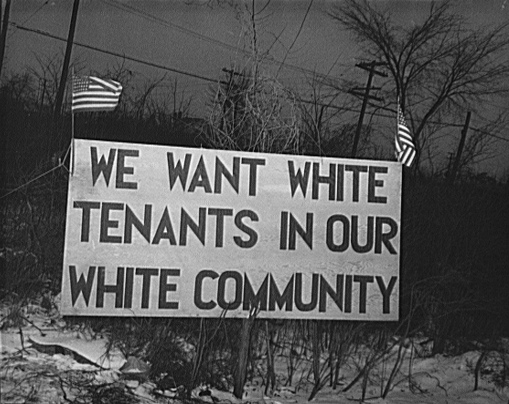
When your dad sees the sign, he says: "That must be because of Jim Crow".
You and your siblings exchange a look wondering Who's Jim Crow?
Task
You will work in pairs or in small groups of three.
Task
During your first days in your new town you talk to your neighbors and kids from school. You also read the newspaper to find out about Jim Crow.
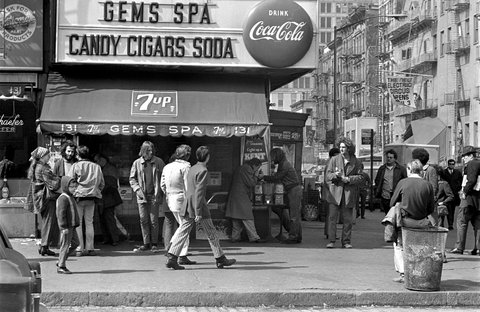
The center of your town where you meet new friends and neighbors.
1) Jim Crow
Use the provided sources to find out as much as possible about Jim Crow. The questions on your worksheet will help you to understand the texts and the videos.
2) Write a diary entry about your first days in your new town. Did you witness discrimination against colored people? What happened? How did you react? How did you feel? Each group member can write a short paragraph (about 8-10 sentences) or you can work together and describe events you witnessed together in a longer paragraph (25-30 sentences).
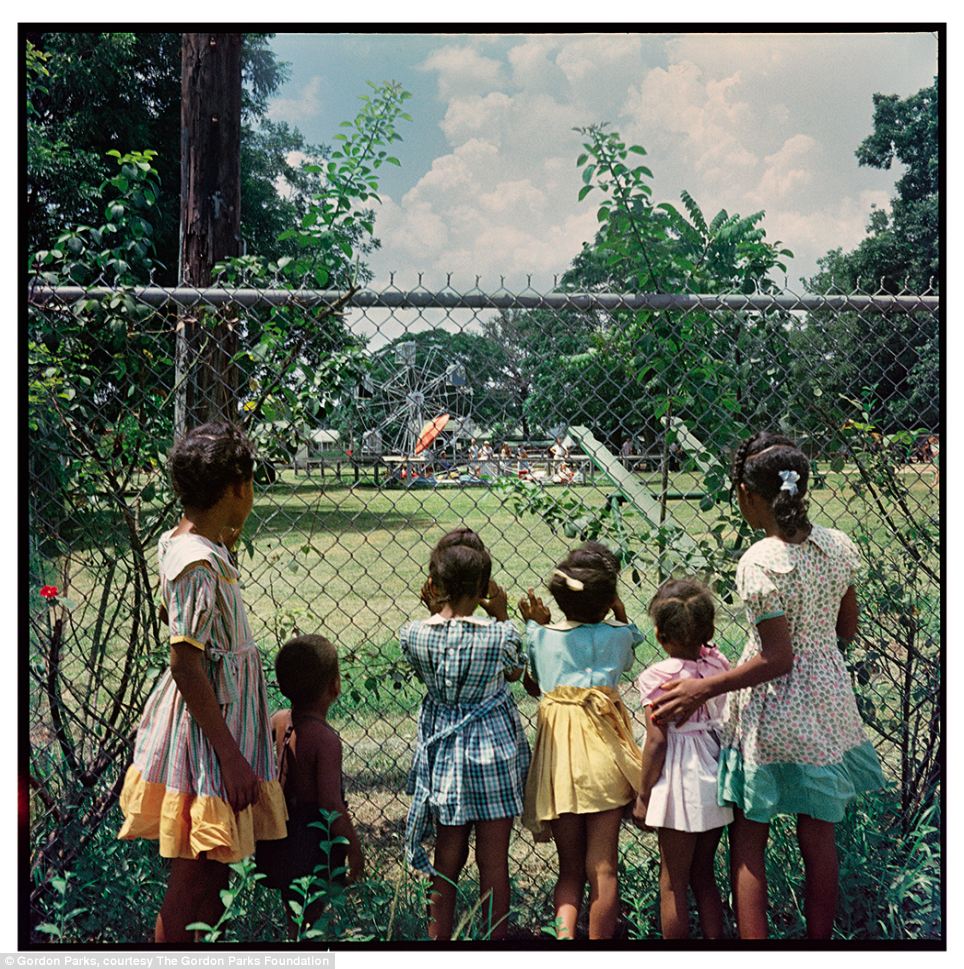
After you found the information you need, have a look at the picures provided on the websites. Think about what it feels like to be discriminated against and excluded from society. Discuss your opinions and findings with your group.
Remember that this is your diary. Give your characters life! Be creative!
Process
Process
Separate but Equal
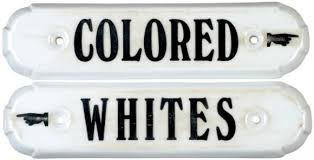
Black Americans didn't have the same rights and opportunities white people had and were excluded from many areas of everyday life. The laws that controlled the lifes of black Americans stated that they had to be separate from white people but equal.
Below are a variety of websites which you and your group will use to answer the questions on your worksheets and to write a diary entry.
Copy and paste the links into a new tab to open them.
1) Dr Byrd explains Jim Crow:http://www.youtube.com/watch?v=x2Iwa9LeuFM
2) Jim Crow in everyday life: http://www.ferris.edu/jimcrow/links/misclink/examples/homepage.htm
3) Jim Crow in pictures: http://www.dailymail.co.uk/news/article-2272369/A-country-divided-Stunn…
4) Herbert Towns remembers: https://www.youtube.com/watch?v=ZYqeZLowt28
5) Beverly Montgomery remembers: https://www.youtube.com/watch?v=ND11iE1OkvQ
Remember, you have now traveled back in time, and are living these horrible racial inequalities yourselves. Focus on your own feelings while you look at the pictures in 3) and watch the videos in 4) and 5).
Write your diary entry. Use the information you have found during your internet research to be creative and give your character real life qualities.
Be prepared to share your findings and opinions with the class.
Evaluation
Evaluation Criteria
Your work will not be graded right away. Keep the completed worksheet and your diary entry in your folder. You may need to copy the diary entry for each member of your group if you worked on it together. You have time until the end of the unit to improve any work you did in class (check for spelling, grammar, content...).
At the end of the unit you will hand in your portfolio and receive a grade on it.
Here are some guidelines to help you improve your writing skills:
Change of Perspective: The diary entry shows that you tried to put yourself into a character living in the USA in the 1960's. You included own emotions and opinions on the happenings of that time.
Content Accuracy and Probability: Is the content of your text accurate. Could it really have happened like that?
Writing Organization: Does your diary entry have a clear beginning and a clear ending? Can it be recognized as a diary entry ("Dear Diary..., date, ending")?
Spelling: Are the words spelled correctly. Check again in a dictionary if you're not sure about a word.
Grammar: Are the grammatical forms correct? Try to use only forms you are familiar with.
Attractiveness and organization: The diary entry shows creativity (drawings, pictures, attractive formatting, well-organized information...).
Group participation: The members of the group cooperated and brought own ideas to the project.
Click this link to have a look at the standards of evaluation grade 10 for written production and the assessment of intercultural communicative competence for more accurate guidelines:
Assessment of written production:
https://www.dropbox.com/s/fx888es36fe5x77/Bewertungsmatrizen_BLF_neu_2015.pdf?dl=0
Assessment of Intercultural Communicative Competence
https://www.dropbox.com/s/t4gez48s40240u1/Assessing%20ICC.pdf?dl=0
Conclusion
Conclusion
You have now completed the research on the Jim Crow Laws. You practiced reading strategies and listening comprehension. You also put yourself in the position of a person living during that time and gained a change of perspective
It is time for you and your group to present the information you have found. You can either read your diary entry out aloud or tell them about your experiences in the South. Don't forget to write unknown words on the board for your classmates.
Remember that you should present in the first person. Speak to the class as if you actually lived through the event you are talking about.
If you are not presenting show respect for the work of your classmates. Listen for mistakes and note questions you might have after their presentation.
Credits
Pictures:
“We want white tenants in our white community.”
Stahl, Kenny. „Detroit's Great Rebellion.com.“ 2012. http://www.detroits-great-rebellion.com/Detroit---1943.html (Zugriff am Juli. 26 2015).
“The center of your town where you meet new friends and neighbors.”
Goodman, Stephanie. „The New York Times.“ ArtsBeat - The Culture at Large. 10. April 2013. http://artsbeat.blogs.nytimes.com/2013/04/10/the-east-village-of-mad-me… (Zugriff am 26. Juli 2015).
“Colored <->Whites”
„Imagearcade.com.“ http://imgarcade.com/1/segregation-signs-in-color/ (Zugriff am 26. Juli 2015).
“Excluded Children”
Crossley, Lucy. „DailyMail Online.“ 3. Februar 2013. http://www.dailymail.co.uk/news/article-2272369/A-country-divided-Stunn… (Zugriff am 26. Juli 2015).
Articles and Videos:
Dr. Byrd explains Jim Crow
Byrd, Marvin L. „www.visionchasers.com.“ 20. Juni 2014. http://www.youtube.com/watch?v=x2Iwa9LeuFM (Zugriff am 26. Juli 2015).
Jim Crow in Everyday Life
„JacksonSun.com.“ 2001. http://www.ferris.edu/jimcrow/links/misclink/examples/homepage.htm (Zugriff am 26. Juli 2015).
Jim Crow in Pictures
Crossley, Lucy. „DailyMail Online.“ 3. Februar 2013. http://www.dailymail.co.uk/news/article-2272369/A-country-divided-Stunn… (Zugriff am 26. Juli 2015).
Herbert Town Remembers
„Chesterfield County Historical Society of Virginia.“ Youtube.com. 18. Mai 2014. https://www.youtube.com/watch?v=ZYqeZLowt28 (Zugriff am 26. Juli 2015).
Beverly Montgomery Remembers
Montgomery, Beverly. „NoGoofs.com.“ 1. Januar 2013. https://www.youtube.com/watch?v=ND11iE1OkvQ (Zugriff am 26. Juli 2015).
Material for Assessment and Evaluation
Bewertungsmatrix BLF Schriftliche Produktion
Freiberg, Geschwister Scholl Gymnasium. „GSG-Freiberg.de.“ 11. Juli 2015. http://www.gsg-freiberg.de/fileadmin/user_upload/_temp_/Bewertungsmatri… (Zugriff am 26. Juli 2015).
Bewertungsmatrix ICC unter Zuhilfenahme von
Lázár, Ildikó, Martina Huber-Kriegler, Denise Lussier, Gabriela Matei, und Christiane Peck. Developing and Assessing Intercultural Communicative Competence: A Guide for Language Teachers and Teacher Educators. Graz: Council of Europe Publishing, 2007.
Teacher Page
The students:
This webquest is designed for students of the English language in year five or six. They should have some experience working on the computer. For weaker students word lists can be provided.
Aims:
This webquest was designed as a part of an intercultural learning unit. By itself it can be used to gather background knowledge about segregation in the American South in the during the era of the Jim Crow Laws.
In addition to the extension of the students' knowledge on that subject, the webquest aims at the creation of empathy towards to victims of discrimination at that time. A vital part of the students' work consists of imagining what it must feel like to be excluded from society.
The work with information from different sources (images, text and video) also plays a vital part in this webquest. Thus the students train listening comprehension as well as their creativity and their reading skills.
This webquest is complemented by a student worksheet. Copy and paste this link into a new tab to open the worksheet.
https://www.dropbox.com/s/4f9cbi4zxs95j3q/Worksheet%20zur%20Webquest.docx?dl=0
Before starting to teach you may want to introduce the students to some important words. Relevant words are:
- segregation
- law
- inequality
- to witness
- to be excluded
- separate
- equal
- inferior / superior
Additionally a self evaluation grid is available here:
https://www.dropbox.com/s/2udxhcolxo10zlf/Interkulturelle%20Selbsteinsch%C3%A4tzung.pdf?dl=0
It can be completed by the students before and after the unit. Comparing both their grids helps students identify their own progress as intercultural speakers as well as areas of learning they need to work on.
Justification for the ESL classroom:
Intercultural Communicative Competence is one of the main aims for FLT in the German curriculum for 'Gymnasium' grade 9/10.
This work with this webquest can promote all compentences included in ICC:
Knowledge: The students actively construct knowledge reading the texts / watching Dr. Byrd's video. The connection of factual knowledge and the students' own emotions and opinions is empasized.
Attitudes: The students are encouraged to relate historical facts to their own lives / imagine they are living at that time and to think about their own opinions on the topic in question. The students develop empathy toward the vicitms of the Jim Crow Laws especially and the victims of injustice and inhumanity in general.
Skills of Interpreting and Relating: The students form relations between the information from different texts. The students use the information they gained to write their own texts in accord with the information from the various sources.
Skills of Discovering and Interacting: The students discuss their findings with their group members. The students can sift through the given sources to find only relevant information.
Critical Cultural Awareness: This includes all four competences of ICC. The students can evaluate and examine critically documents from the Jim Crow era.
For example: The students can use their background knowledge to understand pictures from the era in question.
Furthermore the basic competences reading, writing and listening comprehension are promoted.
This webquest is intended to be used as the first part of an intercultural teaching unit. In such a unit its main aim is the consruction of background knowledge on the topic of the Jim Crow Laws and the development of empathy towards the victims of discrimination among the students.