
Introduction
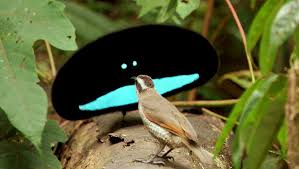
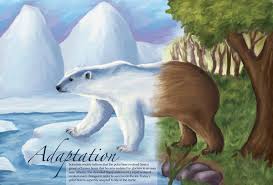
Hello ladies and gentlemen today we will be discussing a very sensitive and controversial subject for your young ears. Yes that's right we are going to be talking about the birds and the bees of evolution. The class will be divided into 3 groups for this activity. Each group will be given a specific aspect of natural selection such as adaptation, genetic mutation, and sexual selection that they will be researching about, and answering questions over the groups specific aspect. Although the groups will be asked to answer an overall question which is " How does this aspect in Natural Selection drive Evolution?"
Task
There will be three groups: Adapation, Genetic Mutation, and Sexual Selection. With these groups the students will be required to watch the videos and answer the questions that fallow the video. For the Videos you will copy the link and search them in the search.
While answering the questions the students will look for the answer for the overall question of: How does this aspect of Natural Selection derive eveolution?
Adaption:
http://ninenet.pbslearningmedia.org/resource/tdc02.sci.life.evo.humming…
- What is the relationship between the length of the hummingbirds' beaks and the flowers from which they feed?
- If the size and shape of the flowers available to a group of hummingbirds were to change dramatically over a short period of time, would individual hummingbirds have the ability to change the size and shape of their beaks to adapt?
- Although individual members of a species may look very much alike, there is often a great deal of variation among them. What role might this variation play in natural selection and evolution?
Genetic Mutation:
http://ninenet.pbslearningmedia.org/resource/tdc02.sci.life.evo.camoufl…;
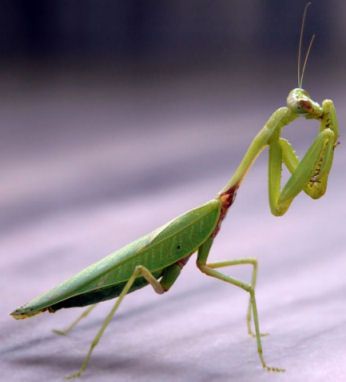
- What is the praying mantis's strategy for self-defense?
- The mantis is nearly invisible sitting on a leaf in the forest, but when the scientist places the insect on his blue shirt, it becomes very obvious. What does this suggest about how well this species of mantis would survive in a different environment -- a desert or a short-grass prairie, for example?
- Would an individual mantis be able to transform its appearance if it were placed in another type of environment? Why or why not?
- If the forest were to dry out and turn to grassland, or if this species of mantis began to expand its range to an area with fewer trees, what might happen to the species over time?
Sexual Slection:
http://ninenet.pbslearningmedia.org/resource/tdc02.sci.life.stru.floral…
http://ninenet.pbslearningmedia.org/resource/tdc02.sci.life.evo.peacock…
-
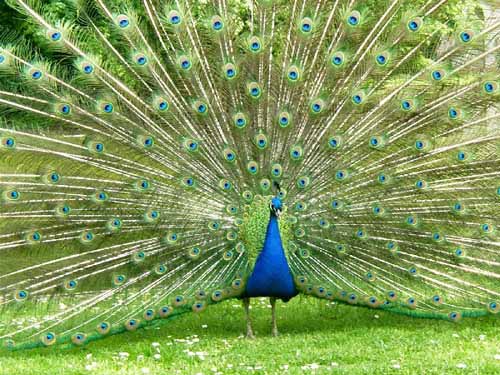
From the research discussed in the video, what appears to be the most important factor in a male peacock's ability to attract mates and successfully reproduce?
- What happened when the scientists altered the peacocks' tails by cutting them short?
- Aside from providing the egg, what role do peahens play in the reproductive success or failure of a would-be mate?
- How might this trait have begun, and how might it have evolved over millions of years?
The three groups (Adaptation, Genetic Mutaion, and Sexual Selection), will then be asked to desgin and present a scientific poster over their research, specific questions, and answer to the overall question.
Process
Students should be divided into 3 groups before starting this activity. When the groups are formed they should begin by watching this video http://ninenet.pbslearningmedia.org/resource/tdc02.sci.life.evo.nilsson… . Then discuss The quote from Darwin in his book The Origin of Species. Which states " To suppose that the eye with all its inimitable contrivances for adjusting the focus to different distances, for admitting different amounts of light, and for the correction of spherical and chromatic aberration, could have been formed by natural selection, seems, I freely confess, absurd in the highest degree. When it was first said that the Sun stood still and the world turned round, the common sense of mankind declared the doctrine false; but the old saying of Vox populi, vox Dei, as every philosopher knows, cannot be trusted in science. Reason tells me, that if numerous gradations from a simple and imperfect eye to one complex and perfect can be shown to exist, each grade being useful to its possessor, as is certainly the case; if further, the eye ever varies and the variations be inherited, as is likewise certainly the case; and if such variations should be useful to any animal under changing conditions of life, then the difficulty of believing that a perfect and complex eye could be formed by natural selection, though insuperable by our imagination, should not be considered as subversive of the theory." From Charles Darwin, On the The Origin of Species (New York: The Modern Library, 1993), 227-228.)
While discussing the video and the quote think about these questions:
Why were people resistant to the idea that the eye evolved through natural selection?
What evidence can you give to show that evolution did occur through natural selection? (For example, some animals alive today have simpler stages of the eye; Nilsson's work shows how the evolution could take place through small changes, etc.)
Why has the flatworm not evolved a more complex eye with a lens?
Why did Darwin compare his theory of natural selection to Copernicus's theory that Earth orbited the Sun?
Moving on from this discussion the groups will investigate their specific aspect that is involved in natural selection By watching videos and researching it on some specific sites designated to there group.
The Adaptation group will watch the video:
http://ninenet.pbslearningmedia.org/resource/tdc02.sci.life.evo.humming…
This group will also have these sites to help with there research:
1. http://evolution.berkeley.edu/evolibrary/article/evo_31
2. https://www.britannica.com/science/adaptation-biology-and-physiology
3. http://bmcevolbiol.biomedcentral.com/articles/10.1186/s12862-015-0424-z
With their video, sites, and research they should be able to anewer the questions and the over all question:
- What is the relationship between the length of the hummingbirds' beaks and the flowers from which they feed?
- If the size and shape of the flowers available to a group of hummingbirds were to change dramatically over a short period of time, would individual hummingbirds have the ability to change the size and shape of their beaks to adapt?
- Although individual members of a species may look very much alike, there is often a great deal of variation among them. What role might this variation play in natural selection and evolution?
- How does this aspect of Natural Selection drive evolution?

The Genetic Mutation group will watch the video:
http://ninenet.pbslearningmedia.org/resource/tdc02.sci.life.evo.camoufl…;
Also have these sites:
1. http://evolution.berkeley.edu/evolibrary/article/evo_18
2. https://ncse.com/book/export/html/1902
3. http://gbe.oxfordjournals.org/content/3/812.full
These are the questions this group will be looking for along with the overall question:
- What is the praying mantis's strategy for self-defense?
- If the size and shape of the flowers available to a group of hummingbirds were to change dramatically over a short period of time, would individual hummingbirds have the ability to change the size and shape of their beaks to adapt?
- Although individual members of a species may look very much alike, there is often a great deal of variation among them. What role might this variation play in natural selection and evolution?
- How does this aspect of Natural Selection drive Evolution?
The Sexual Selection group will be given these videos:
http://ninenet.pbslearningmedia.org/resource/tdc02.sci.life.stru.floral…
http://ninenet.pbslearningmedia.org/resource/tdc02.sci.life.evo.peacock…
Along with these sites:
http://www.zoologi.su.se/research/tullberg/papers/11Aggression.pdf
http://www.infoplease.com/cig/biology/natural-selection.html
http://evolution.berkeley.edu/evolibrary/article/0_0_0_/evo_28
Their questions for Sexual Selection:
- From the research discussed in the video, what appears to be the most important factor in a male peacock's ability to attract mates and successfully reproduce?
- What happened when the scientists altered the peacocks' tails by cutting them short?
- Aside from providing the egg, what role do peahens play in the reproductive success or failure of a would-be mate?
- How might this trait have begun, and how might it have evolved over millions of years?
- How does this aspect of Natural Selection drive Evolution?
Once the all 3 groups have finished their videos, conducted their research over their topic, and answered their questions they will theN proceed to the evaluation tab to be given their rubric for the next step in which is creating and constructing a scientific poster over Natural selection. The poster will highlight the groups specific topic in Natural Selection and all three posters will answer the question " How does this aspect of Naturl Selection drive Evolution?"

Evaluation
Students' posters will be graded based on the organization, attractiveness, grammar, and fact accuracy. Posters must include proper citations and clearly defined graphics that are relative to the subject. The poster must show use of information from within videos as well as their own researched content.
Graphics-Relevance:
20- All graphics are related to the topic and make it easier to understand. All borrowed graphics have a source situation.
Labels-
20-All items of importance on the poster are clearly labeled with labels that can be read easily.
Content- Accuracy:
20- All facts on poster are accurate.
Knowledge Gained-
20- Students can accurately answer all questions related to facts in the poster and processes used to create the poster.
Attractiveness:
20- The poster is exceptionally attractive in terms of design, layout, and neatness,
Grammar/Spelling:
20- There are no mistakes on the poster.
Conclusion
In this webquest, students were assigned a certain aspect of natural selection; such as adaption, genetic mutation, and sexual selection. After watching the given videos and articles, the students will have to decide how their aspect of natural selection drives evolution and displayed on a poster to present to the class. The students were evaluated based on information, presentation skills, and overall understanding. After this webquest, think of other ways that you see these aspects of natural selection in every day life.
Credits
Videos:
http://ninenet.pbslearningmedia.org/resource/tdc02.sci.life.evo.camouflage/evolution-of-camouflage/
http://ninenet.pbslearningmedia.org/resource/tdc02.sci.life.stru.floral/floral-arrangements/
http://ninenet.pbslearningmedia.org/resource/tdc02.sci.life.evo.peacock/tale-of-the-peacock/
http://ninenet.pbslearningmedia.org/resource/tdc02.sci.life.evo.sexguppy/sex-and-the-single-guppy/
Pictures:
Sexual Selection:
http://www.zoologi.su.se/research/tullberg/papers/11Aggression.pdf
http://www.infoplease.com/cig/biology/natural-selection.html
http://evolution.berkeley.edu/evolibrary/article/0_0_0_/evo_28
Adaptation:
http://evolution.berkeley.edu/evolibrary/article/evo_31
https://www.britannica.com/science/adaptation-biology-and-physiology
http://bmcevolbiol.biomedcentral.com/articles/10.1186/s12862-015-0424-z
Genetic Mutation:
http://evolution.berkeley.edu/evolibrary/article/evo_18
https://ncse.com/book/export/html/1902
http://gbe.oxfordjournals.org/content/3/812.full
Book:
Darwin, C. (1937). The origins of species. New York: P. F. Collier & son.
Teacher Page
Sexual Slection Resources
http://www.zoologi.su.se/research/tullberg/papers/11-Aggression.pdf
http://www.infoplease.com/cig/biology/natural-selection.html
http://evolution.berkeley.edu/evolibrary/article/0_0_0_/evo_28
Adpation Resources
http://evolution.berkeley.edu/evolibrary/article/evo_31
https://www.britannica.com/science/adaptation-biology-and-physiology
http://bmcevolbiol.biomedcentral.com/articles/10.1186/s12862-015-0424-z
Genetic Mutations
http://evolution.berkeley.edu/evolibrary/article/evo_18
https://ncse.com/book/export/html/1902
http://gbe.oxfordjournals.org/content/3/812.full
To downlaod a copy of the indivdual rubric copy the URL and hit search.
file:///C:/Users/usern/AppData/Local/Microsoft/Windows/INetCache/Content.Outlook/IHC84YMO/Science%20(002).pdf