
Introduction
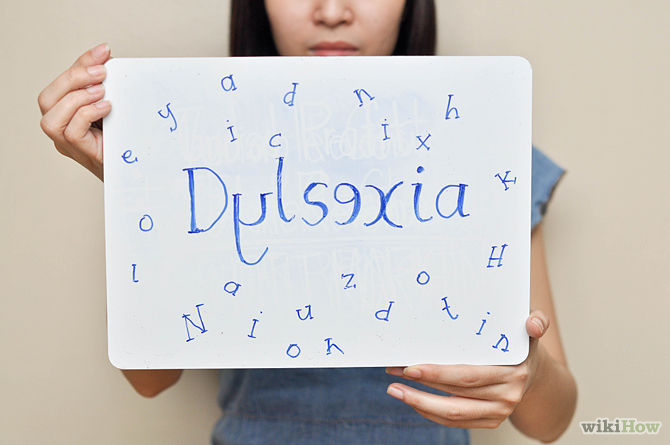 Dyslexia is a learning disability characterized by trouble with reading despite normal intelligence. The most common problems are difficulties in reading, spelling and writing words. Someone with dyslexia would have problems identifying speech sounds and learning how they relate to letters and words.
Not everyone is affected with the same characteristics. People with dyslexia have normal or higher than normal intelligence but it is a lifelong condition caused by inherited traits that affect how your brain works. It is not the result of lack of motivation, sensory impairment, inadequate instruction or environmental opportunities.
https://www.youtube.com/watch?v=zafiGBrFkRM What is dyslexia?
http://eida.org/frequently-asked-questions-2/ Frequently asked questions about dyslexia
Task
 Here is an example of a typical second grader with dyslexia:
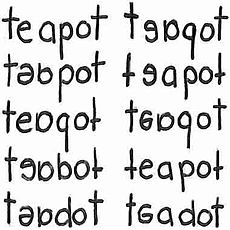
Penny is in second grade and she has difficulty learning to read. She is only able to read about ten words and is very slow to learn any new words. She can spell her name but has difficulty spelling anything else. She often daydreams and seems to not be listening to what her teacher is saying. If the teacher asks her to read a two digit number like 21 she will reverse the numbers and say 12 instead. When the teacher reads with Penny she will complain about having a stomach ache. Whenever she sees the word “the” she says “a” instead. When reading Penny will say “b” instead of “d” and “p” instead of “q.” She might read “now” as “won” and “left” as “felt.”
Phrases might appear as: Thew ord sare n otsp aced cor rect ly. (The words are not spaced correctly) or We spell wrds xatle az tha snd to us. (We spell words exactly as they sound to us) or Sometimesallthelettersarepushedtogether. (Sometimes all the letters are pushed together)
At the same time, Penny is a great dancer and can copy the dance moves exactly how she sees them in music videos. She loves to socialize with other girls and boys and if there is a play or skit to act out in class she is the first one to volunteer.
https://www.youtube.com/watch?v=xyab_VSBCAk Personal accounts of what it is like to be dyslexic as a child
https://www.youtube.com/watch?v=eYSYjoMcm5Y Quick test to see if you are dyslexic
Process
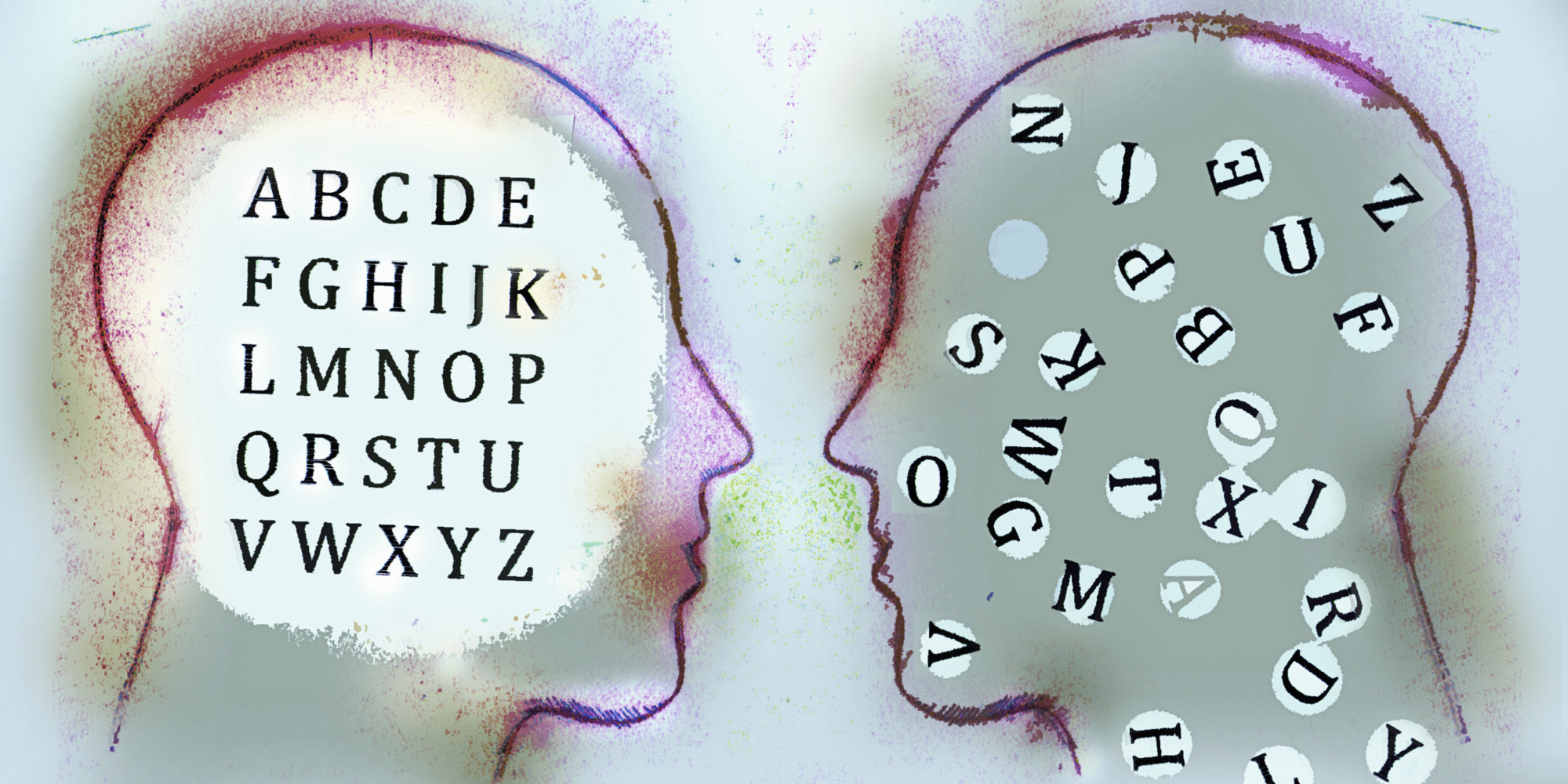 Dyslexia is caused by a dominant gene on the short arm of chromosome #6. People with dyslexia have neurophysiological differences in the brain which means they have a larger right hemisphere than those of normal readers. A person with dyslexia uses nearly five times the brain area than an average person while performing a simple language task. People with dyslexia usually have strengths in areas controlled by the right side of the brain, for example, artistic, athletic or mechanical abilities.
Dyslexia and ADD/ADHD are not connected. They are two separate and identifiable entities. Although more boys are sent for testing than girls, research shows that dyslexia impacts just as many girls as boys. Dyslexia is not gender dependent.
Some famous people that succeeded despite being dyslexic are:
Alexander Graham Bell Dustin Hoffman
Thomas Edison Whoopi Goldberg
Albert Einstein Jack Nicholson
Charles Darwin Tom Cruise
Benjamin Franklin Channing Tatum
https://www.youtube.com/watch?v=4N6RKHOHMJQ Interview with Steven Spielberg on being dyslexic
https://www.youtube.com/watch?v=F7OlxL9iUeI Quotes about famous people who were dyslexic
Evaluation
 In order for Penny to be able to learn and function in the classroom, the following learning approaches should be taken:
- Provide a quiet area for activities like reading, answering comprehension questions
- Use books on tape
- Use books with large print and big spaces between lines
- Don’t count spelling on history, science or other similar tests
- Allow alternative forms for book reports
- Allow the use of a laptop or other computer for in-class work
- Use multi-sensory teaching methods
- Teach students to use logic rather than rote memory
- Present material in small units
- Have teachers participate in professional development on dyslexia to help understand what dyslexia is and its common characteristics.
https://www.youtube.com/watch?v=fzHaLYsTgJc Interviews with succesful people who are dyslexic
Conclusion
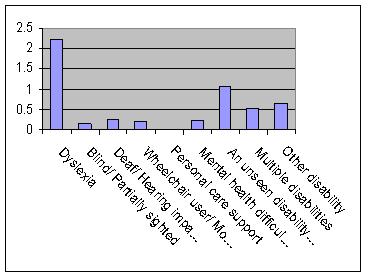 Dyslexia exists in every country, even where the written language is not phonetic. It affects one out of every five children in the United States and is the leading cause of school dropouts and juvenile offenders.
The earlier the diagnosis of dyslexia is made and intervention started, the better the outcome. It is also important to focus on the child’s self-esteem, since dealing with dyslexia can be extremely frustrating.
People with dyslexia shouldn't feel limited in their academic or career choices. Most colleges make special accommodations for students with dyslexia, offering them tutors, learning aids, computer software, reading assignments on tape, and special arrangements for exams.