
Introduction
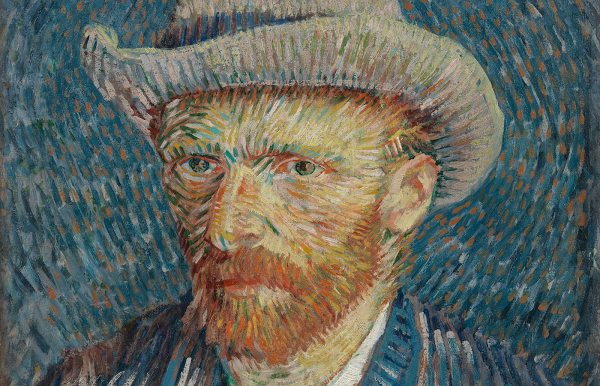
Vincent Van Gogh is one of the most recognizable artists today, yet he only sold one painting during his short lifetime.He was a Dutch Post Impressionist artist who painted a variety of subjects- landscapes, still lifes, portraits and numerous self portraits. He worked day and night with a passion that few people possess. In just over 10 years, he created about 2,100 works of art. His vibrant use of color and dramatic, expressive brushstrokes make his paintings unique and easily identifiable.
Although Van Gogh had a sad and lonely life, he expressed beauty and joy through his paintings. Even though it's been over a century since his death, his art is timeless and continues to inspire.
Task
[video:https://youtu.be/erW5gN6LoP4 align:center]
Van Gogh had a distinct style of drawing and painting, using swirls, dots and lines.
Your task will be:
- to discover more about Van Gogh's style
- to learn that you can use texture and movement in your own drawings
- to understand that color can be used objectively (realistically like something looks) or subjectively (exaggerated to make a statement or set a mood)
- to realize that drawing and painting can reflext your mood or even tell people about your personality
Below is an audio/video clip comparing two of Van Gogh's paintings.
[video:https://youtu.be/CCZVHIXF8_Q]
Process
- View some of Van Gogh's paintings and drawings to get an understanding of his style. Click to view some of Van Gogh's paintings and drawings.
- Learn a little more about his life and personality.
- Prepare to draw your own drawing using some of the techniques that Van Gogh used.
- Outline the shape of your portrait.
- Use a variety of lines to give your drawing texture (swirls, curvy lines, dots, and dashes).
- Choose colors to set a mood or express a feeling.
- Share your drawing with your classmates/friends and talk about your lines and use of color. What were you trying to say through your drawing?
Below is a trailer for Loving Vincent, a movie where hundreds of artists painted individual movie frames that captured Van Gogh's style and emotion.
[video:https://www.youtube.com/watch?v=MA96aDZYdCc align:center]
Evaluation
| 3 | 2 | 1 | 0 | |
| Interpretation | Student displayed understanding of Van Gogh's style and incorporated it into their artwork. | Student displayed understanding of Van Gogh's style but had difficulty incorporating it into their artwork. | Student did not fully understand Van Gogh's style but completed their artwork. | Student did not understand Van Gogh's style and did not complete any artwork. |
| Color & Technique | Student used color and line expressively. | Student used color and line. | Student attempted to use color and line. | Student did not complete artwork. |
| Effort | Student put forth their best effort. | Student completed work but could have put forth more effort. | Student put very little effort into their artwork. | Student did not attempt to complete assignment. |
Conclusion
- Vincent Van Gogh was a Post Impressionist painter who was not popular during his lifetime but is one of the most famous artists of all time.
- Vincent used bright and unusual colors to express emotion.
- Vincent's style changed over the years but his later works were very colorful and used textural brush strokes.
- You can use some of Van Gogh's in your own artwork.
- You can express your emotions or set a mood through artwork.
- Often times an artists style evolves and changes over time.
- Art is about self expression. Have fun!
Teacher Page
GPS Standard (7th Grade Visual Arts)
VA7MC.3 Interprets how artists create and communicate meaning in and through their work. a. Identifies, discusses and analyzes common themes, symbols, values and/or intentions found in a variety of art works of past and/or present artists in a variety of ways (spoken, written, or visual).
b. Compares and contrasts how factors of time and place influence the development of and meaning in works of art.
c. Recognizes and evaluates how artists choose and use materials, visual elements,/principles, styles, techniques and tools to shape and communicate meaning.
d. Participates in open-ended discussion and formulates a position regarding the aesthetic value of a specific artwork.
Tips & Suggestions for Modifications:
Some students may be confident in drawing their own portraits and others may need you to provide a template. Below is a link to a Van Gogh portrait template.