
Introduction
What are communicable diseases?
Communicable diseases are usually spread from person to person, and sometimes from an animal to a person. These infectious and contagious diseases and illnesses are often spread through airborne viruses or bacteria, and sometimes through blood or other bodily fluids.
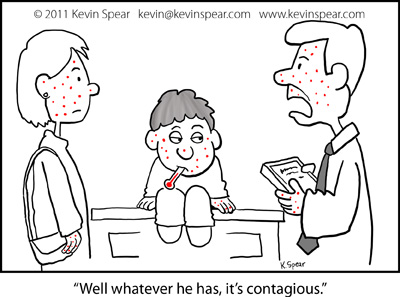
Focus: Measles & Chicken Pox
Why do we need to know about them?
We must learn about communicable diseases that can affect us so we can be aware of them and try and stay healthy.
Measles & chicken pox sometimes get confused with each other because they have some similarities. This WebQuest is focused on learning about what measles and chicken pox are, as they are common illnesses in primary school-aged children, like you! Because of this, we need to know what measles and chicken pox are, what to look for and how to treat it if you or someone you know is ever affected.
_______________________________________________________________________________________________________________
Brainstorming
Before we start, turn to the person beside you and discuss what you think measles is.
- Are there any words that come to mind? (e.g. rash, redness)
- Do you know of anyone that may have had it?
- If you're not sure, have a guess at what you think it is
Measles
Measles is a contagious viral illness that causes skin rash and fever
- Symptoms of measles include fever, runny nose, dry cough, sore/red eyes, red and blotchy skin rash
- It is airborne, which means a person can be affected by swallowing or inhaling a cough or sneeze from an infected person
- We can treat measles with bed rest, plenty of water & paracetamol
- We can be immunised against measles
_______________________________________________________________________________________________________________
Brainstorming
- What about chicken pox? What do you think it is?
- Have you had it maybe?
Chicken Pox
Chicken pox is a contagious viral illness that creates a blistering skin rash
- Symtoms include fever, general sickness, itchy skin rash (small blisters)
- It is airborne, meaning a person is infected when an infected person coughs or sneezes on them. It can also be spread from touching the fluid from the blisters on the skin
- We can treat chicken pox with bed rest, warm baths, creams, paracetamol, and in bad cases, antiviral medication
- We can be immunised against chicken pox
_______________________________________________________________________________________________________________
As you can see, it is easy to get the measles and chicken pox mixed up, but they are very different! Both are caused by different viruses, show different symptoms and need to be treated differently. It is now up to you to find this out.
Task
It is now up to you to explore what measles and chicken pox are by picking one of the illnesses and creating a 5 minute presentation on it. You can choose to present it with a poster, a PowerPoint, or a speech with some images. Use books from the library and websites to create your presentation.
With either measles or chicken pox in mind, you must answer:
- What is it?
- Who can it affect?
- What are its symptoms?
- Should children come to school if they have it?
- How is it treated?
- Can we be vaccinated against it?
- What can we do to prevent it?
- What can we do in our classroom to minimise its risk?
_______________________________________________________________________________________________________________
The below clips are there to help you decide which illness interests you more:
If you choose measles for you presentation, watch this introductory clip before beginning:
https://www.youtube.com/watch?v=xbm37sD9-zA&spfreload=10
If you pick chicken pox for your presentation, watch this introductory clip before beginning:
https://www.youtube.com/watch?v=WuNg29BFxBc&spfreload=10
Process
Before you start...
- You must gather into groups of 3 people to complete this task
- You will be given 3 lessons to prepare and they will be presented next week
How to start...
1. Find your group
2. Decide on either measles or chicken pox after watching the clips on the previous page
3. Decide how you want to present your information
4. Start your research!
Evaluation
You will be marked on this presentation through your ability to:
1. Show your understanding of the communicable disease chosen
2. The way you present it (i.e. a poster, PowerPoint, speech with printed images)
3. How it is presented (using a loud voice, sharing the speaking with other members of the group)
4. How well you work as a team (observed during preparation time)
Conclusion
Good luck!
_______________________________________________________________________________________________________________
Once you have finished your presentation, come back to this WebQuest and ask yourself these questions:
- Do I know enough information about measles/chicken pox that I can identify it?
- Do I know what to look for (the symptoms)?
- Do I know what do to if I think I have measles/chicken pox?
If you can answer these questions, well done! You have used information from books and websites to learn about measles/chicken pox, what it looks like and how to respond to it. You now know enough information about it should you or someone you know ever be affected by it.

Teacher Page
For teachers: This Web Quest is designed to be implemented in the classroom to inform and engage students in their learning about illnesses, diseases and conditions that they are likely to be affected by in their lives, either themselves or others. The Web Quest aims to expand students’ knowledge on measles and chicken pox.
Student learning likely to be developed from this task:
- ICT skills (locating websites for research, using WebQuest to learn)
- Using inquiry make decisions about their work and to research learning
- Working collaboratively in a group
- Literacy skills: communication (presentation), thinking skills, reading, writing/typing
- Learning new information and ideas
_____________________________________________________________________
This learning task aligns with the Australian Curriculum learning outcomes for grade 6:
HPE
- Plan and practise strategies to promote health, safety and wellbeing (ACPPS054)
- Investigate the role of preventive health in promoting and maintaining health, safety and wellbeing for individuals and their communities (ACPPS058)
English
- Use interaction skills, varying conventions of spoken interactions such as voicevolume, tone, pitch and pace, according to group size, formality of interaction and needs and expertise of the audience (ACELY1816)
- Select, navigate and read texts for a range of purposes, applying appropriate text processing strategies and interpreting structural features, for example table of contents, glossary, chapters, headings and subheadings (ACELY1712)
- Use comprehension strategies to interpret and analyse information and ideas, comparing content from a variety of textual sources including media and digital texts (ACELY1713)
______________________________________________________________________________________
General Capabilties:
- ICT
- Critical and creative thinking
- Literacy