
Introduction
Introduction
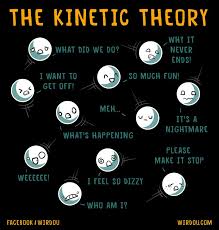
This web quest will give opportunity to learners to use variety of tools to discover information about the topic: Kinetic Particle Theory of Matter. It is designed for grade IX learners. The main objectives of the lesson are:
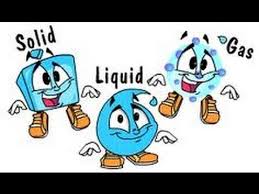
- Differentiate between the three states of matter.(Solid, Liquid, Gas)
- Create particle diagram of the chosen state of matter keeping in view “The Kinetic Particle Theory”.
- Justify your diagram with three valid points.
- Complete the assigned quiz to evaluate the learning outcomes.
Task
Task
You are about to travel into the topic Kinetic Particle Theory of Matter.
You are going on a trip into different WebPages so you will be able to understand that Matter Matters! l
• First, read the information in the webpages.
• After that listen and watch the videos.
• Draw your assigned state of matter (particle diagram) with three relevant points.
Finally, complete the online quiz to see how much you have learnt. Screenshot the result and post it on EDMODO.
Enjoy and have fun with .
Best of Luck!
Process
Process
Follow the instructions:
Reading Task : First, read the information that appears in the web page
Watching Videos :Now watch the videos related to the topics
Hands on Activity :
• Draw the particle diagram of the state of matter that is assigned to you with three relevant points to explain it. Share it with your class.
. Assessment:Finally, do the quiz.
http://easyscienceforkids.com/fun-states-of-matter-quiz-free-interactiv…
Evaluation
Evaluation
Rubric Sheet- States of Matter /Technology
Criteria
Excellent=4 Points
Very Good=3 Points
Good=2 Points
Satisfactory=1 Point
Target-1:Explanation of Videos in the form of correct particle diagram with relevant points
Excellent:The student drew particle diagram of solid, liquid, or gas correctly with relevant points to explain it.
Very Good:The student drew particle diagram of solid, liquid, or gas appropriately with relevant points to explain it.
Good:The student drew particle diagram of solid, liquid, or gas correctly with two points to explain it.
Satisfactory:The student drew vague particle diagram of solid, liquid, or gas with one relevant points to explain it.
Target-2:Quizz
Excellent:The student answered all questions correctly.
Very Good:The student answered almost all questions correctly.
Good:The student answered some correctly.
Satisfactory:The student answered none of the questions correctly.
Target-3:States of Matter Concept
Excellent:The student shows complete evidence of understanding states of matter.
Very Good:The student shows evidence of understanding states of matter, but not being advanced in the concept. Good:The student understands some about states of matter, but not enough to be proficient.
Satisfactory:The student shows no evidence of understanding the concept taught

Conclusion
Conclusion
As you could see Matter is everywhere and it is very important to know about it.
It is made up of tiny particles that are in continuous motion.
After doing all these activities you are able to explain and understand:
- That matter is everything that exists
- That matter is in three stages (solid. liquid and gas)
- That matter has volume and mass
- One state of matter can change into other
- All three states of matter have different arrangement of particles
-In Solids particles are tightly packed,they can only vibrate at their fixed positions.That is the reason that solids have definite shape,and volume.
-In liquids particles are a little bit far away .They can move in random direction and collide with the walls of the container.So liquids have fixed volume but no specific shape,they attain the shape of the container.-In Gases particles are widely spaced,so gases do not have fixed volume and shape.
Credits
Credits
Teacher Page
Key Points:
• Matter is anything that occupies space and has mass.
• There are three states of matter. solids, liquids and gases.
• Particles in a: o Gases are well separated with no regular arrangement.
o Liquids are close together with no regular arrangement.
o Solid are tightly packed, usually in a regular pattern.
• Particles in a: o Gases vibrate and move freely at high speeds.
o Liquids vibrate, move about, and slide past each other.
o Solids vibrate (jiggle) but generally do not move from place to place.
• Solids and liquids cannot be compressed, but gases can be compressed.
• Solids cannot flow but liquids and gases can flow.
• A specific temperature at which a solid changes into liquid is called melting point.During melting there is no rise in temperature as the heat energy is utilized to break the attractive forces of the particles. Temperature remains constant.
• When the particles lose energy and move closer together at a constant temperature from a liquid state to a solid state, we say freezing occurs.
• Boling is a physical change when a liquid changes into a gaseous state.
• A physical change when a gas changes into liquid, it’s called condensation.
• Evaporation is escape of particles from the surface of liquid below its boiling point.
• Sublimation is when a solid directly changes into gaseous state, or gas directly changes into solid without an intermediate phase. [img_assist|nid=44412|title=Kinetic Particle Theory-Three States of Matter|desc=|link=none|align=left|width=624|height=480]