
Introduction
Hello Class! Welcome to your first web quest! Have Fun!
Why do we have day and night on planet Earth? What causes the seasons on our planet? What is the difference between rotation and revolution? What does it mean the Earth rotates on an axis?
Today, the National Aeronautics and Space Administration (NASA) scientists need your help in gathering information on the planet Earth.

Task
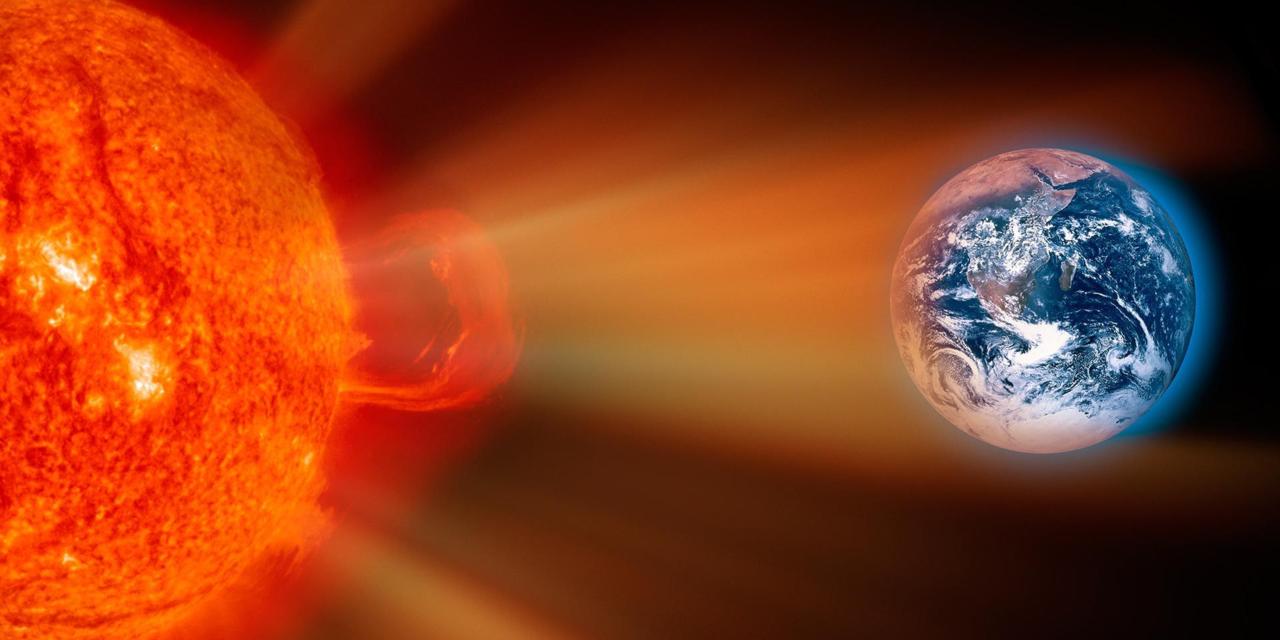
You will be given 2-3 days to complete the following assignments.
Before you begin your research and exploration write the following questions down on the next blank page in your Space Journal. Remember to Write neatly and give yourself room on each page to write your answers! You can return back to this page at any time. You can do so by clicking on "Task" button at the top of the page to return here.
Answer ALL questions in complete sentences!
You are expected to read everything and watch every video. If a page does not work let me know by RAISING your hand.
Day 1. Read Everything and answer the questions below!
Page 1 (Write the following questions in your journal. Hint: write 3 questions on each page and remember to give yourself room to ANSWER the questions. At least 3 lines in between questions)
- Planet Earth is the _________ planet from the Sun. (fill in the blank)
- What is the Earth's "natural satellite"?
- Using the text, what does the word atmosphere mean?
- What gases make up the Earth's atmosphere?
- Why is the atmosphere important for us on Earth?
- Draw the Earth on its tilt and label its' Axis. Explain what the axis is.
Page 2: Cut out and Glue the layers of the Earth page into your notebook. Label each layer (4 main layers and the atmosphere) as you see on the next web page. You can find the paper you need on the table where your notebooks go.
Key Vocabulary: Mantle (Upper and lower), Atmosphere, Inner core, outer core and crust.
*Once you have finished for today put your computer away and go pick up an exit ticket on the back table!
Day 2
Page 3: Write down in this order with 3 LINES in-between each word on the next blank page in your journal: Atmosphere, Crust, Mantle, Outer Core and Inner Core. You are to write down the information you read about each layer.
Example: Atmosphere: contains gases and is a barrier of protection for our planet. <---- That is how it should be written in your Space Journal.
Page 4 (NEXT blank page) Go to the side table where the journals usually go and grab the Rotation and Revolution page. Then, Glue Rotation and Revolution page into your Space Journals. The glue should ONLY be on the side where it says Rotation and Revolution. The other side will be just like our 4 kinds of sentences page we did a few weeks ago. The example will be on the projector.
All of answers can be found in the text and/or in the videos.
*Once you have finished for today put your computer away and go pick up an exit ticket on the back table!
Day 3
Page 5: Glue the season page on the next blank page this can also be found on the side table where you put your Space Journals. Label and answer the question on the page using the information you have read and watched.
*Once you have finished for today put your computer away and go pick up an exit ticket on the back table!
Process
Planet Earth
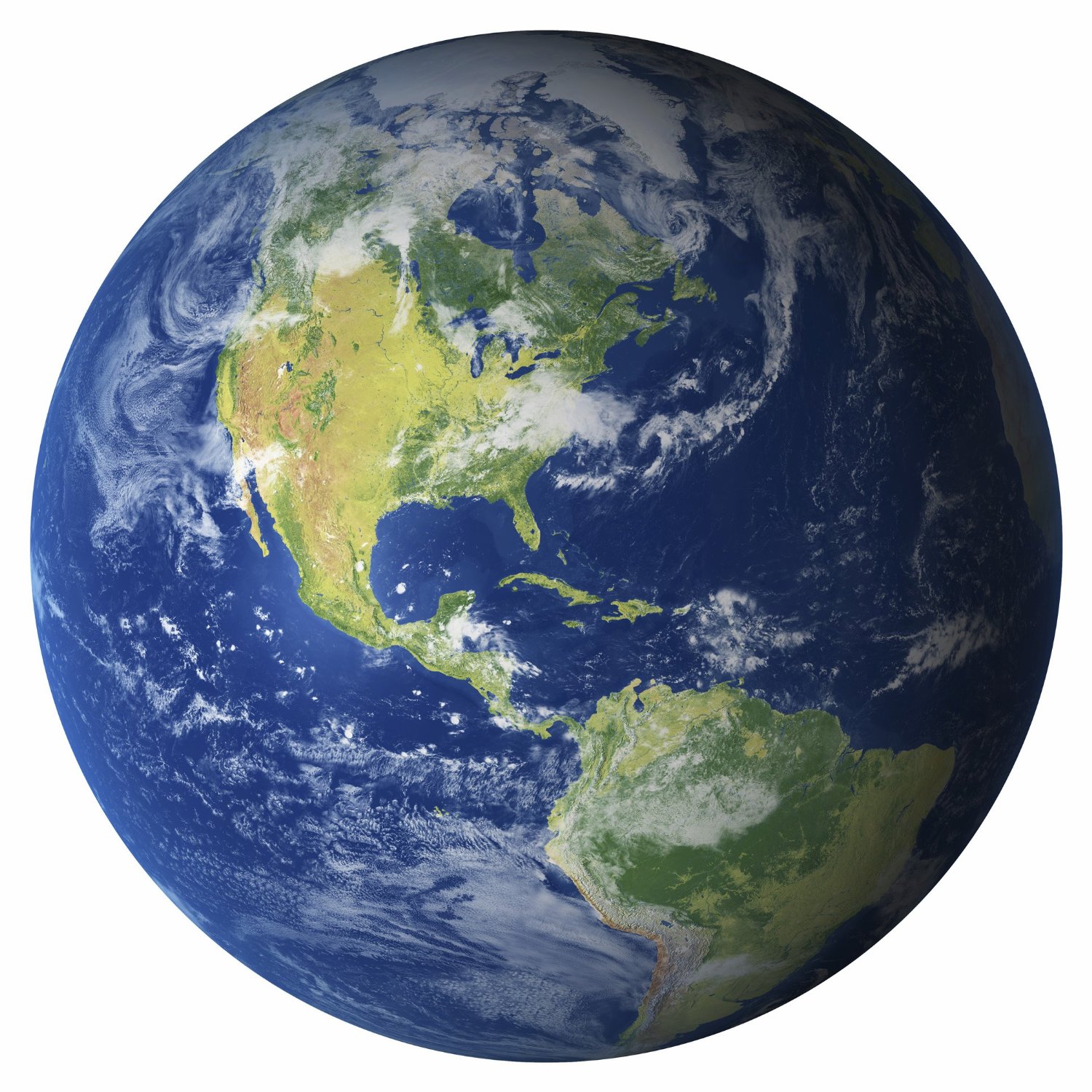
The Earth is the third planet from the Sun and the fifth largest planet in our solar system. Earth is the only planet in our solar system that has liquid water. It has a solid and active surface with mountains, valleys, canyons, plains and so much more. Earth is special because it is an ocean planet. Water covers about 70% of Earth's surface. Earth has only one naturally occurring satellite, the Moon. From Earth, you can only see one side of the moon because of its rotation around the Earth.
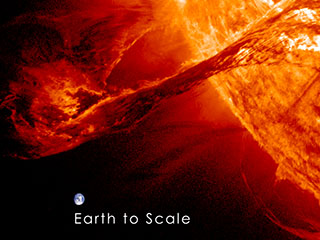
Earth's Atmosphere and Structure
Near the surface, Earth has an atmosphere that consists of gases, 78 percent nitrogen, 21 percent oxygen, and 1 percent other gases such as carbon dioxide. The atmosphere are gases that surround the Earth.The atmosphere affects Earth's climate and local weather. Earth's atmosphere also shields us from much of the harmful radiation coming from the sun and protects us from meteoroids. The Earth is composed of four main layers, starting with an inner core at the planet's center, followed by the outer core, 2 layers of mantle and crust.
Read more about the Earth's atmosphere by copy and pasting the link below!
To do so, highlight the whole link, then right click and hit copy. Next, move your mouse to the address bar (where you type in websites) and paste the link in by right clicking and click on paste. Then, hit enter/return or go on the address bar.
http://spaceplace.nasa.gov/atmosphere/en/
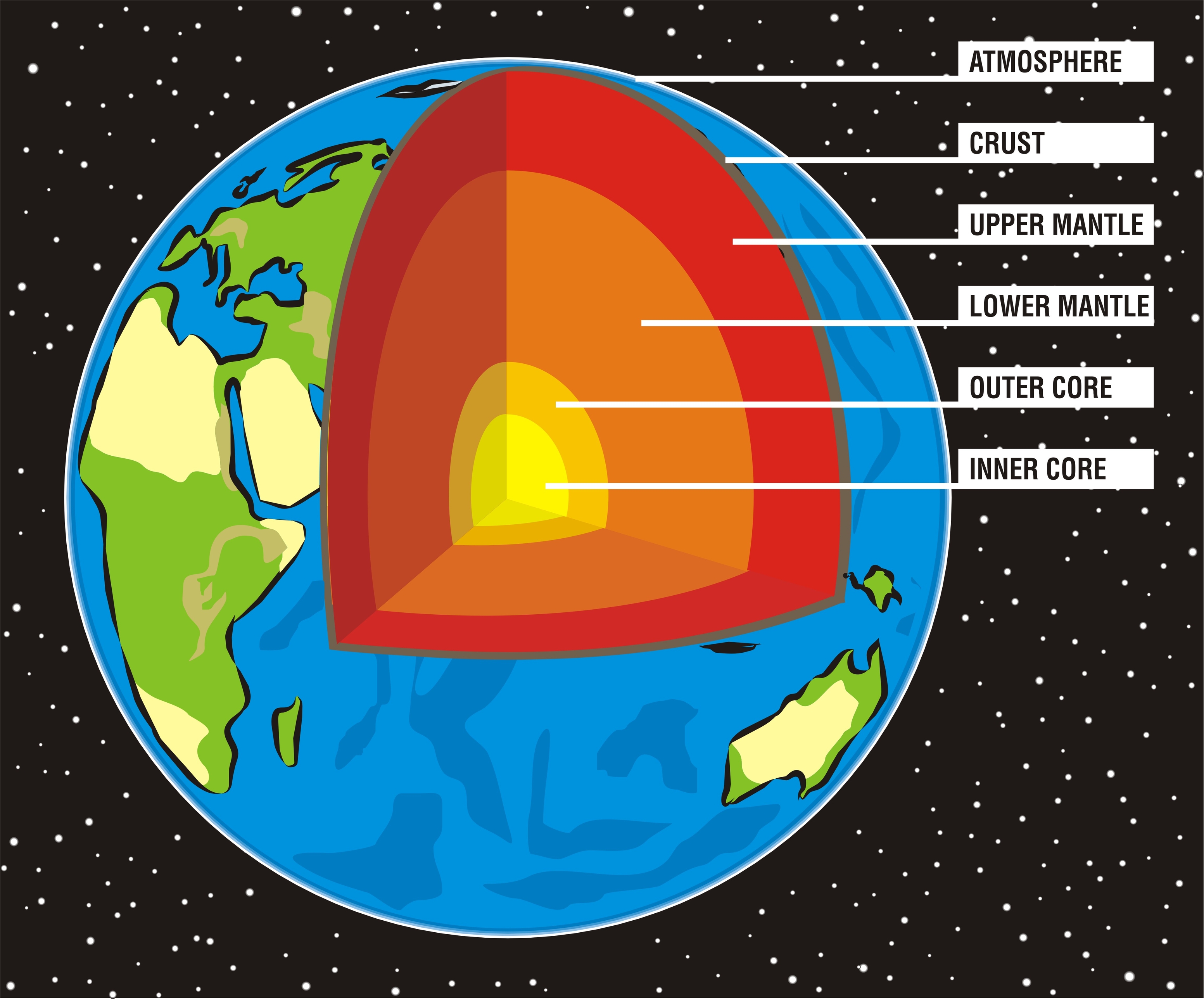
Layers of the Earth:
Atmosphere: Contains gases and is a barrier of protection for our planet.
Crust: Outermost layer that contains the sea floor and land.
Upper and Lower Mantle: Thickest layer, contains 85% of Earth’s weight made up of super heated rock.
Outer Core: 1,800 miles of molten rock/ lava mixture.
Inner Core: Believed to be a solid sphere of iron and nickel.
Watch and listen to "the layers of the Earth" song. To watch you need to copy and paste the link into the address bar. To do so, highlight the whole link, then right click and hit copy. Next, move your mouse to the address bar (where you type in websites) and paste the link in by right clicking and click on paste. Then hit enter/return or go on the address bar.
HIT THE BACK TO RETURN TO THIS PAGE AFTER WATCHING!
http://www.schooltube.com/video/ce265828750dd9a8270f/Layers-of-the-Eart…;
Orbit and Rotation
As Earth orbits the sun, it completes one rotation every 24 hours. It takes 365.25 days to complete
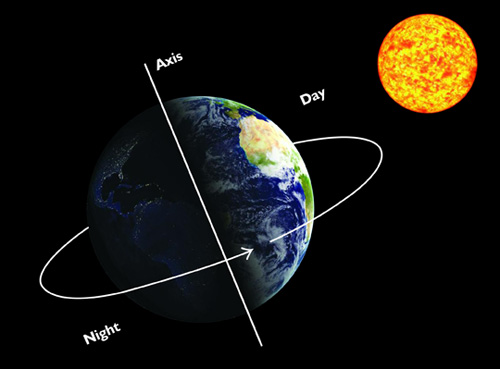
one trip around the sun. That extra quarter(.25) of a day presents a challenge to our calendar system, which counts one year as 365 days.
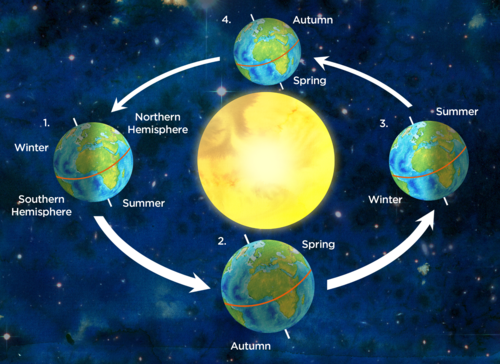
To keep our yearly calendars consistent with our orbit around the sun, every four years we add one day. That day is called a leap day, and the year it's added to is called a leap year. Earth's axis of rotation is tilted or at a slant (23.4 degrees). This tilt causes our yearly cycle of seasons.
During part of the year, the northern hemisphere is tilted toward the sun and the southern hemisphere is tilted away. With the sun higher in the sky, giving direct solar heating in the north producing summer there. Less direct solar heating produces winter in the south. Six months later, the situation is reversed. When spring and fall begin, both hemispheres receive roughly equal amounts of heat from the sun.
Earth's Moon
Earth is the only planet that has a single moon. Our moon is the brightest and most familiar object in the night sky. The moon is farther away from Earth than most people realize. The moon is an average of 238,855 miles away. That means 30 Earth-sized planets could fit in between Earth and the moon.

Fast Fact!
It takes about eight minutes for light from the sun to reach our planet.
Hmm... Why do you think that is?
Now, explore the Earth's rotation and revolution. Again copy and paste the link into the address bar. Once you have explored, hit the back button or arrow at the top of your page to return to this page.
http://www.ictgames.com/dayNight/index.html
Watch the two videos below. Remember to put your responses to the questions in your journal!
https://www.playposit.com/listcode/488040/g1a1d0
AND
https://www.playposit.com/listcode/488042/g1a1d0
Evaluation
How am I being graded?
You will be graded on completion of required materials/notes and neatness of the assignment. Rubric is below!

Conclusion
In conclusion you have learned that the Earth rotates on its axis, causing day and night. You also learned that the Earth revolves around the Sun causing changes in seasons. You also learned where the measurements of time for days, seasons, and years come from.