
Introduction
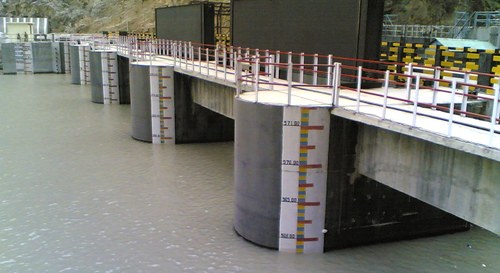
Dams are quite large spaces of water that provide towns and cities with an endless water supply. But how much water is actually being used?
Will we eventually run out of water? Does an 'endless' water supply sound realistic?

Task
Your task is to calculate how much water is being used every day and every year. Will we use it all up?
This dam uses 500 kilolitres of water every single day.
day.
How much water is being used every year in kilolitres?
How much is that in megalitres?
If we have a limit of 150,000 kilolitres of water every year, how much extra water is being used?
In five years time, how much extra water in megalitres is being used?
If the dam uses over 100,000 extra kilolitres of water over 5 years, the dam water level will decrease. Will this occur?
This dam has a base of area 875 metres squared and it is 60 metres deep. How much water can it hold? (in litres, kilotres and megalitres)
Can the capacity of the dam hold a days worth, a months worth or a years worth? What does this suggest?
Explain your solutions.
Process
Remember to use your conversion notes on units of measurement from your lesson material.
Make sure you use the abbreviations for litres, kilolitres and megalitres.
You can also use your calculator but if you can do the questions in your head then give it a go.
Solutions should be clear and concise.
Show your working.
*Your responses can be presented in a word document, a PowerPoint slide or a poster. You can be as creative as you want.
Evaluation
kk.jpg)
Conclusion
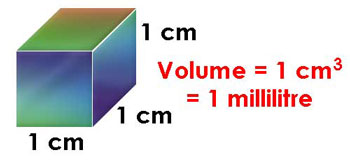
Hopefully this task has given you a greater understanding about units of measurement, capacity and volume.
A dam is not the only resource that can be used in a situation like this. Can you think of any other situations were units of measurement and capacity may be involved and/or used.
Have a go at the following online activities if you still feel unsure.
http://splash.abc.net.au/res/i/L2316/index.html
https://interactivemaths.wikispaces.com/Volume+%26+Capacity#int_vol
Credits
I used the following sites to help create this webquest:
https://interactivemaths.wikispaces.com/Volume+%26+Capacity#int_vol
http://www.tesaustralia.com/teaching-resources/
https://www.createwebquest.com
http://syllabus.bos.nsw.edu.au/mathematics/mathematics-k10/
Books:
Goos, M., Stillman, G. & Vale, C. (2007). Teaching Secondary School Mathematics: Research and practice for the 21st century. Sydney, NSW: Allen & Unwin.
Teacher Page
Mathematics Syllabus Information:
Outcomes:
A student:
› communicates and connects mathematical ideas using appropriate terminology, diagrams
and symbols MA4-1WM
› applies appropriate mathematical techniques to solve problems MA4-2WM
› uses formulas to calculate the volumes of prisms and cylinders, and converts between units
of volume MA4-14MG
Content:
Choose appropriate units of measurement for volume and convert from one unit to another
(ACMMG195)
• recognise that 1000 litres is equal to one kilolitre and use the abbreviation for kilolitres (kL)
• recognise that 1000 kilolitres is equal to one megalitre and use the abbreviation for
megalitres (ML)
• choose an appropriate unit to measure the volumes or capacities of different objects,
eg swimming pools, household containers, dams
- use the capacities of familiar containers to assist with the estimation of larger capacities (Reasoning)
• convert between metric units of volume and capacity, using 1 cm3 = 1000 mm3 ,
1 L = 1000 mL = 1000 cm3 , 1 m3 = 1000 L = 1 kL, 1000 kL = 1 ML
Develop the formulas for the volumes of rectangular and triangular prisms and of prisms in
general; use formulas to solve problems involving volume (ACMMG198)
• develop the formula for the volume of prisms by considering the number and volume of
'layers' of identical shape: leading to V = Ah