
Introduction
Hello Third Graders!
You will be learning more about landforms. Be prepared to see more detailed pictures and learn more about landforms around the world. You will use the information gathered to create a Presentation in Google.
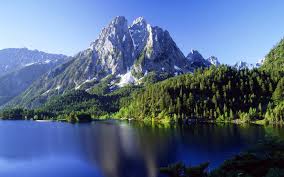
Task
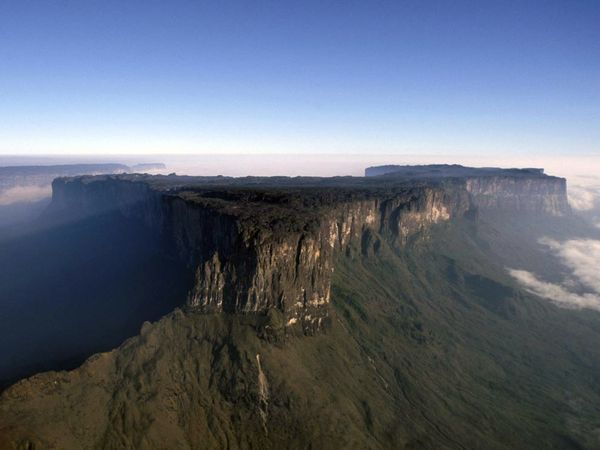 First, your group will be looking at pictures of landforms. Think about why the landforms are important. Your group will also be reading facts about landforms. Think about how the landforms are different.
Second, your group will pick one landform to learn more about. You will be filling out a graphic organizer that will help you create a Presentation in Google about that landform. Think about how the landform affects the people, animals, and plants that live there.
As you research, keep these questions in mind.
- What is the landform?
- How would I describe and define the landform?
- What unique characteristics are evident in the landform?
- What are the advantages and disadvantages of the landform?
Process
1. Assign group roles. Each group needs a reader/navigator and writer/task manager.
The reader is in charge of reading the text at a nice pace so that all of the other group members can understand.
The navigator is in charge of moving the mouse and using the keyboard to move around the WebQuest.
The writer is in charge of writing the information onto the graphic organizer.
The task manager is in charge of making sure everyone is working hard and staying on task so your quest will be done on time.
**Remember it is everyone's job to share ideas, discuss information and answer questions.
2. After you each have a role, you can begin! Use the two links below to view different landforms. Look at at least 5 different landforms. While you are looking at the landforms, talk about these questions with your group:
How are the landforms different?
How are they the same?
You do not have to read all of the text by each landform, but read enough to get an idea of what makes that landform unique.
Click here to view the landforms.
Click here to view other landforms.
3. As a group, pick one landform from the list that you would like to learn more about. You will need to add your choice to the chart on the SmartBoard. If there is already a group listed, then you must choose another one. Don't forget to circle the landform you chose on your graphic organizer.
mountains
hills
valleys
wetlands
oceans
lakes
rivers
islands
archipelagos
plateaus
canals/straits
canyons
glaciers
4. Click on the link below and find your landform in the Landform Definition Chart. Read the definition for your landform. You can use parts of this information for one of your facts. Record the fact on your graphic organizer.
5. Look at the links under your landform below to gather other information about your landform. Record the information in the boxes on your graphic organizer. Be sure to fill in every box on the graphic organizer.
Evaluation
You and your group will be creating a Presentation in Google. Your presentation must contain 6 slides and include the following:
Slide #1 - Will contain the name of your landform, your name and your partner's name, and pictures of your landform. Find these pictures on the internet and copy them on your first slide.
Slide #2 - Describe your landform in your own words. Tell the features of this landform.
Slide #3 - Find a famous example of your landform. Copy a picture into the slide and put the name of it as well as where it's located. A map of it's location should also be included. For example, if your famous landform can be found in North Carolina, I would expect a picture of North Carolina with the general area of the landform marked or labeled.
Slide #4 - Find examples of animals that live on this landform. Include pictures of some of the animals.
Slide #5 - Find examples of plants that live on this landform. Include pictures of some of the plants.
Slide #6 - Tell us any additional facts that you found interesting. Include at least 1 picture.
You will be scored as follows:
|
Landforms Google Presentation Rubric |
|||||
|
|
4 |
3 |
2 |
1 |
Comments |
|
Graphic Organizer/ Notes Page |
Organizer is completed with detailed, accurate information. |
Organizer is completed but may include few pieces of inaccurate information or lacks detail. |
Organizer has empty spaces. Information that is filled in may have some inaccurate facts. |
Organizer has empty spaces. Information is mostly inaccurate OR organizer is not handed in. |
|
|
Slide Presentation |
Presentation contains 6 slides and includes all required information. |
Presentation contains 6 slides but may be missing 1-2 pieces of required information. |
Presentation contains less than 6 sides and includes all required information |
Presentation contains less than 6 slides and is missing pieces of required information. |
|
|
Oral Presentation |
All members of the group have an equal speaking part. Volume of presenters is loud enough for all to hear. Eye contact with the audience is made with little to no reading directly from slides. |
All members of the group have an equal speaking part. Volume of presenters may be inconsistent for audience to hear. Eye contact is made with a majority of reading directly from slides. |
Members of the group do not have an equal speaking part. Volume from presenters is inconsistent for audience to hear. Eye contact is infrequently made with a majority of reading directly from slides. |
Members of the group do not have an equal speaking part. Volume from presentation is low and difficult for the audience to hear. No eye contact is made with the audience. |
|
|
Cooperation and Responsibility |
All members of the group took equal responsibility in completing the task. Decisions and compromises were made with no obvious problems. |
Group members took equal responsibility in completing the task. Decisions and compromises were made with little obvious problems. |
There was an unequal responsibility among group members in completing the task. Decisions and compromises were made with some obvious problems. |
There was an unequal responsibility among group members in completing the task. Decisions and compromises were made with many obvious problems. |
|
|
Time on Task |
Group members used time wisely. Presentation was completed on or before due date. |
Group members mostly used time wisely. Presentation was completed on or before due date. |
Group members did not use time wisely. Presentation was completed on or before due date. |
Group members did not use time wisely. Presentation was completed after due date. |
|
Conclusion
Upon completion of this WebQuest, you will have learned about one of many landforms. When everyone has completed creating their presentations, you will present them to the class. If you are finished before presentation day, take time to practice your presentation with your partner.
You may also visit the following sites, if time allows:
Landforms Trivia - Answer these questions on a separate sheet of paper. You and your partner must have your own paper.